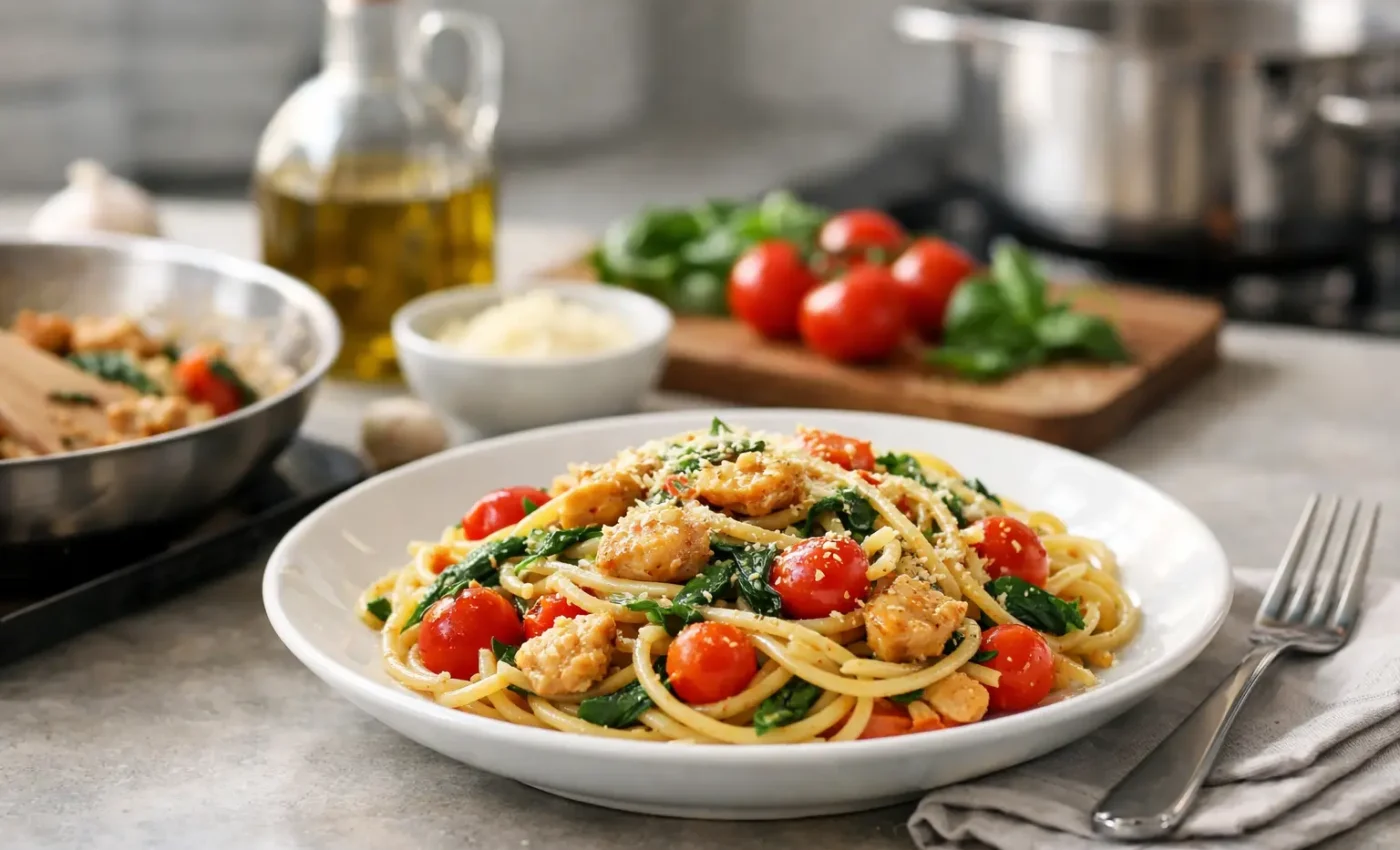
The best 15 minute pasta dinner is not about rushing through a complicated recipe. It is about choosing ingredients that cook at the same pace, using what is already in the pantry, and building flavor while the water boils. On a busy night, that can mean the difference between a real homemade meal and another round of takeout.
Pasta is a dependable answer when everyone is hungry and time is short. It is affordable, family-friendly, and flexible enough to work with leftover chicken, a bag of spinach, a jar of sauce, or a handful of frozen peas. With a few smart habits, dinner can be on the table quickly without tasting like an afterthought.
What Makes a 15 Minute Pasta Dinner Work
Fast pasta dinners rely on timing more than fancy technique. Start the water first, use a wide skillet for the sauce, and choose ingredients that need little or no separate cooking. While the pasta boils, you should be able to finish everything else in the skillet.
The pasta shape matters, too. Thin spaghetti, angel hair, linguine, small shells, rotini, and elbows cook quickly. Check the package rather than assuming every pasta will be done in the same amount of time. A thick rigatoni or large stuffed pasta can still make a great dinner, but it may not fit a true 15-minute window.
A sauce does not need to simmer for an hour to be satisfying. Jarred marinara, pesto, cream cheese, grated Parmesan, canned tomatoes, olive oil, garlic, and pasta water all create a flavorful base in minutes. The goal is not to make a restaurant project on a Wednesday. The goal is good food, made practical.
Start With a Simple Pasta Formula
When you do not know what to make, use this easy formula: pasta, a quick sauce, a protein or hearty add-in, and one fresh or frozen vegetable. It gives you enough structure to make a complete meal while leaving room for what you have on hand.
For example, toss spaghetti with marinara, browned ground beef, and baby spinach. Stir rotini with pesto, shredded rotisserie chicken, and frozen peas. Make a creamy skillet sauce with cream cheese, Parmesan, garlic powder, and a splash of pasta water, then add broccoli florets and cooked sausage.
You do not need every part every time. If your family prefers a simple bowl of buttered noodles with Parmesan and sliced chicken on the side, that still counts. The best quick dinner is the one people will eat and you can make without extra stress.
Keep the Protein Truly Quick
Raw chicken breasts, thick pork chops, and dried beans can take your meal beyond 15 minutes. They are useful ingredients, just not always the right choice for tonight.
For speed, look for cooked or fast-cooking options: rotisserie chicken, leftover meatballs, deli turkey, canned tuna, cooked Italian sausage, frozen cooked shrimp, or eggs. Shrimp is especially helpful because it cooks in just a few minutes. Add it to a hot skillet with olive oil, garlic, salt, and pepper, then remove it as soon as it turns pink and opaque.
If you are using ground beef or turkey, break it up in a large skillet as the pasta water heats. Lean ground meat is often ready by the time the noodles are close to done. Drain excess fat if needed, then stir in sauce directly in the pan.
Let Vegetables Pull Their Weight
Choose vegetables that cook quickly or can be added straight from the freezer. Baby spinach wilts in a minute. Frozen peas heat through in the last two minutes of pasta cooking. Cherry tomatoes soften quickly in a skillet, while jarred roasted red peppers and marinated artichokes only need warming.
Broccoli is a good choice if you cut it small. Add the florets to the pasta pot during the last three minutes so they cook alongside the noodles. This saves a pan and keeps cleanup reasonable. Thinly sliced zucchini, mushrooms, and bell peppers also work well in a hot skillet.
Fresh vegetables bring color and texture, but pantry and freezer vegetables are often the smarter weekday choice. There is no prize for chopping more when dinner needs to happen now.
A Reliable 15-Minute Method
Put a large pot of salted water over high heat before you do anything else. Cover it to bring it to a boil faster. While it heats, gather your sauce ingredients, grate cheese if needed, and set a colander in the sink.
Once the pasta goes into the water, heat olive oil in a large skillet. Cook any quick protein or vegetables that need the skillet, then add your sauce. For a tomato-based dinner, use marinara or canned crushed tomatoes with garlic, Italian seasoning, and a pinch of red pepper flakes if your household likes heat. For a creamy dinner, soften cream cheese in the skillet with milk or broth and Parmesan.
Before draining the pasta, scoop out about a cup of the starchy cooking water. Add the drained pasta to the skillet and toss it with the sauce. A splash of pasta water helps a thick sauce coat the noodles instead of sitting at the bottom of the pan. Add more a little at a time until the pasta looks glossy and well covered.
Taste before serving. A small pinch of salt, a squeeze of lemon, extra Parmesan, or black pepper can make a quick meal taste more finished. These final touches take seconds and are often more useful than adding another ingredient.
Three Easy Directions for Busy Nights
A tomato pasta is the familiar option for picky eaters and packed schedules. Warm marinara with cooked meatballs or browned ground turkey, toss with spaghetti, and fold in spinach. Finish with mozzarella or Parmesan. It is comforting, simple, and easy to adjust for a larger family.
For something brighter, pesto pasta comes together quickly with chicken and peas. Toss hot pasta with pesto and a little pasta water, then add shredded chicken, peas, and grated Parmesan. A squeeze of lemon keeps the rich pesto from feeling heavy. If you have cherry tomatoes, halve them and stir them in at the end.
A creamy garlic pasta works well when the fridge is nearly empty. Cook pasta while warming butter or olive oil with minced garlic. Stir in cream cheese, milk, Parmesan, and pasta water until smooth. Add frozen broccoli, leftover chicken, or cooked sausage. The sauce is rich, so a little lemon juice or a side of simple greens gives the meal balance.
Common Problems That Slow Dinner Down
The biggest time trap is waiting to decide on the sauce after the pasta is already cooking. Make the choice first, even if it is as simple as pesto from the fridge. Gather the ingredients before you start, because hunting for Parmesan while noodles overcook makes a quick meal feel harder than it is.
Another common problem is a dry or clumpy sauce. Drain pasta well, but do not rinse it. The starch on the noodles helps sauce cling, and reserved pasta water loosens everything without making it watery. Add the water gradually, especially with pesto or cheese sauces.
It also helps to avoid overcrowding the skillet. If you are feeding a family of five or more, use the pasta pot to toss everything together after draining. A crowded skillet makes it harder to mix evenly, and sauce can cool down before it reaches the table.
Make Tomorrow’s Dinner Easier
A few small choices can turn pasta into a repeatable weeknight plan. Keep two pasta shapes, a jar of marinara, pesto, canned tuna, frozen vegetables, and Parmesan in regular rotation. Buy rotisserie chicken when it fits the budget, then use the leftovers for sandwiches, salads, and a quick pasta night.
You can also cook extra pasta if tomorrow’s schedule looks just as busy. Toss it lightly with olive oil, refrigerate it, and reheat it in a skillet with sauce and a splash of water. It will not have the same texture as freshly cooked pasta, but it is a useful trade-off when the evening is packed.
Tonight, choose the ingredients that make dinner feel easiest: a favorite noodle, a dependable sauce, and one add-in that makes the bowl feel complete. A warm, satisfying pasta dinner does not need a long ingredient list to earn a place in your regular rotation.