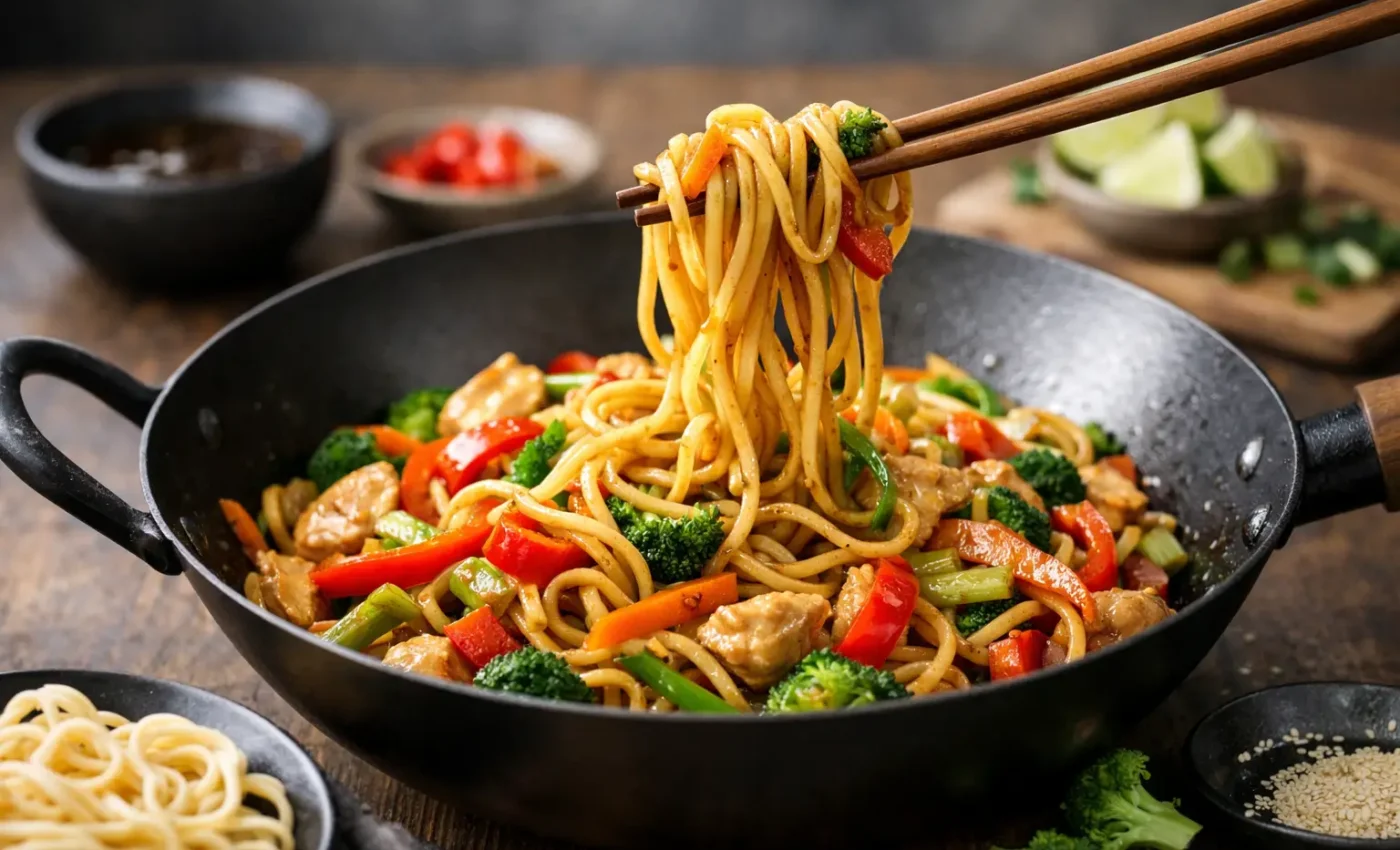
A good easy Asian noodle stir fry solves a very specific weeknight problem: you need dinner to feel like a real meal, but you have little time and an even smaller amount of energy. With noodles, a few vegetables, and a simple savory sauce, you can get a hot, satisfying dinner on the table in about 25 minutes. Better still, this is the kind of recipe that works with what is already in the fridge.
The goal is not to copy one exact restaurant dish. It is to build a dependable stir fry formula that gives you tender noodles, crisp-tender vegetables, and a sauce that clings to every bite. Once you know the order, tonight is made easy.
What makes an easy Asian noodle stir fry work
Stir fry moves quickly, so a little preparation makes the cooking feel calm rather than rushed. Have the vegetables chopped, sauce stirred together, and noodles ready before the pan gets hot. The actual cooking is fast, usually less than 10 minutes.
The most reliable version has three parts: noodles for substance, a protein if you want one, and vegetables for color and crunch. A short sauce made with soy sauce, sesame oil, garlic, and a little sweetness brings those ingredients together. You do not need specialty sauces or a long ingredient list to make it taste good.
A large skillet works well for most home cooks. A wok is helpful, but it is not required. The key is to use a pan large enough that the ingredients can make contact with the hot surface instead of steaming in a crowded pile. If your skillet is small, cook the protein first, set it aside, then stir fry the vegetables and noodles in batches.
Choose noodles that fit your pantry
Most noodles can work, but the cooking method changes slightly depending on what you use. Dried rice noodles, such as pad Thai-style noodles, are a fast choice and have a light texture. Lo mein noodles or fresh yakisoba-style noodles are chewier and especially convenient when you need dinner quickly. Spaghetti is also a practical substitute when that is what you have.
Cook dried noodles just until barely tender. They will finish softening when they hit the hot sauce in the skillet. Overcooked noodles are the most common reason stir fry turns soft or sticky, especially with rice noodles. Drain them well, and if they need to sit for more than a few minutes, toss them with a small amount of neutral oil.
For a family dinner, plan on about 8 ounces of dry noodles for four servings. If you are using fresh noodles, a 12- to 14-ounce package is usually enough. The exact amount depends on how vegetable-heavy you want the meal to be.
A simple stir fry sauce you can remember
You can mix the sauce in a measuring cup while the noodle water heats. For four servings, combine:
- 1/4 cup low-sodium soy sauce
- 2 tablespoons water
- 1 tablespoon honey or brown sugar
- 1 tablespoon rice vinegar or lime juice
- 2 teaspoons toasted sesame oil
- 2 cloves garlic, finely minced
- 1 teaspoon grated fresh ginger, optional
This sauce is balanced but mild enough for the whole table. For more heat, add red pepper flakes, chili garlic sauce, or sriracha at the table. That approach is often easier than making the entire skillet spicy when kids or heat-sensitive eaters are included.
If you want a thicker, glossy sauce, whisk 1 teaspoon cornstarch into the cold sauce mixture. It is optional. Without it, the noodles will still be flavorful, just a little less saucy. If you use cornstarch, stir the sauce again right before pouring it into the skillet because it can settle at the bottom.
How to make easy Asian noodle stir fry
Start by cooking the noodles according to the package directions, stopping about a minute early if possible. Reserve a few tablespoons of cooking water, then drain the noodles. That starchy water can loosen the sauce later if the pan looks dry.
Heat 1 tablespoon of oil in a large skillet over medium-high heat. Add thinly sliced chicken, shrimp, firm tofu, or ground turkey if you are using protein. Season lightly with salt and pepper, then cook until done. Chicken should be cooked through, shrimp should be pink and opaque, and tofu should have lightly browned edges. Transfer the protein to a plate.
Add another small splash of oil if the skillet looks dry. Cook firm vegetables first, such as broccoli, carrots, bell peppers, or snap peas. Stir them for two to four minutes, until they brighten in color and begin to soften. Add quicker-cooking ingredients, including sliced cabbage, mushrooms, spinach, or bean sprouts, near the end.
Return the protein to the skillet with the drained noodles. Pour in the sauce and use tongs to toss everything continuously for one to two minutes. The noodles should look evenly coated and hot. If they seem dry or clumped together, add a spoonful of reserved noodle water and keep tossing.
Finish with sliced green onions, sesame seeds, chopped cilantro, or crushed peanuts if your family enjoys them. These are not required, but they add freshness and texture with almost no extra work.
The best vegetables for a quick skillet dinner
Use a mix of vegetables that cook at about the same speed, or add them in stages. Bell peppers and snap peas stay pleasantly crisp. Shredded cabbage is affordable, lasts well in the refrigerator, and wilts into noodles quickly. Broccoli is a favorite, though small florets cook more evenly than large pieces.
Frozen stir fry vegetables can be a helpful shortcut on especially busy nights. Cook them in a hot skillet until the extra moisture evaporates before adding the sauce. They may be softer than fresh vegetables, but they still make a useful, colorful dinner when time matters more than perfect crunch.
A simple combination of broccoli, carrots, and bell pepper is familiar and dependable. For a more budget-friendly bowl, use cabbage, carrots, and onions. If your refrigerator is nearly empty, even a bag of coleslaw mix can become a fast vegetable base.
Protein options and easy swaps
This recipe is flexible because the sauce works with nearly any protein. Thin chicken breast or chicken thighs cook quickly and are easy to season. Shrimp makes the meal feel a little special without adding much prep time. Ground pork, turkey, or beef are practical choices when you want to avoid slicing raw meat.
For a meatless dinner, use firm or extra-firm tofu. Pat it dry, cube it, and cook it in a little oil before the vegetables. Let it sit undisturbed for a minute or two at a time so it can brown. Edamame is another easy option, especially if you want plant-based protein without the extra step of browning tofu.
Leftover cooked chicken, pork, or rotisserie chicken works too. Add it near the end with the noodles so it warms through without becoming dry. This is one of the best ways to turn small amounts of leftovers into a dinner that does not feel like leftovers.
Common stir fry problems, fixed
If the noodles stick together, they may have been overcooked or left sitting too long after draining. A splash of warm water and steady tossing can usually separate them. Next time, drain them a little earlier and add them to the skillet sooner.
If the vegetables are watery, the pan may be crowded or not hot enough. Give the skillet time to heat before adding ingredients, and avoid adding too many vegetables at once. Frozen vegetables also release more water, so they benefit from a few extra minutes in the pan before sauce goes in.
If the flavor seems flat, do not automatically add more salt. A small squeeze of lime juice or a splash of rice vinegar can wake up the whole dish. If it tastes too salty, add a handful of extra noodles or vegetables, or loosen the sauce with a little water.
Make it easier on future weeknights
Chop vegetables when you unpack groceries, then store them in containers for the next few days. Keep soy sauce, sesame oil, garlic, and a package of noodles on hand, and you are close to a flexible dinner at any time. You can also mix a double batch of sauce and refrigerate half for a second meal later in the week.
An easy Asian noodle stir fry is at its best right after cooking, when the vegetables still have a little bite. But leftovers can be refrigerated for up to three days and reheated in a skillet with a splash of water. Keep the formula in mind, use the ingredients you have, and let a simple skillet dinner take one decision off your plate tonight.