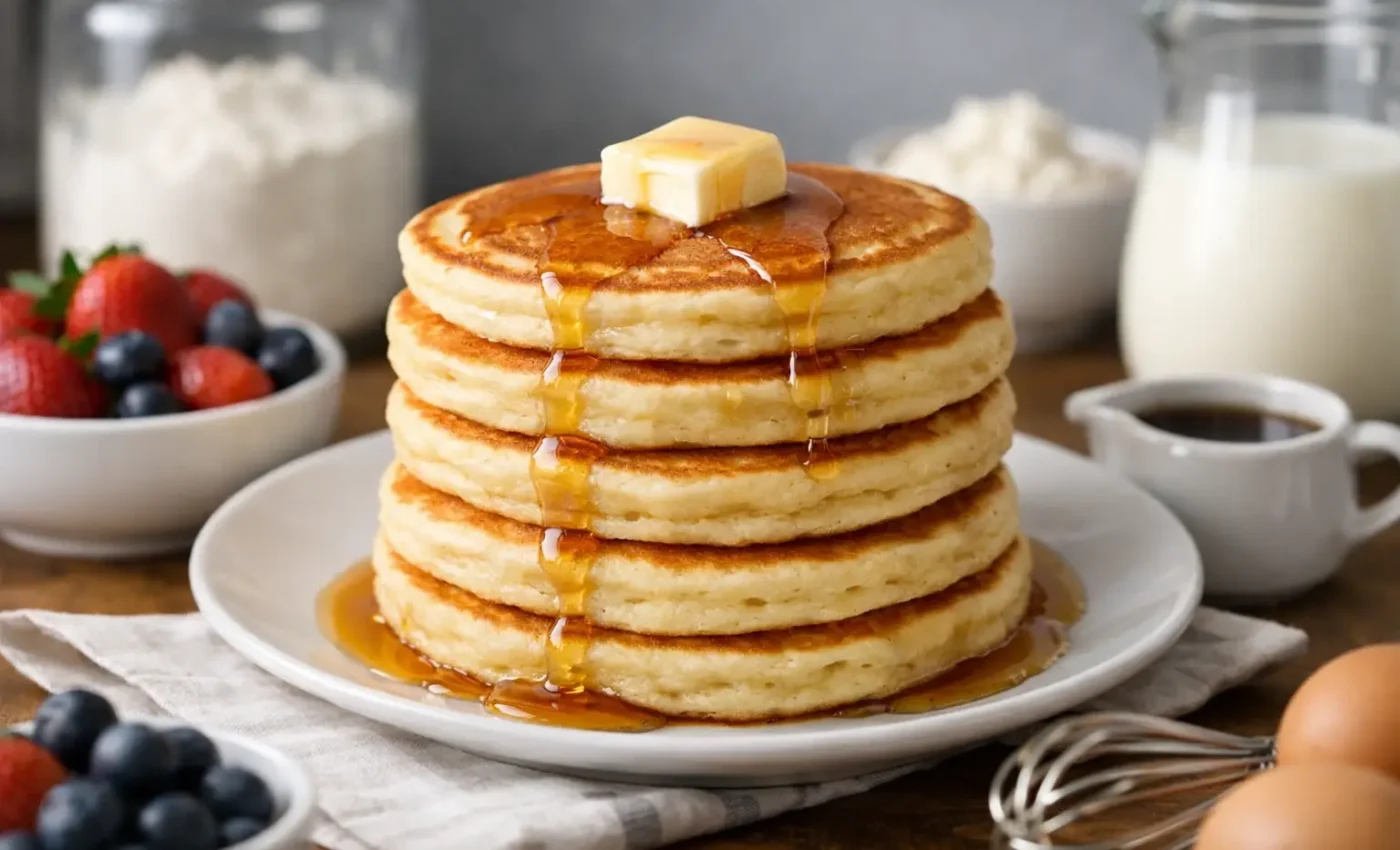
A good pancake breakfast should not require a special trip to the store or a stack of dirty bowls. Once you know how to make pancakes with a dependable batter and the right skillet heat, fluffy, golden pancakes can be on the table in about 20 minutes – even on a busy morning.
This easy version uses familiar pantry staples, makes enough for a small family, and leaves room for the toppings everyone likes best. Serve them with butter and maple syrup, fresh fruit, peanut butter, or a handful of chocolate chips stirred into part of the batter.
How to Make Pancakes From Scratch
The key to tender pancakes is simple: do not overmix the batter, and give it a few minutes to rest before cooking. A few small lumps are completely fine. In fact, mixing until the batter is perfectly smooth can make pancakes tough instead of light.
This recipe makes about 10 to 12 medium pancakes, depending on how much batter you use for each one.
Ingredients
- 1 1/2 cups all-purpose flour
- 2 tablespoons granulated sugar
- 2 teaspoons baking powder
- 1/2 teaspoon salt
- 1 1/4 cups milk
- 1 large egg
- 3 tablespoons melted butter, plus more for the pan
- 1 teaspoon vanilla extract
If you prefer a less sweet pancake, reduce the sugar to 1 tablespoon. The sugar helps with browning, but the recipe will still work without much of it.
Make the batter
Start by whisking the flour, sugar, baking powder, and salt in a large bowl. This spreads the baking powder evenly through the flour, so each pancake rises well.
In a separate measuring cup or small bowl, whisk together the milk, egg, melted butter, and vanilla. The butter should be melted but not piping hot, or it may start to cook the egg.
Pour the wet ingredients into the flour mixture. Stir gently with a whisk or spatula only until no large pockets of dry flour remain. Stop there. The batter should look thick and slightly lumpy, not thin and glossy.
Let the batter sit for 5 minutes while you warm the skillet. That short rest gives the flour time to absorb the liquid and lets the baking powder begin doing its job. You will often see a few bubbles forming at the surface, which is a good sign.
Cook the pancakes
Set a nonstick skillet or griddle over medium heat. Add a small amount of butter or neutral cooking oil, then wipe away any excess with a paper towel. You want a lightly coated surface, not a pan full of sizzling butter that will brown before the pancake does.
For each pancake, pour about 1/4 cup of batter onto the hot skillet. Leave space between pancakes so they are easy to flip. Cook until bubbles rise and pop across the top and the edges look set, usually 2 to 3 minutes.
Flip once and cook the second side for another 1 to 2 minutes, until golden and cooked through. Transfer finished pancakes to a plate or a baking sheet in a low oven while you cook the rest.
The first pancake is often a test pancake. If it browns too quickly before the center cooks, lower the heat a little. If it stays pale after several minutes, turn the heat up slightly. Every stove and skillet runs differently, so adjusting after that first pancake is normal.
The Best Heat for Fluffy Pancakes
Medium heat is the sweet spot for most home kitchens. High heat can make the outside dark before the inside has time to rise and cook through. Heat that is too low can leave pancakes pale, dry, and a little flat.
A quick test helps when you are unsure: flick a few drops of water into the skillet. They should dance briefly across the surface and disappear. If the water vanishes instantly, the pan is likely too hot. If it just sits there, give the skillet another minute.
Butter adds great flavor, but it can brown quickly. For a longer batch, use a little oil in the pan and add butter to the finished stack instead. Or use a mix of butter and oil for both flavor and better heat control.
Simple Pancake Add-Ins and Toppings
Plain pancakes are always welcome, but a basic batter is also an easy starting point for variety. Add-ins work best when they are sprinkled onto each pancake right after you pour the batter into the skillet. This keeps blueberries or chocolate chips from sinking to the bottom of the bowl.
Try blueberries, sliced bananas, mini chocolate chips, chopped strawberries, or finely diced apples with a pinch of cinnamon. For a little extra protein, serve pancakes with scrambled eggs, Greek yogurt, or a side of turkey sausage rather than trying to change the batter itself.
For a weekend-style plate without extra effort, top warm pancakes with butter, maple syrup, and fruit. On a weekday, peanut butter and banana slices make a filling option that comes together fast.
Common Pancake Problems and Easy Fixes
Why are my pancakes flat?
Flat pancakes usually come from old baking powder, batter that was mixed too much, or a batter that is too thin. Check the date on your baking powder first. If it is fresh, make sure you measured the flour correctly by spooning it into the measuring cup and leveling it off rather than packing it down.
If the batter seems runny, stir in flour 1 tablespoon at a time. Let it sit for a minute before adding more, since flour needs a little time to absorb the liquid.
Why are my pancakes browned outside but raw inside?
The skillet is too hot. Lower the heat and give the pan a minute to settle before cooking the next pancake. Smaller pancakes also cook more evenly than oversized ones, especially with a thicker batter.
Why are my pancakes tough?
Overmixing is the usual reason. Stir just until combined, even if you see small lumps. Tough pancakes can also happen when you keep flipping them. One flip is all they need.
Why do my pancakes stick to the pan?
Use a nonstick skillet if possible, and make sure it is preheated before the batter goes in. A very light coating of butter or oil helps, but too much fat can create uneven brown spots. If the pancakes are sticking, wait another 20 to 30 seconds before flipping. They may simply need more time to set.
Make-Ahead and Leftover Pancakes
Pancakes are one of the easiest breakfasts to prepare ahead. Let leftovers cool completely, then store them in an airtight container in the refrigerator for up to 3 days. Reheat them in a toaster, toaster oven, skillet, or microwave until warm.
For longer storage, freeze pancakes in a single layer on a baking sheet until firm. Move them to a freezer bag with parchment paper between layers if needed. They can be reheated straight from frozen, making a homemade breakfast much easier on rushed school mornings.
If you are cooking for different appetites, make the full batch and freeze what you do not need. A calm morning is often worth more than starting breakfast from scratch every single time.
Keep this recipe close for the mornings when everyone wants something warm, familiar, and homemade. With a bowl, a skillet, and a few everyday ingredients, breakfast can feel like a small win before the day gets moving.