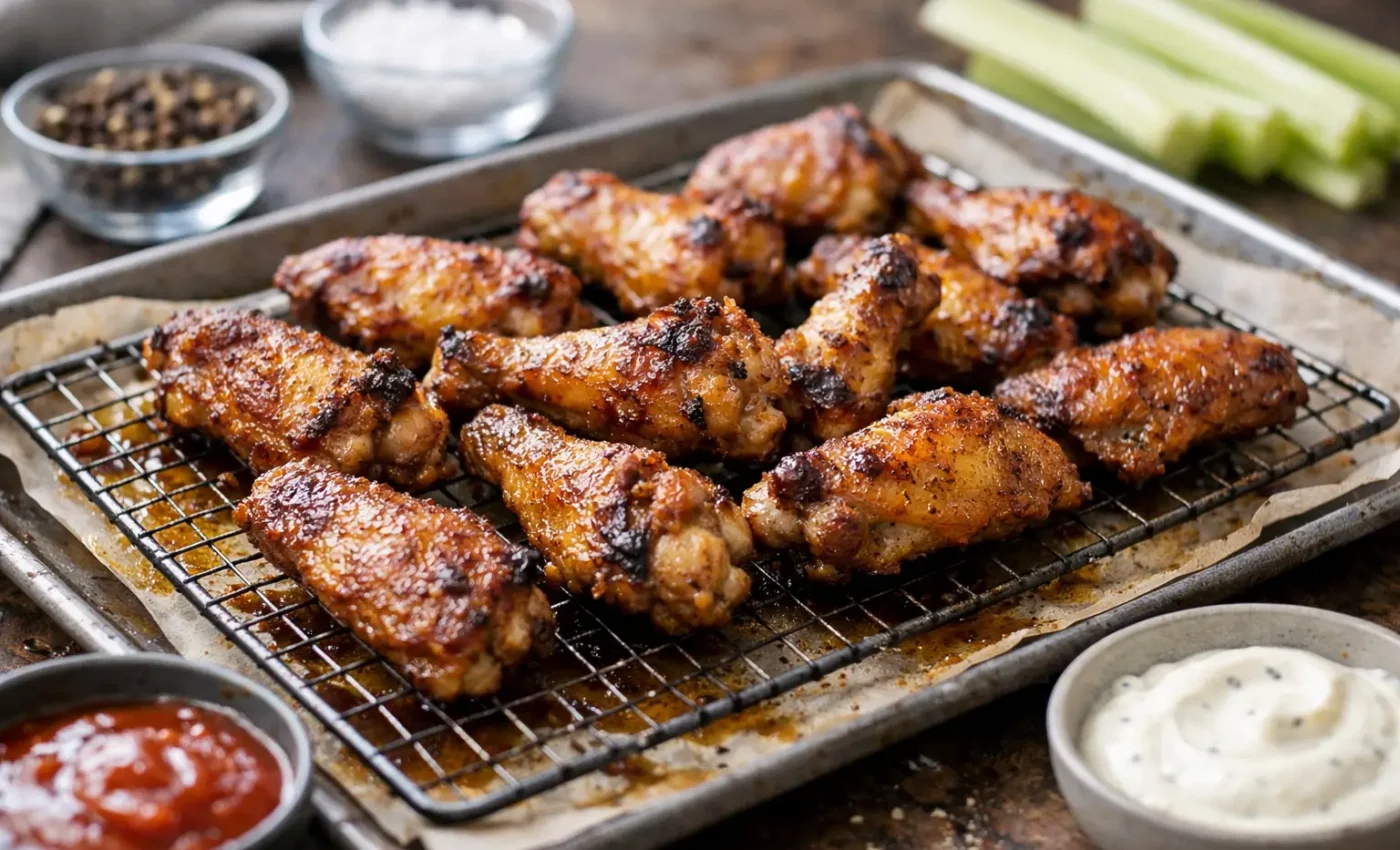
A tray of baked wings can solve dinner, snacks, and last-minute company with very little planning. The trick is not a complicated sauce or special appliance. To bake chicken wings that are crisp outside and tender at the bone, start with dry wings, use high heat, and give them enough room on the pan.
This method uses familiar pantry ingredients and an ordinary oven. Serve the wings plain with a favorite dipping sauce, toss them in buffalo sauce after baking, or pair them with rice, salad, raw vegetables, or oven fries for an easy family meal.
What makes baked chicken wings crispy?
Chicken wing skin contains plenty of fat, which is good news for oven cooking. As the wings roast, that fat renders out and helps the skin brown. The challenge is keeping moisture from getting in the way. Wet skin steams before it crisps, so drying the wings well matters more than adding a long list of seasonings.
A hot oven also makes a real difference. At 425°F, the skin has enough heat to brown while the meat stays juicy. A wire rack set inside a rimmed baking sheet helps hot air move around the wings and lets excess fat drip away. It is helpful, but not required. Wings baked directly on a parchment-lined sheet pan can still turn out very well if you turn them halfway through.
For extra-crisp skin, a small amount of aluminum-free baking powder is a dependable option. It changes the surface of the skin so it browns and dries more effectively. Do not swap in baking soda. Baking soda has a much stronger flavor and can make the wings taste unpleasant.
Ingredients for easy oven-baked wings
For about 2 pounds of split chicken wings, you need wings, oil, salt, black pepper, garlic powder, paprika, and aluminum-free baking powder. This makes a lightly seasoned batch that works with nearly any sauce or side dish.
If your wings are sold whole, separate the drumettes from the flats at the joint with a sharp knife or kitchen shears. Save the wing tips for homemade stock, or discard them if you prefer. Buying pre-split wings is the quickest choice for a busy night.
Choose regular baking powder, not a baking powder blend with added flavoring. Check the label for aluminum-free if possible, especially if you are using more than a small amount. The wings should be thawed completely before cooking so they bake evenly.
How to bake chicken wings at 425°F
Heat the oven to 425°F. Line a rimmed baking sheet with foil or parchment for easier cleanup, then place a wire rack on top if you have one. Lightly oil the rack so the wings release easily.
Pat 2 pounds of wings very dry with paper towels. Take an extra minute here. Moisture on the surface is the most common reason oven wings come out pale or soft.
In a large bowl, toss the wings with 1 tablespoon neutral oil, 1 tablespoon aluminum-free baking powder, 1 teaspoon kosher salt, 1 teaspoon paprika, 1 teaspoon garlic powder, and 1/2 teaspoon black pepper. The coating should be light and even, not thick or pasty.
Arrange the wings in a single layer, leaving a little space between each piece. Crowding the pan traps steam, and steaming works against crisp skin. Bake for 20 minutes, then turn the wings with tongs. Continue baking for 20 to 25 minutes, until browned and crisp.
Most wings need 40 to 45 minutes total, but size matters. Smaller wings may be ready closer to 38 minutes, while larger, meatier wings can take up to 50 minutes. The safest check is an instant-read thermometer. Chicken is safe at 165°F in the thickest part, away from the bone, though wings often have a better tender texture when they reach about 175°F to 185°F.
Let the wings rest for 5 minutes before serving. This short pause keeps the juices from running out immediately and gives the skin a moment to set.
If you do not have a wire rack
Bake the wings directly on a parchment-lined sheet pan. Turn them after 20 minutes, then turn them once more about 10 minutes later if you want more even browning. They may not be quite as crisp underneath, but they will still be flavorful and satisfying.
You can also preheat the empty sheet pan in the oven, then carefully place the wings on the hot pan. That first burst of heat helps the bottoms start browning. Use caution, since hot oil can splatter when the wings hit the pan.
When to add sauce
Sauce goes on after the wings are baked. Adding a sugary sauce before roasting can cause it to burn before the chicken is done, and a wet sauce softens crisp skin during cooking.
For buffalo-style wings, melt butter and stir it with hot sauce, then toss the hot wings until coated. For barbecue wings, use a thin layer of sauce after baking and return them to the oven for 3 to 5 minutes if you want it to cling and caramelize slightly. Keep a little extra sauce on the side for anyone who likes more.
Dry seasoning is another easy route. Increase the paprika, add chili powder or cayenne for heat, or use lemon pepper seasoning after baking. If a seasoning blend already contains a lot of salt, reduce the added salt so the wings do not become overly salty.
Common wing problems and easy fixes
If the wings are not crispy, the pan may be crowded, the wings may have gone into the oven wet, or the oven may not have fully preheated. Give the oven time to reach 425°F and avoid opening the door repeatedly, since every peek lowers the temperature.
If the seasoning tastes bitter or metallic, too much baking powder may be the cause. Stick to about 1 tablespoon for 2 pounds of wings, and toss thoroughly so it is distributed in a thin coating.
If the wings brown too quickly, move the pan to the center rack and check that the oven temperature is accurate. Dark pans can brown food faster than light-colored aluminum pans. If you only have a dark sheet pan, begin checking a few minutes early.
If you are cooking several pounds for a crowd, use two sheet pans rather than piling wings onto one. Rotate the pans between racks and switch their positions when you turn the wings. The cooking time may be a few minutes longer, but the results will be more even.
Make-ahead and leftover tips
For faster prep, season the wings up to one day ahead and refrigerate them uncovered on a rack over a sheet pan. The uncovered chill time dries the surface, which can improve crispness. Keep them away from ready-to-eat foods and wash hands, boards, and tools after handling raw chicken.
Store leftover baked wings in a covered container in the refrigerator for up to 4 days. Reheat them at 400°F on a sheet pan or rack until hot and crisp again, usually 10 to 15 minutes. The microwave is quick, but it will soften the skin.
Baked wings are one of those flexible meals that make a regular night feel a little more fun. Keep a bag of wings in the freezer, choose a seasoning your household enjoys, and let the oven do most of the work while you finish the rest of dinner.