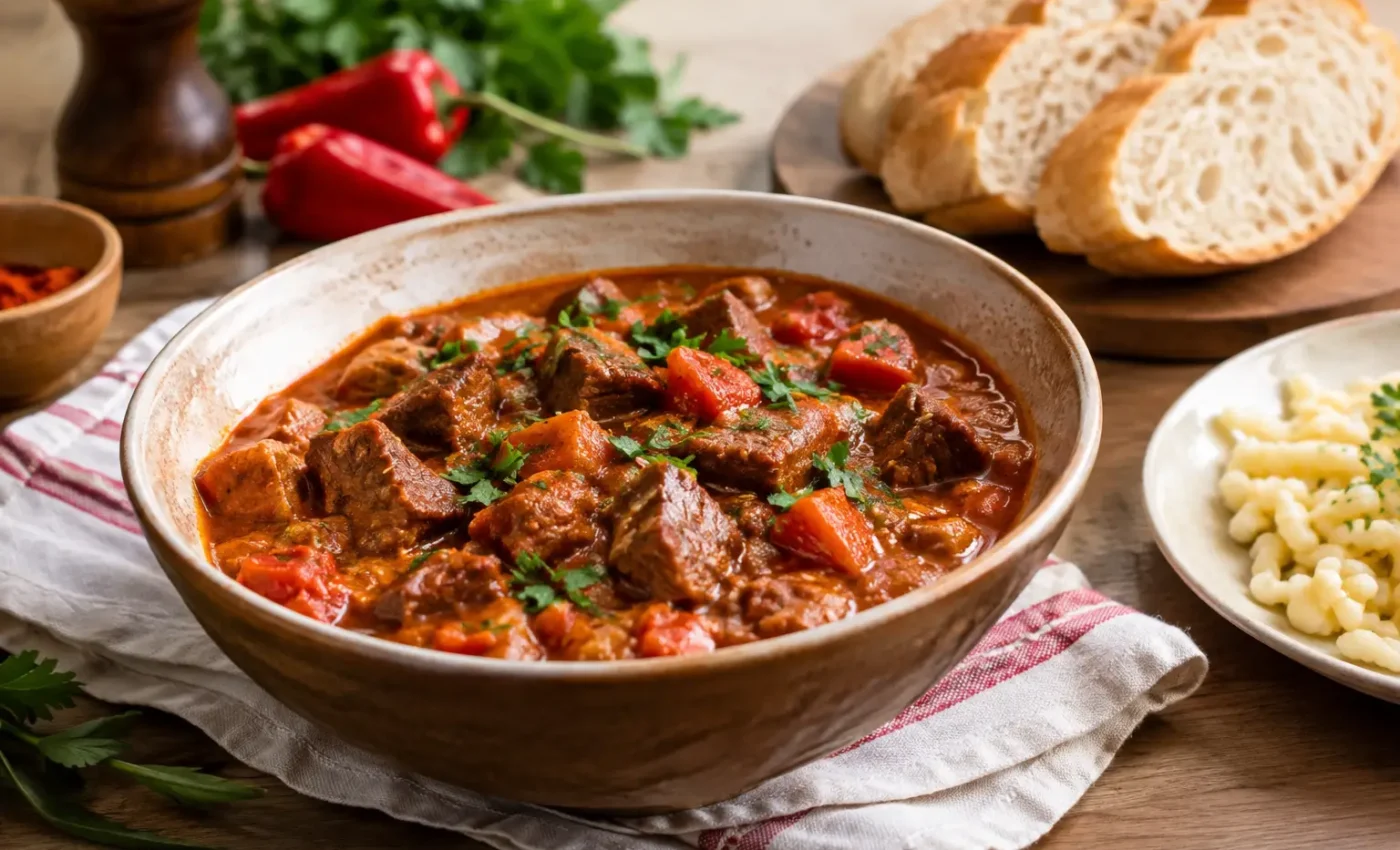
A pot of chicken paprikash on the stove can turn plain pantry staples into a dinner everyone looks forward to. The best Hungarian comfort foods are built for that kind of meal: warming soups, tender meat, soft noodles, potatoes, cabbage, and a generous use of sweet paprika. They taste deeply satisfying without requiring fussy techniques or hard-to-find ingredients.
Hungarian food can be rich, but it is also practical. Many favorites stretch affordable ingredients, make great leftovers, and work well for relaxed family dinners. Start with one dish, then add a simple green salad, pickles, or crusty bread to balance the table.
Best Hungarian Comfort Foods to Make at Home
1. Gulyás (Hungarian Goulash)
Gulyás is often called goulash in the United States, but traditional Hungarian gulyás is closer to a hearty soup than a thick stew. Beef simmers with onions, paprika, potatoes, carrots, and sometimes small pinched noodles called csipetke. The broth is savory, gently smoky from the paprika, and filling enough for dinner.
For a busy weeknight, use stew beef cut into smaller pieces so it cooks faster. A longer, slower simmer gives the best tenderness, though, making this a smart make-ahead meal for a weekend or a night when you want leftovers ready for tomorrow.
2. Chicken Paprikash (Paprikás Csirke)
Chicken paprikash is one of the easiest Hungarian dishes to bring into an everyday dinner routine. Chicken is braised in a sauce of onions, sweet paprika, broth, and tomatoes or peppers, then finished with sour cream for a silky texture. The flavor is warm and savory rather than fiery.
Chicken thighs are especially dependable here because they stay tender during simmering. Serve the sauce over egg noodles, rice, mashed potatoes, or homemade dumplings. If your household prefers a lighter meal, use less sour cream and add a crisp cucumber salad alongside it.
3. Pörkölt
Pörkölt is a thick, paprika-seasoned meat stew, usually made with beef, pork, or chicken. Unlike gulyás, it has much less liquid and is meant to be spooned over noodles, potatoes, or bread. The key is cooking plenty of onions until soft and sweet before adding the paprika and meat.
This is a good choice when you want a hearty dinner with a short ingredient list. Beef needs more time to become tender, while pork shoulder or chicken can make pörkölt more manageable for a regular weeknight. Keep the heat low once the paprika goes in, since burnt paprika can taste bitter.
4. Nokedli Dumplings
Nokedli are small, soft dumplings that make a simple meal feel special. The dough is made from flour, eggs, water, and salt, then dropped into boiling water in tiny pieces. They are similar to spaetzle, with a pleasantly chewy, tender texture.
Nokedli are the classic partner for chicken paprikash, where they soak up every bit of creamy sauce. A colander with large holes can work if you do not own a dumpling maker. Cooked dumplings are best fresh, but leftovers can be pan-fried in butter for a quick side dish the next day.
5. Rakott Krumpli (Layered Potatoes)
Rakott krumpli is the kind of baked casserole that makes sense for busy households: layers of sliced potatoes, hard-boiled eggs, sausage, and sour cream baked until hot and golden. Every family makes it a little differently, which is part of its appeal.
Use a smoked sausage you enjoy, such as kielbasa, and season lightly because the sausage brings plenty of salt. This dish is rich, so a sharp side of pickles, sauerkraut, or dressed greens helps. It also reheats well, making it a reliable option for meal planning.
6. Töltött Káposzta (Stuffed Cabbage)
Stuffed cabbage wraps seasoned ground meat and rice in cabbage leaves, then cooks the rolls slowly in a tangy cabbage and tomato sauce. Some versions use sauerkraut in the cooking pot, giving the dish a sour, savory edge that cuts through the richness.
It takes more assembly than a one-pot soup, so it is best saved for a relaxed afternoon or prepared in stages. You can boil and separate the cabbage leaves ahead of time, then assemble the rolls when you are ready. The result is especially good after a night in the refrigerator, when the flavors have had time to settle together.
7. Lecsó (Pepper and Tomato Stew)
Lecsó is a bright, homey stew of bell peppers, tomatoes, onions, and paprika. It is lighter than many Hungarian comfort foods but still feels cozy, especially when served with eggs, sausage, rice, or bread. Think of it as a flexible skillet dinner that puts peak-season vegetables to work.
Choose red, yellow, or orange bell peppers for sweetness and color. Add sliced sausage for a more substantial main dish, or crack eggs into the simmering vegetables for an easy meatless-leaning dinner. It depends on what is in your fridge, which is exactly why lecsó earns a place in a practical meal rotation.
8. Lángos
Lángos is fried dough, usually served warm with garlic, sour cream, and shredded cheese. It is a popular street food, and it delivers immediate comfort: crisp edges, a soft center, and plenty of savory topping.
Because frying takes a little attention, lángos is more of a fun weekend lunch or casual dinner than an everyday solution. Keep toppings simple and serve it with soup or salad so the meal does not feel too heavy. If you are feeding a crowd, set out toppings and let everyone build their own.
9. Főzelék (Vegetable Stew)
Főzelék proves that comfort food does not always need meat. This thick vegetable dish can be made with peas, green beans, spinach, squash, lentils, or potatoes. The vegetables are simmered until tender, then the cooking liquid is lightly thickened to create a spoonable stew.
A fried egg, meatball, or sausage often goes on top, turning it into an easy complete meal. For US home cooks, frozen vegetables make főzelék especially convenient. It is a good answer for nights when you want something warm and satisfying but lighter than a heavy braise.
10. Palacsinta (Hungarian Pancakes)
Hungarian palacsinta are thin, tender pancakes rolled around fillings such as apricot jam, sweetened cottage cheese, cocoa, or ground walnuts. They can be dessert, a special breakfast, or the sweet finish after a simple soup dinner.
The batter is less thick than an American pancake batter, so the pancakes cook quickly in a lightly buttered skillet. Do not worry if the first one is imperfect. Once the pan is properly heated, the rest usually come together easily.
What Gives Hungarian Comfort Food Its Signature Flavor?
Sweet Hungarian paprika is the ingredient most people notice first. It adds red color and an earthy, peppery warmth, not necessarily intense heat. Paprika tastes best when it is fresh, so replace an old tin if its aroma is faint.
Onions are just as important. Many Hungarian dishes begin with onions cooked slowly in fat until soft, creating a sweet foundation for paprika, broth, meat, and vegetables. Sour cream, dill, caraway, garlic, and pickled vegetables also appear often, adding creaminess, freshness, or tang where needed.
Make Your First Hungarian Dinner Easy
If you are new to these flavors, start with chicken paprikash or lecsó. Both use familiar ingredients, do not require special equipment, and offer plenty of room to adjust the meal to your family. Serve chicken paprikash over store-bought egg noodles, or make lecsó with sausage and bread for a fast, low-pressure dinner.
For a weekend project, choose gulyás, stuffed cabbage, or layered potatoes. These dishes reward a little extra time and usually taste even better reheated. Pick one recipe that fits tonight’s schedule, keep the sides simple, and let a warm paprika-scented dinner do the comforting work.