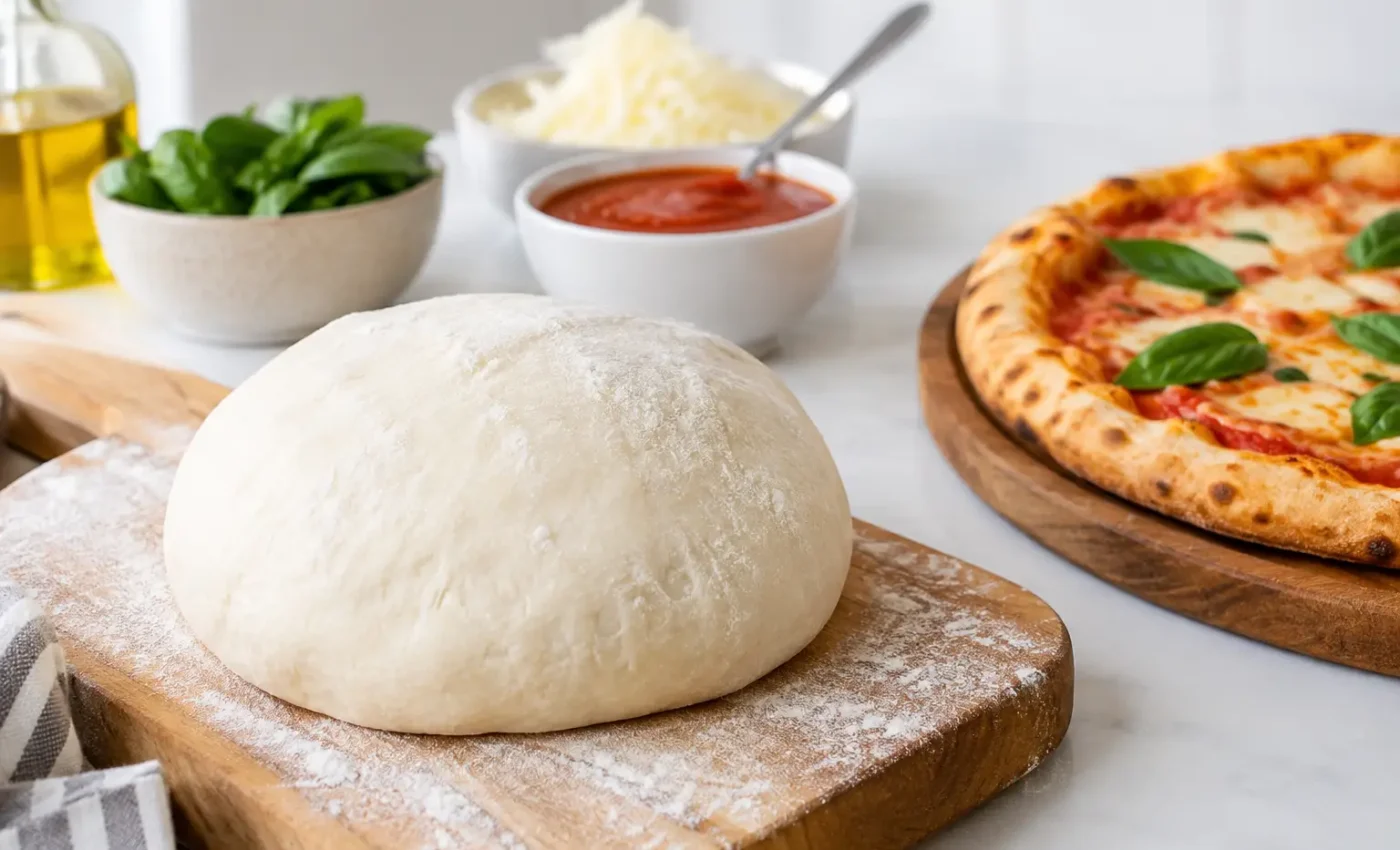
A good homemade pizza does not need a specialty flour, a pizza oven, or an all-day project. The right pizza dough comes down to a few familiar ingredients, enough time for the yeast to work, and a simple method you can repeat when dinner needs to feel homemade without becoming complicated.
For a typical family pizza night, plan on about 15 minutes of hands-on work. The dough can rise while you help with homework, finish the workday, or pull together toppings. Better still, you can make it ahead and keep it in the refrigerator until you are ready to bake.
What Makes Pizza Dough Reliable
Pizza dough is a basic yeast dough: flour, water, yeast, salt, and a little oil. Each ingredient has a job. Flour provides structure, water turns the flour into a workable dough, yeast creates air pockets, salt brings out flavor, and oil makes the dough easier to handle while adding tenderness.
For two medium pizzas, start with 3 1/2 cups all-purpose flour, 1 packet or 2 1/4 teaspoons active dry yeast, 1 1/2 teaspoons salt, 1 teaspoon sugar, 1 1/4 cups warm water, and 2 tablespoons olive oil. This makes enough dough for two 12-inch pizzas, or one larger sheet-pan pizza with a thicker, softer crust.
All-purpose flour is the practical choice for most home kitchens. Bread flour creates a slightly chewier crust because it contains more protein, but it is not required. If all-purpose flour is what you have, you can still make a crust with crisp edges and a satisfying bite.
The water should feel warm, not hot. Aim for about 105 to 110 degrees F if you have a thermometer. Water that is too hot can damage the yeast, while cool water simply slows the rise. On a busy evening, warm water helps keep the schedule moving.
An Easy Pizza Dough Method
Stir the warm water, sugar, and yeast together in a large bowl. Let the mixture sit for 5 to 10 minutes, until it looks foamy on top. That foam is a reassuring sign that the yeast is active. If nothing happens, the yeast may be old or the water temperature may have been off, so it is worth starting again before adding the flour.
Add the olive oil, salt, and about 3 cups of the flour. Stir until a shaggy dough forms, then turn it onto a lightly floured counter. Knead for 5 to 7 minutes, adding the remaining flour a little at a time only if the dough is very sticky.
The goal is soft and smooth, not stiff. A dough that sticks slightly to your hand is usually better than one packed with extra flour. Too much flour is one of the most common reasons homemade crust turns dense and dry.
Place the dough in a lightly oiled bowl, cover it, and leave it in a warm spot for 45 to 60 minutes. It should roughly double in size. If your kitchen is cool, it may need longer, and that is completely normal. Yeast follows temperature more than the clock.
Once risen, gently press the dough down and divide it into two equal pieces. Shape each piece into a smooth ball and let them rest for 10 minutes. This small pause relaxes the dough, making it much easier to stretch without springing back.
Stretch It Without the Fuss
Use your hands to press one dough ball into a round, starting in the center and leaving a slightly thicker border around the edge. Pick it up and gently stretch it from the outside, rotating as you go. If it resists, set it down for five minutes, then try again. Forcing the dough can make it tear.
A rolling pin works when time is tight, especially for a sheet-pan pizza. The trade-off is that it presses out some of the air bubbles, so the crust may be flatter. It will still taste good, and a quick homemade pizza is often better than waiting for a perfect one.
Transfer the shaped dough to a lightly oiled pizza pan, baking sheet, or piece of parchment paper. Parchment makes moving the pizza much less stressful, particularly if you are using an upside-down sheet pan as a baking surface.
The Best Bake for Homemade Pizza Dough
Heat the oven as hot as it safely goes, usually 475 to 500 degrees F. Let it preheat for at least 20 minutes so the pan or pizza stone has time to get properly hot. A hot surface helps the bottom begin crisping before the toppings release too much moisture.
Keep the toppings modest. Spread a thin layer of sauce, add cheese, and use just enough vegetables or meat to cover the pizza without piling it high. Overloading is tempting, but it can leave the center soft and underbaked.
Bake for 10 to 14 minutes, depending on the thickness of the dough and the heat of your oven. The pizza is ready when the cheese is bubbling, the crust is deeply golden around the edges, and the bottom feels firm when lifted with a spatula. Let it rest for two minutes before slicing so the cheese has a chance to settle.
If you like a crispier crust, pre-bake the plain shaped dough for 4 minutes before adding toppings. This is especially useful for pizzas with vegetables that hold a lot of water, such as mushrooms, spinach, or fresh tomatoes.
Make Pizza Dough Fit Your Schedule
The same dough can work for a relaxed weekend dinner or a rushed Tuesday. For a same-night pizza, give it the standard 45- to 60-minute rise. For more flavor and more flexibility, make the dough a day ahead.
After kneading, place it in an oiled covered container and refrigerate it for up to 48 hours. The slower rise develops a deeper flavor and can make the dough easier to stretch. Take it out about 45 minutes before shaping so it can lose some of its chill. Cold dough tends to pull back and can feel stubborn.
You can also freeze pizza dough. After the first rise, divide it into portions, lightly coat each one with oil, and freeze in airtight bags. Thaw overnight in the refrigerator, then leave it at room temperature for 30 to 45 minutes before shaping. It is a useful backup for nights when the question of what to cook needs a fast answer.
Common Pizza Dough Problems, Solved
If the dough will not rise, check the yeast first. Expired yeast and overly hot water are the usual culprits. A cooler kitchen can also slow things down, so give the dough more time or set the covered bowl near, not on, a warm oven.
If the dough keeps shrinking while you stretch it, it needs a rest. Cover it and wait five to 10 minutes. The gluten will relax, and the dough will cooperate much more easily.
If the crust is pale underneath, the pan probably was not hot enough or the pizza was placed too high in the oven. Bake on a lower rack and allow the oven more preheating time next time. If the crust is tough, use less flour while kneading and avoid overworking the dough.
Once you have made this pizza dough a couple of times, it becomes one of those dependable kitchen basics that takes pressure off dinner. Keep the toppings simple, use what is already in the fridge, and let a warm, crisp-edged pizza make an ordinary night feel a little more settled.