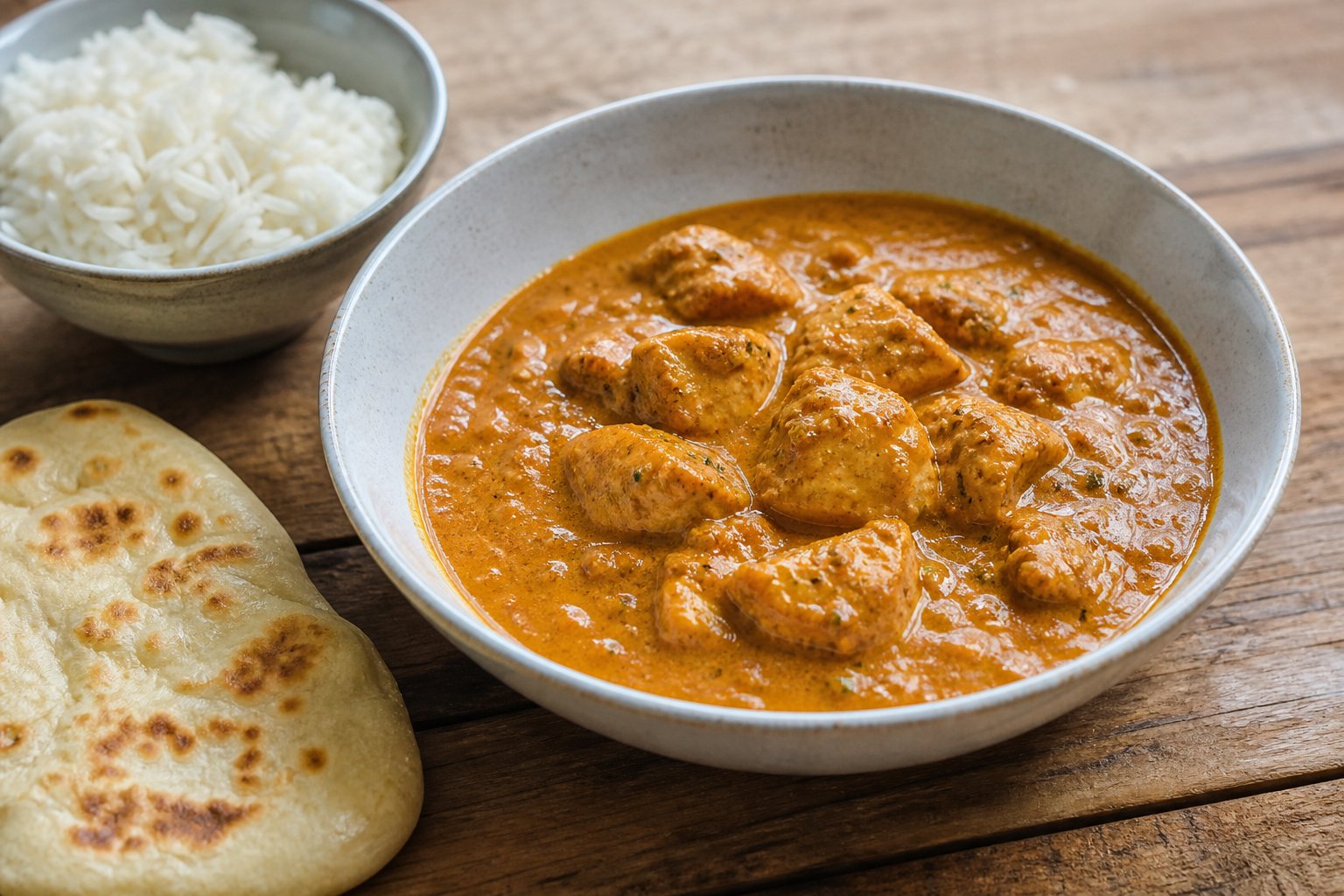
How the quick curry develops flavor
This gentle tomato and coconut curry is designed for a weeknight rather than a long spice-list project. Chicken thigh stays tender during simmering, and blooming the curry powder with onion, garlic and ginger gives the sauce much more character.
Preparing the aromatics first
Cut the chicken into pieces of around 3 cm so they cook evenly. Shake the coconut milk can before opening. Different curry powders vary greatly, so use a mild blend first and add cayenne separately if you want more heat.
Adjusting heat and richness
Add a diced bell pepper with the chicken or stir in spinach at the end. Chickpeas can replace half or all of the chicken; simmer them for only 12–15 minutes. A spoonful of plain yogurt gives a tangier finish.
Chicken thighs, spices and coconut milk
Boneless thigh remains tender during the uncovered simmer and is more forgiving than breast. Curry powder blends vary, so smell and taste yours before deciding whether to add more. Full-fat coconut milk gives the smoothest sauce; shake the can before opening so the cream and liquid are evenly mixed.
Rice and toppings for serving
Serve with basmati rice, cucumber, lime and coriander. Warm flatbread is useful when you want to stretch the meal to more people.
Getting full spice flavor without bitterness
Adding curry powder directly to cold liquid leaves the spices flat. Stir it through the softened onion and oil for one minute, but keep it moving so it does not scorch. After adding coconut milk, use a gentle uncovered simmer; a fierce boil can toughen the chicken and reduce the sauce unevenly.
Why the curry is good the next day
Cool quickly and refrigerate for up to 3 days, or freeze for 2 months. Reheat until piping hot throughout, adding a splash of water if the sauce has thickened.