How the soup becomes naturally creamy
A small potato gives this pumpkin soup body without overpowering its mellow sweetness. Cumin adds warmth in the background, and the cream is stirred in at the end so the flavor stays clean and the texture silky.
Avoiding thin or gluey pumpkin soup
Do not add extra stock before the vegetables are tender and blended. If using a countertop blender, work in batches and vent it safely because hot liquid expands. Blend only until smooth; prolonged high-speed blending of the potato can make the texture sticky. Warm the cream gently rather than boiling it.
Cutting pumpkin for even cooking
Choose a firm, sweet pumpkin or butternut squash and cut it into even cubes. A stable board and a sharp, heavy knife make peeling much safer. Hot soup expands in a blender, so work in batches and vent the lid if you do not have a stick blender.
Pumpkin, potato and stock proportions
Use a dense, sweet eating pumpkin rather than a watery carving pumpkin. The small potato supplies starch and body without making the soup taste of potato. Begin with the stated stock amount; different pumpkins release different amounts of water, and it is much easier to thin a finished soup than rescue a weak one.
Spices and toppings to try
Add fresh ginger with the onion, or use smoked paprika instead of cumin. Coconut milk can replace the cream. For a deeper flavor, roast the pumpkin cubes at 210°C for 25 minutes before adding them to the stock.
Simple ways to make a meal
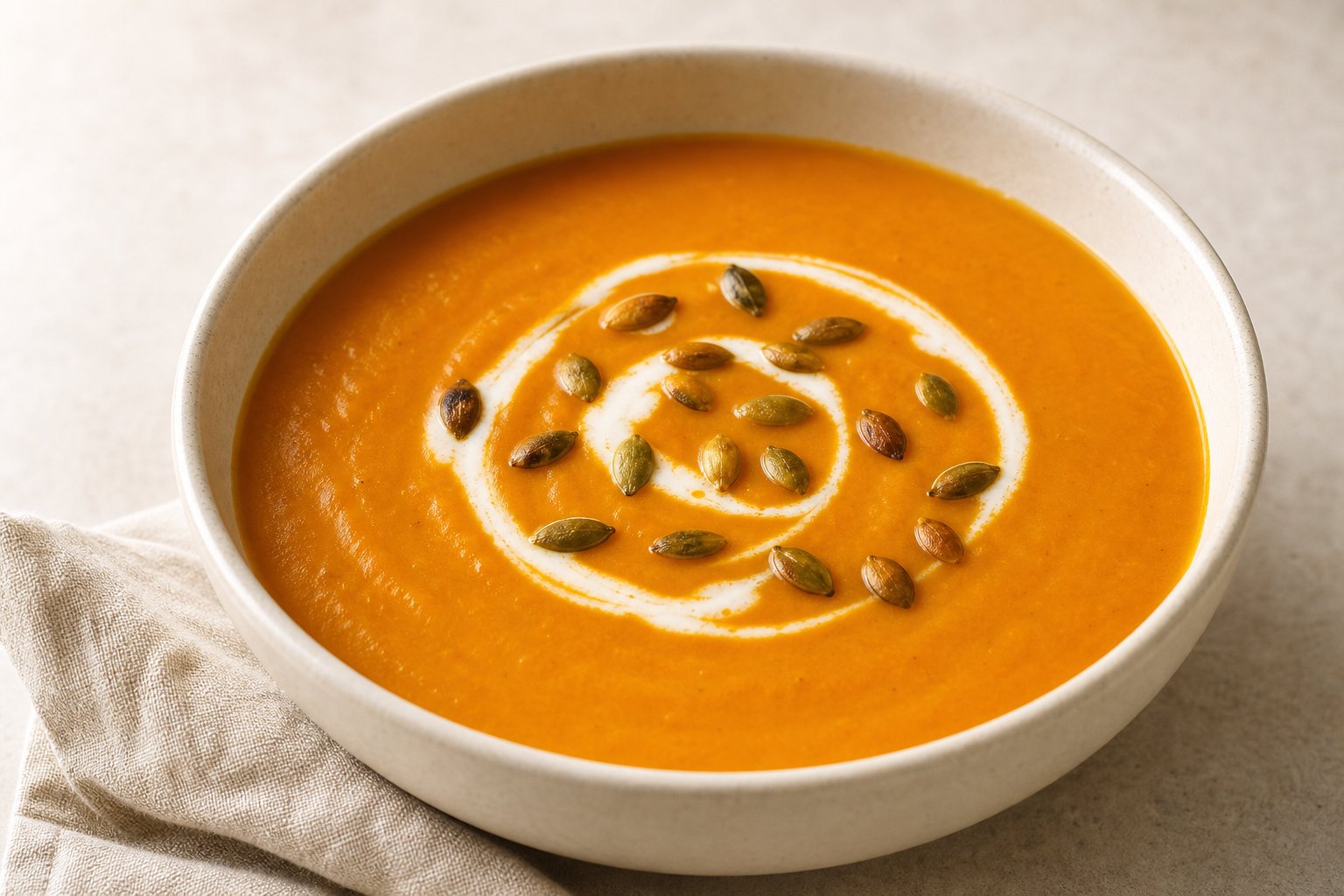
Top with toasted pumpkin seeds, black pepper and a small swirl of cream. Serve with cheese toast, seeded bread or a chickpea salad.
Freezing the soup successfully
Refrigerate for up to 4 days or freeze before adding the cream for up to 3 months. Reheat gently, then add cream after thawing for the smoothest texture.
Can I make the soup without cream?
Yes. Omit the cream and adjust the consistency with a little extra stock. Coconut milk is another option, but it gives the soup a distinct flavor rather than acting as a neutral substitute.