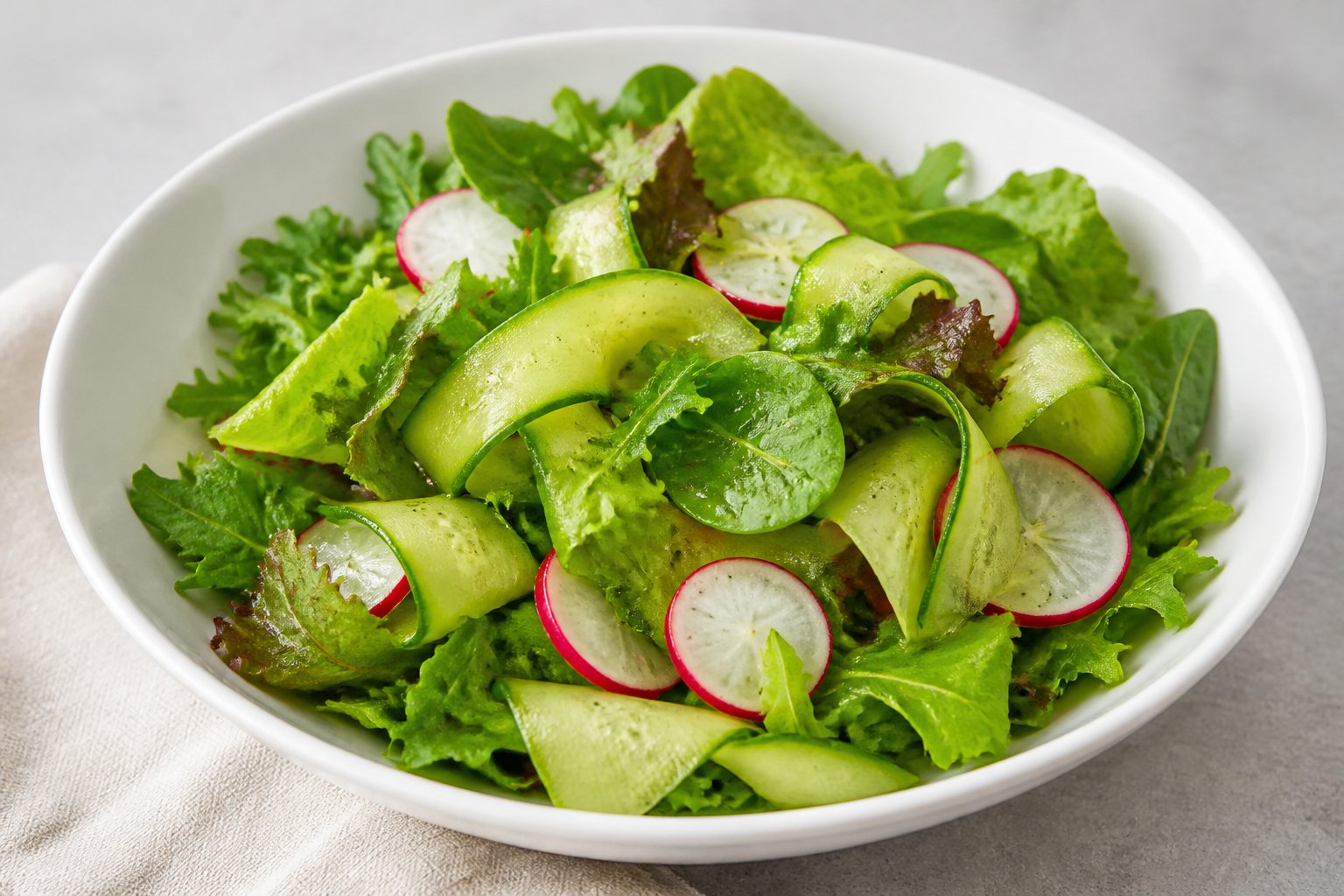
Why a simple salad still needs contrast
A simple green salad becomes far more dependable when the leaves are properly dry and the dressing is balanced before it reaches the bowl. This one is crisp, lightly sharp and neutral enough to sit beside pasta, roast chicken or a tray bake.
Leaves, crisp vegetables and dressing
A mixture of mild and slightly peppery leaves is more interesting than one variety, but any fresh leaves work. Dijon mustard and honey help the lemon juice and olive oil combine into a light emulsion. Taste the dressing on a leaf—not from a spoon—because the salad dilutes its sharpness.
Washing and drying the leaves
Soak tired leaves in very cold water for 10 minutes, then spin or pat them completely dry. Slice the radishes finely so their peppery flavor is distributed rather than dominating individual bites.
The causes of limp, overdressed salad
Dressing slides off wet leaves and pools at the bottom, so dry the greens thoroughly. Add dressing only when everyone is ready to eat and begin with two thirds of it. Toss by lifting rather than pressing; delicate leaves bruise easily, and more dressing can always be added but cannot be removed.
Easy additions for different meals
Add avocado, toasted seeds, crumbled feta or thinly sliced apple. White wine vinegar can replace lemon juice, and maple syrup can replace honey. Soft herbs such as parsley, dill or chives are always welcome.
Serving at the last moment
Dress at the last possible moment and use a large bowl so the leaves can be lifted rather than crushed. This quantity serves four as a side or two as a base for chicken, salmon or chickpeas.
Keeping components fresh
Undressed, washed leaves and cut vegetables keep for 1–2 days in a covered container lined with paper towel. Store the dressing separately for up to 5 days and shake before using.