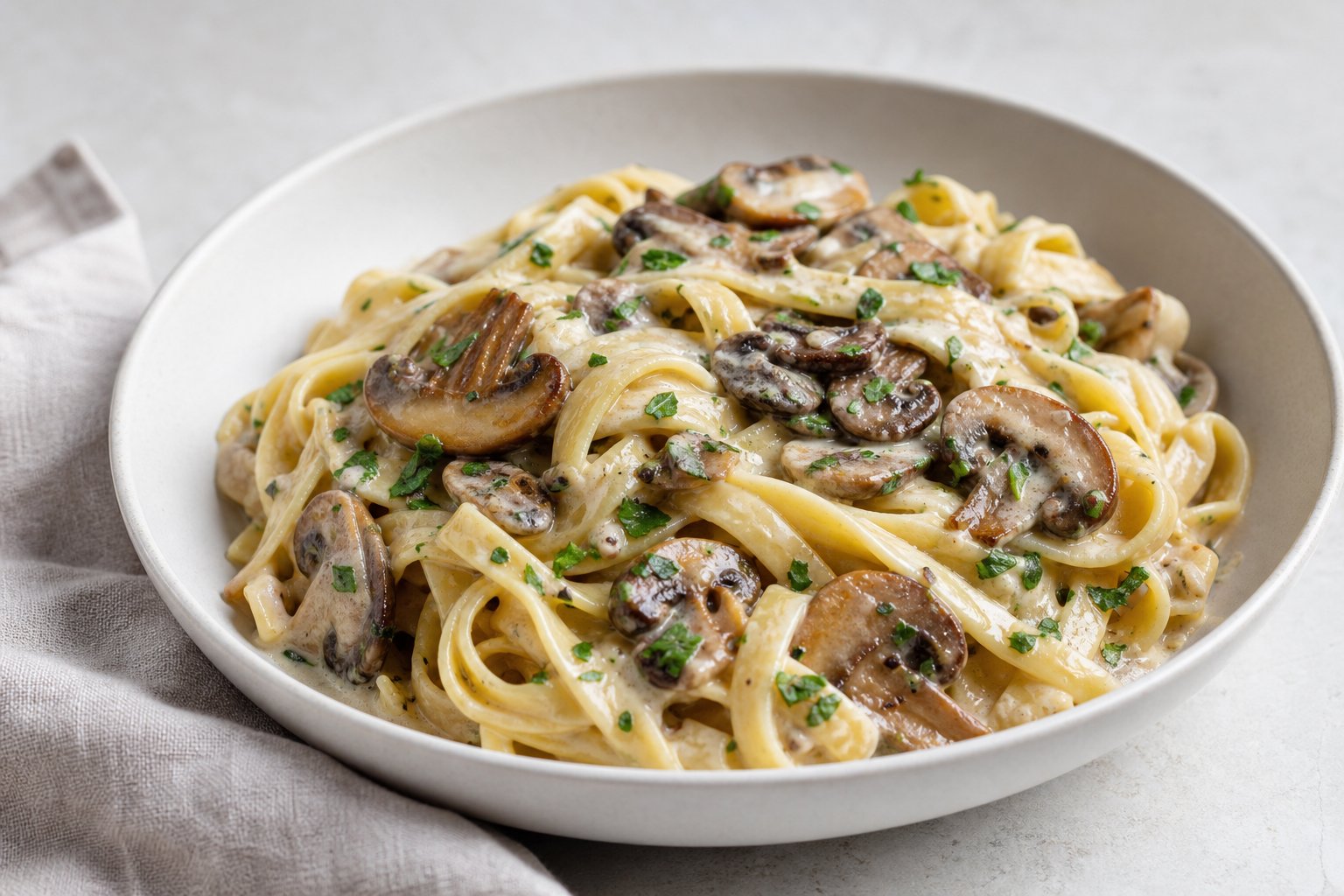
How mushrooms build a savory sauce
The flavor of this pasta comes from properly browned mushrooms rather than a long list of ingredients. Cooking them in a wide pan drives off their moisture and creates savory edges before garlic, cream and parmesan turn the pan juices into sauce.
Browning mushrooms before adding cream
Wipe mushrooms clean rather than soaking them, and slice them evenly. Do not salt them during the first few minutes of cooking. Use the widest pan available and cook in two batches if necessary.
Ways to vary the mushroom pasta
Mix chestnut and button mushrooms, or add a few rehydrated porcini for depth. Spinach can be folded in at the end. For a lighter finish, replace half the cream with stock and add lemon zest.
Mushrooms, Parmesan and garlic
A mixture of brown and white mushrooms gives deeper flavor while remaining affordable. Wipe away visible soil and avoid soaking them, since mushrooms already release plenty of water. Finely grated Parmesan thickens the sauce, and fresh garlic should be added only after browning so it does not burn.
Serving tagliatelle immediately
Serve immediately with parsley, extra black pepper and a bitter-leaf salad. Garlic bread is generous but not essential—the sauce is rich enough on its own.
Why mushrooms sometimes turn pale and rubbery
Crowding is the usual cause: the mushroom liquid cannot evaporate and the slices simmer in their own moisture. Use the widest pan available or brown them in batches. Wait until their liquid has disappeared before adding garlic and cream, then loosen the finished sauce with pasta water instead of more cream.
Reheating without splitting the sauce
Refrigerate for up to 2 days and reheat gently with a splash of milk or water. The finished dish does not freeze particularly well, but the browned mushrooms can be frozen separately.