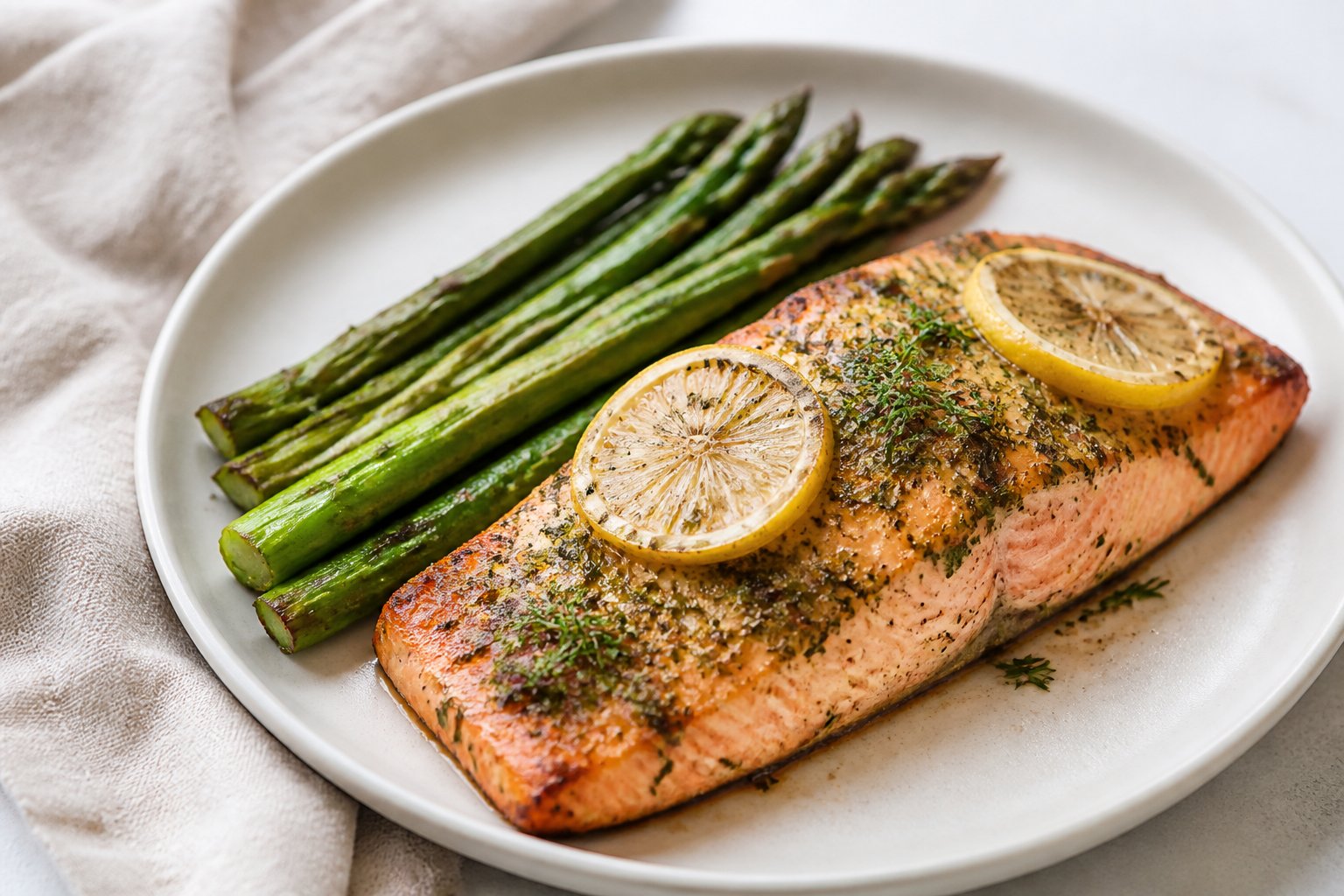
Why gentle oven heat suits salmon
Baking salmon and asparagus on the same tray keeps this dinner straightforward and lets the herb-lemon topping flavor both. The key is judging the fish by thickness rather than relying only on the clock.
Preparing fillets and asparagus
Choose fillets of similar size so they finish together and remove pin bones with clean tweezers. Trim the woody asparagus ends. If the spears are very thick, give them a five-minute head start.
Selecting evenly sized salmon fillets
Fillets of similar thickness finish at the same time; if one is much thinner, remove it first. Run clean fingertips across the surface and pull remaining pin bones with tweezers. Lemon zest brings more fragrance than extra juice, while olive oil carries the herbs and protects the fish from drying.
Herb and vegetable alternatives
Use green beans, broccolini or thin zucchini instead of asparagus. Fresh dill can replace dried, and a teaspoon of Dijon mustard can be mixed into the herb oil. Trout fillets work with a slightly shorter baking time.
How to avoid dry salmon and scorched herbs
Cooking time depends on thickness rather than weight alone, so begin checking at the early end of the range. Finely mince the garlic and keep most of the herb mixture on the fish, where moisture protects it. Rest the fillets briefly; carrying heat finishes the center without further oven exposure.
Fresh sides for the baked fish
Serve with baby potatoes, rice or buttered new potatoes. A spoonful of yogurt mixed with lemon and dill makes an easy cold sauce.
Using cooked salmon safely
Refrigerate cooked salmon for up to 2 days. Enjoy it cold in a salad or reheat covered at a low temperature to avoid drying it out. Do not leave cooked fish at room temperature for more than 2 hours.
How can I tell when the salmon is ready?
Check the thickest part. It should reach the temperature stated in the method and separate into moist flakes with gentle pressure; remove thinner fillets earlier if necessary.