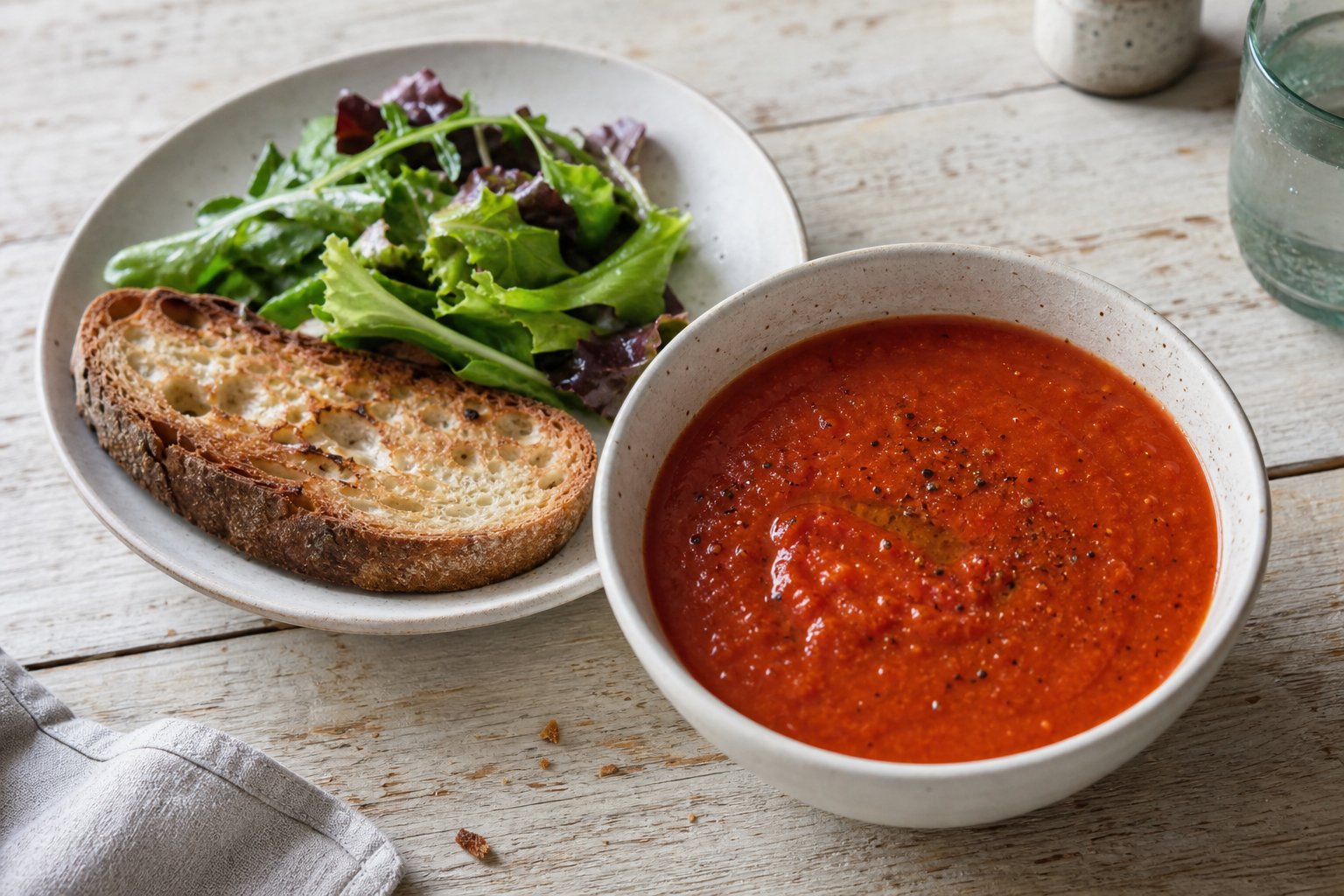
What roasting adds to tomato soup
Roasting fresh tomatoes concentrates their sweetness and gives this soup a deeper flavor than a purely simmered version. Onion and garlic soften on the same tray, so most of the work happens in the oven before a quick blend with stock.
Tomato ripeness and stock strength
Ripe, heavy tomatoes with a clear tomato aroma produce the fullest soup. If fresh tomatoes are pale and hard, good canned tomatoes may be a better choice. Use a moderately flavored vegetable stock so it supports rather than masks the roasted fruit, and leave the garlic in its skin to prevent scorching.
Capturing every drop of tray juice
Use the ripest tomatoes available and place them cut-side up so their juices stay on the tray. Keep the garlic in its skin while roasting if the cloves are small; this protects them from burning.
Avoiding lost flavor and unnecessary sweetness
Use a rimmed tray and transfer all the caramelized juices to the saucepan; discarding them removes much of the roasted flavor. Do not add sugar automatically. Blend and season first, then use only enough sugar to round off genuine sharpness. A crowded tray will steam rather than brown the tomatoes.
Ways to adjust the finished soup
Roast a red pepper with the tomatoes, add chili flakes or replace basil with thyme. A spoonful of cream softens the acidity, while white beans blended into the soup add body without dairy.
Toppings and simple sides
Pair with grilled cheese, garlic toast or a simple sandwich. Finish each bowl with basil, olive oil or a few crisp croutons.
Freezing roasted tomato soup
Refrigerate for up to 4 days or freeze for 3 months. Reheat gently and adjust the consistency with stock or water after thawing.