Why slow simmering tenderizes the beef
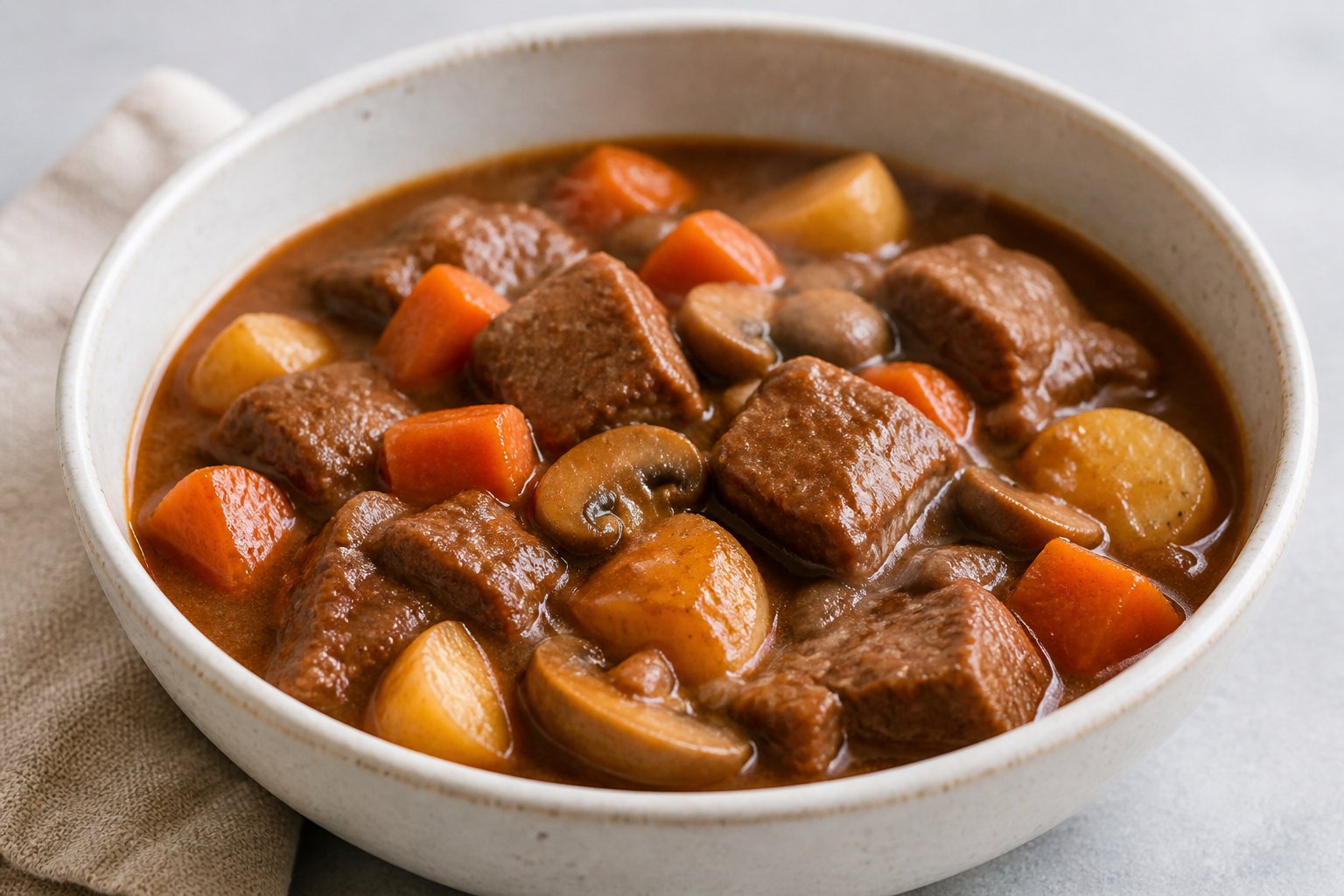
This is a straightforward stovetop casserole with tender beef, mushrooms and vegetables in a rich but uncomplicated gravy. Browning the meat and tomato paste builds the depth that a short ingredient list otherwise lacks.
Browning in batches for a deeper gravy
Use chuck or another cut sold for stewing, and cut away only large, hard pieces of fat. Dry the beef before coating it with flour. A heavy pan with a tight lid keeps the simmer steady and gentle.
Vegetable and herb variations
Add celery, parsnip or frozen peas near the end. Replace 150 ml stock with red wine, letting it bubble for 2 minutes before adding the remaining liquid. Pearl barley can replace the potatoes but may require extra stock.
Choosing stewing beef and thickening lightly
Look for chuck, blade or another stewing cut with fine seams of connective tissue; lean quick-cooking steak becomes dry during a long simmer. The light flour coating helps browning and gives the gravy body without making it pasty. Small waxy potatoes hold their shape better than floury varieties.
Serving a hearty casserole
Serve with green vegetables and crusty bread. Because potatoes are already in the pot, mashed potato is unnecessary, though it is welcome for a larger gathering.
Why casseroles stay tough or taste flat
Beef that is gray rather than brown has usually been crowded into the pan. Work in batches and allow the surface to sear before turning. Once the stock is added, keep the simmer very gentle; rapid boiling tightens the meat. If it remains firm at the stated time, it needs longer, not higher heat.
Cooling and reheating slowly
The flavor improves overnight. Refrigerate for up to 3 days or freeze for 3 months. Reheat slowly until piping hot, adding stock if the gravy has thickened too much.
Why is the beef still tough after an hour?
Stewing cuts vary. Continue cooking at a very gentle simmer in fifteen-minute intervals, adding a little hot water if needed, until a piece yields easily to a fork.