Why fresh tomatoes make a light sauce
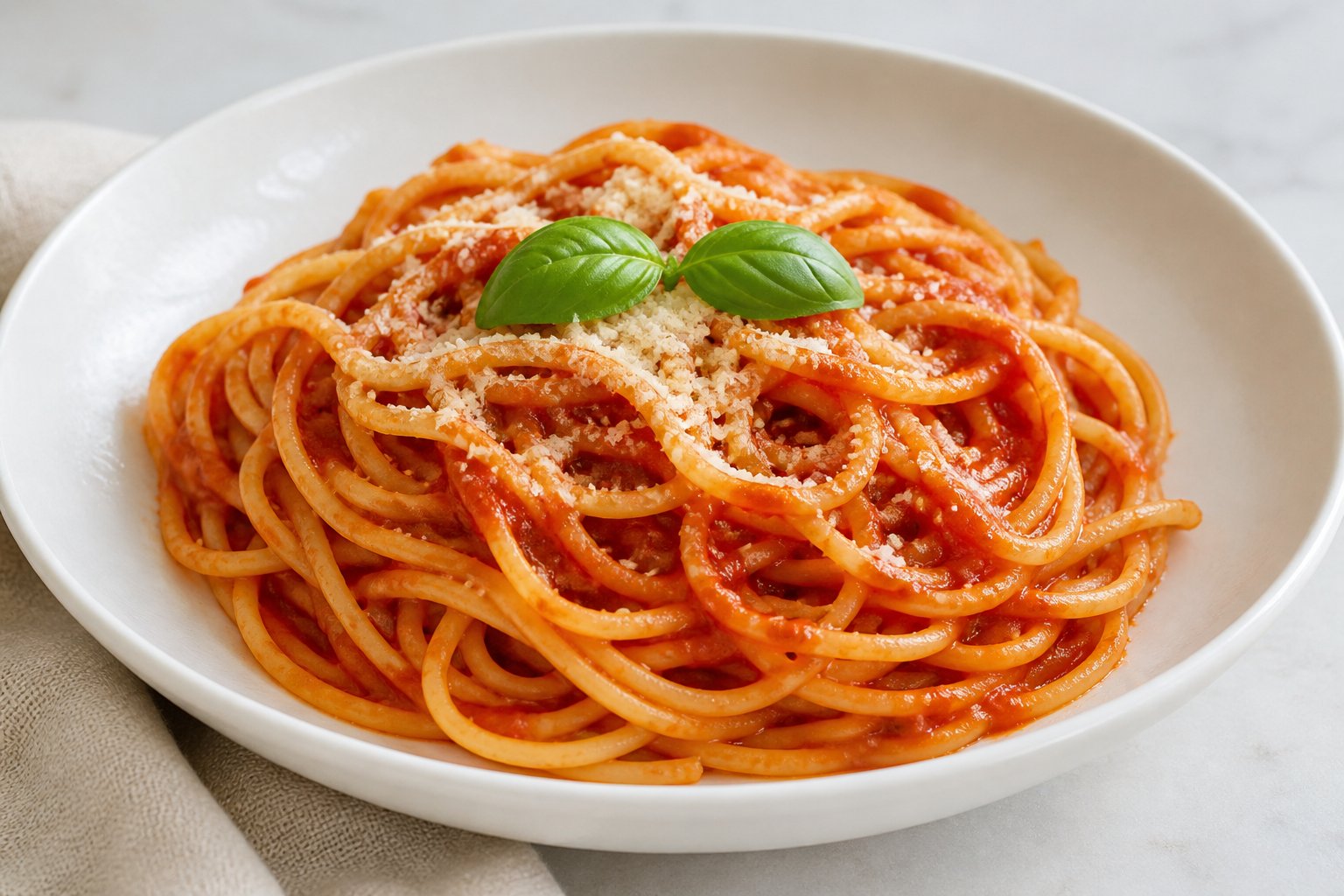
This is a fresh, chunky spaghetti rather than a long-cooked red sauce. Cherry tomatoes collapse in olive oil and mingle with sliced garlic, basil and a little chili, leaving some pieces intact and creating a light coating for every strand.
Cherry tomatoes, olive oil and sliced garlic
Choose ripe cherry tomatoes that feel heavy and smell sweet at the stem; underripe tomatoes will not collapse into a satisfying sauce. Thin garlic slices perfume the oil more gently than minced garlic. Use an olive oil you enjoy tasting, since it remains a noticeable part of the finished sauce.
Softening tomatoes while spaghetti cooks
Use ripe cherry tomatoes and halve them through the stem so they cook evenly. Slice the garlic rather than crushing it for a mellow flavor, and keep the oil below smoking point.
Small changes that preserve the style
Add olives or capers, or finish with a knob of butter. A handful of rocket can wilt into the pasta at the end. Pecorino can replace parmesan, and the chili can be omitted.
Finishing with basil and Parmesan
Serve in warm bowls with basil and cheese. Add a green salad or roasted vegetables rather than a second heavy side.
Keeping the fresh sauce sweet, not bitter
Start garlic in warm rather than fiercely hot oil and keep it pale. Give the tomatoes the full cooking time so some burst and others retain shape. Transfer the spaghetti before it is fully cooked and add reserved water gradually; this creates a light emulsion instead of an oily layer at the bottom.
Eating leftovers without drying them
This pasta is best fresh, when the tomatoes are bright and the garlic is fragrant. Refrigerate leftovers for up to 2 days and reheat with a splash of water; freezing is not recommended.