Why canned tomatoes suit a quick soup
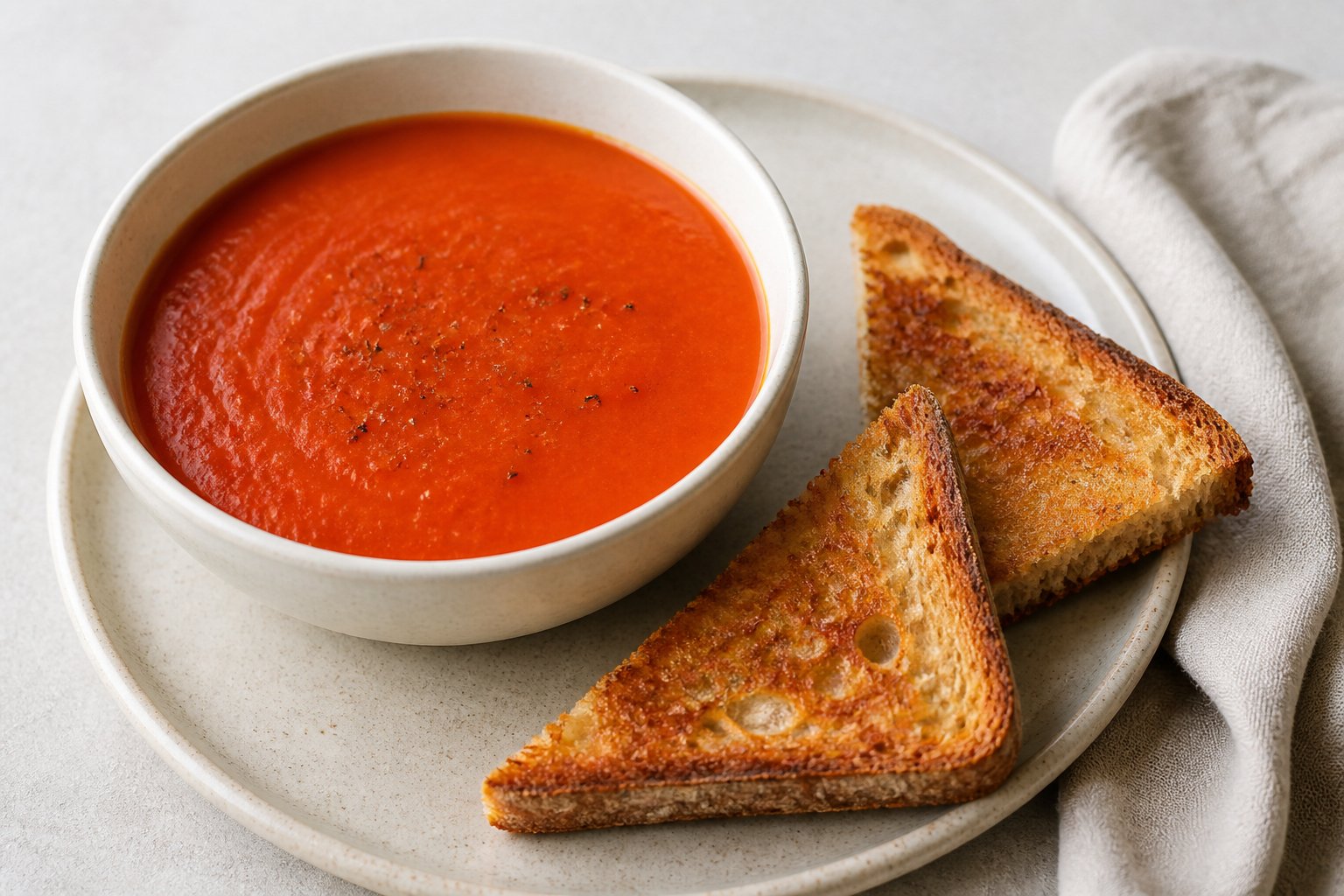
This smooth pantry tomato soup is simple enough for lunch but carefully balanced so it does not taste like warmed canned tomatoes. Slowly softened onion provides sweetness, stock adds depth and crisp sourdough makes the bowl feel complete.
Softening the onion before simmering
Use whole or chopped tomatoes that you already enjoy, and allow the onion to soften without browning. When blending hot liquid, use a stick blender or work in small batches with the blender lid vented.
Tomatoes, stock and sturdy sourdough
Use canned tomatoes with a rich red color and choose a stock that is not overly salty. Sourdough or another substantial bread stays crisp long enough to dip; thin sandwich bread softens almost immediately. Sugar is optional and should correct sharpness only after the soup has simmered and been blended.
Small additions for different moods
Add basil, smoked paprika or a little cream. Blend in white beans for extra body and protein. Turn the toast into cheese toast under the grill, or rub it with a cut garlic clove while hot.
Getting smooth soup without flat flavor
Onion needs the full gentle cooking time or its raw edge remains after blending. Do not use sugar before tasting, and never overfill a countertop blender with hot soup. Toast the bread at the end and serve it beside, not floating in, the bowl so it stays crisp.
Keeping the toast crisp
Serve in warm bowls with the toast on the side so it stays crisp. A swirl of yogurt or a few torn basil leaves make a useful finish.
Storing soup apart from bread
Refrigerate the soup for up to 4 days or freeze for 3 months. Store bread separately and toast fresh portions when reheating the soup.
Can I use a countertop blender instead of a stick blender?
Yes, but let the soup cool slightly, work in small batches and leave a safe vent for steam according to the blender manufacturer's instructions.