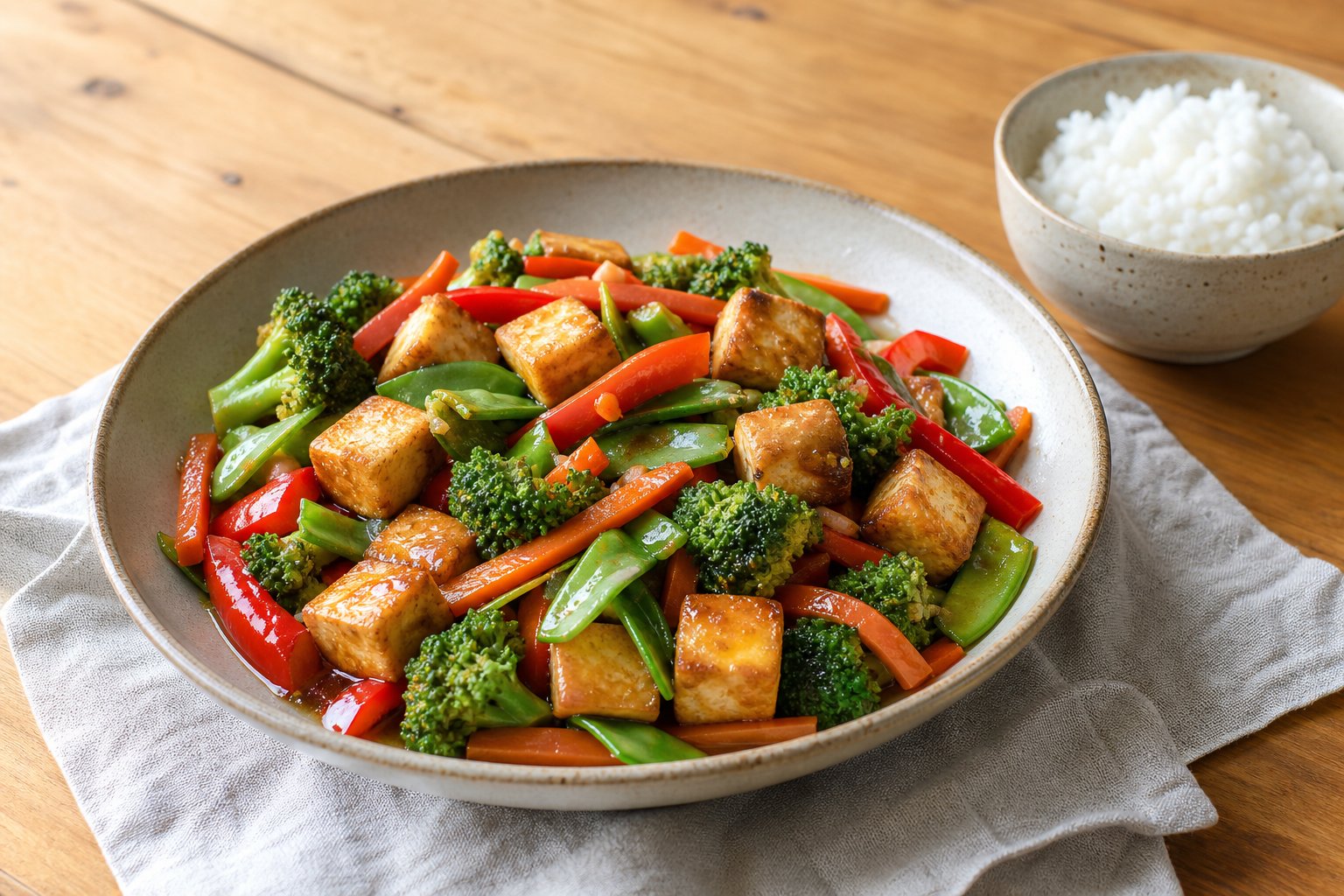
Why the vegetables cook in stages
A successful stir-fry depends on preparation and sequence: firm vegetables go in first, delicate ones later, and the sauce is added only when everything is nearly ready. Browning the tofu separately keeps its edges crisp.
How to avoid a wet, crowded stir-fry
Prepare every ingredient before heating the wok because cooking moves quickly. A small or lukewarm pan traps steam, so work over medium-high heat and cook in batches if necessary. Add the sauce only after excess water has evaporated; putting it in early causes the vegetables to simmer and softens the tofu crust.
Drying and browning the tofu
Press excess water from the tofu and cut all vegetables before heating the pan. Keep the pieces thin and even. Use the largest wok or frying pan you have, and cook in batches if necessary to avoid steaming.
Firm tofu and vegetables with bite
Firm or extra-firm tofu is essential because silken tofu will break during tossing. Pat it thoroughly dry so the surface browns. Cut carrots thinly and broccoli into small florets, while keeping pepper and snow peas larger; this compensates for their different cooking speeds without boiling anything first.
Ways to change the vegetables
Use mushrooms, cabbage, baby corn or green beans. Cashews add crunch. Tamari can replace soy sauce, and maple syrup makes the dish vegan in place of honey.
Serving the stir-fry immediately
Serve immediately over rice or noodles, with lime, spring onion or sesame seeds. Have the rice ready before you begin stir-frying.
Keeping leftovers from becoming soft
Refrigerate for up to 3 days, though the vegetables soften. Reheat quickly in a hot pan. Freeze only the cooked tofu and sauce; freshly cooked vegetables are much better.
Why did the tofu stick to the pan?
It may have been damp or turned too soon. Use a lightly oiled hot pan and leave each side undisturbed until a crust forms and the cubes release more easily.