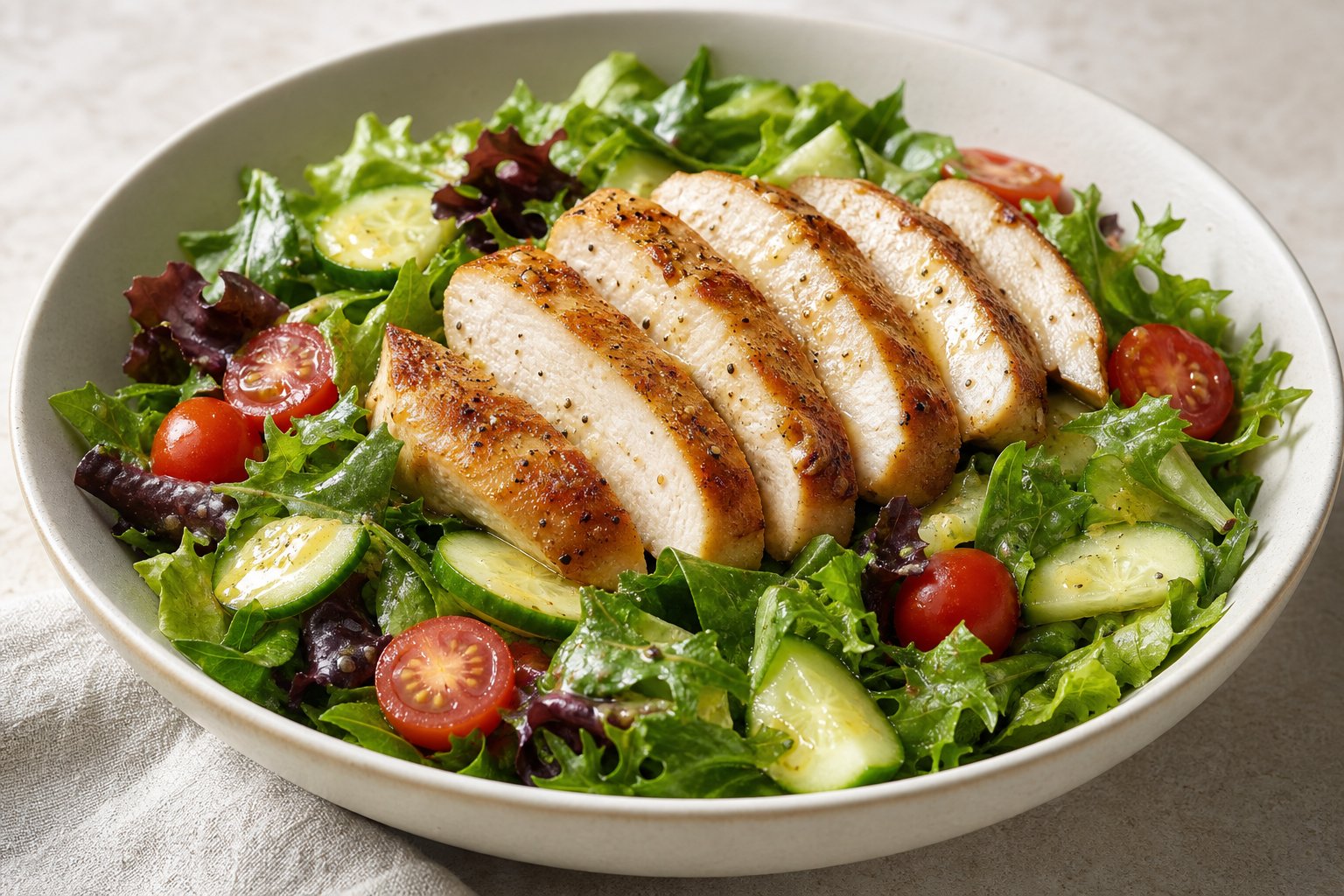
Why warm chicken and cool leaves work
Warm sliced chicken turns a simple bowl of crisp leaves into a satisfying lunch or light dinner. A mustard, lemon and honey dressing connects the savory chicken with the fresh cucumber and tomatoes without overwhelming them.
Cooking evenly thick fillets
Bring thick chicken breasts to an even thickness by slicing or gently flattening them. Dry salad leaves thoroughly and prepare them while the chicken cooks, but do not dress them until serving.
Ways to change the salad
Add avocado, boiled egg, feta or toasted nuts. Turkey breast works in place of chicken. For a more substantial meal, add cooked new potatoes or a scoop of quinoa.
Balancing the mustard-lemon dressing
Dijon mustard gives the dressing body, honey rounds the lemon and olive oil carries the flavor across the leaves. Taste it on cucumber or a leaf before adjusting. Dry salad leaves are essential, and evenly thick chicken fillets cook through without thin edges becoming tough.
Assembling just before eating
Divide between wide plates and place the chicken on top rather than mixing it vigorously through delicate leaves. Crusty bread is a good addition.
Avoiding dry chicken and wilted leaves
Do not slice the chicken straight from the pan; resting keeps more juice in the meat. Toss the leaves only after the chicken is cooked and rested, using just enough dressing to coat them. Arrange warm slices on top rather than mixing aggressively, which bruises and wilts the salad.
Keeping chicken and salad separate
Store chicken, dressing and salad separately for up to 2 days. Reheat chicken until hot or serve it cold; never leave cooked poultry at room temperature for more than 2 hours.