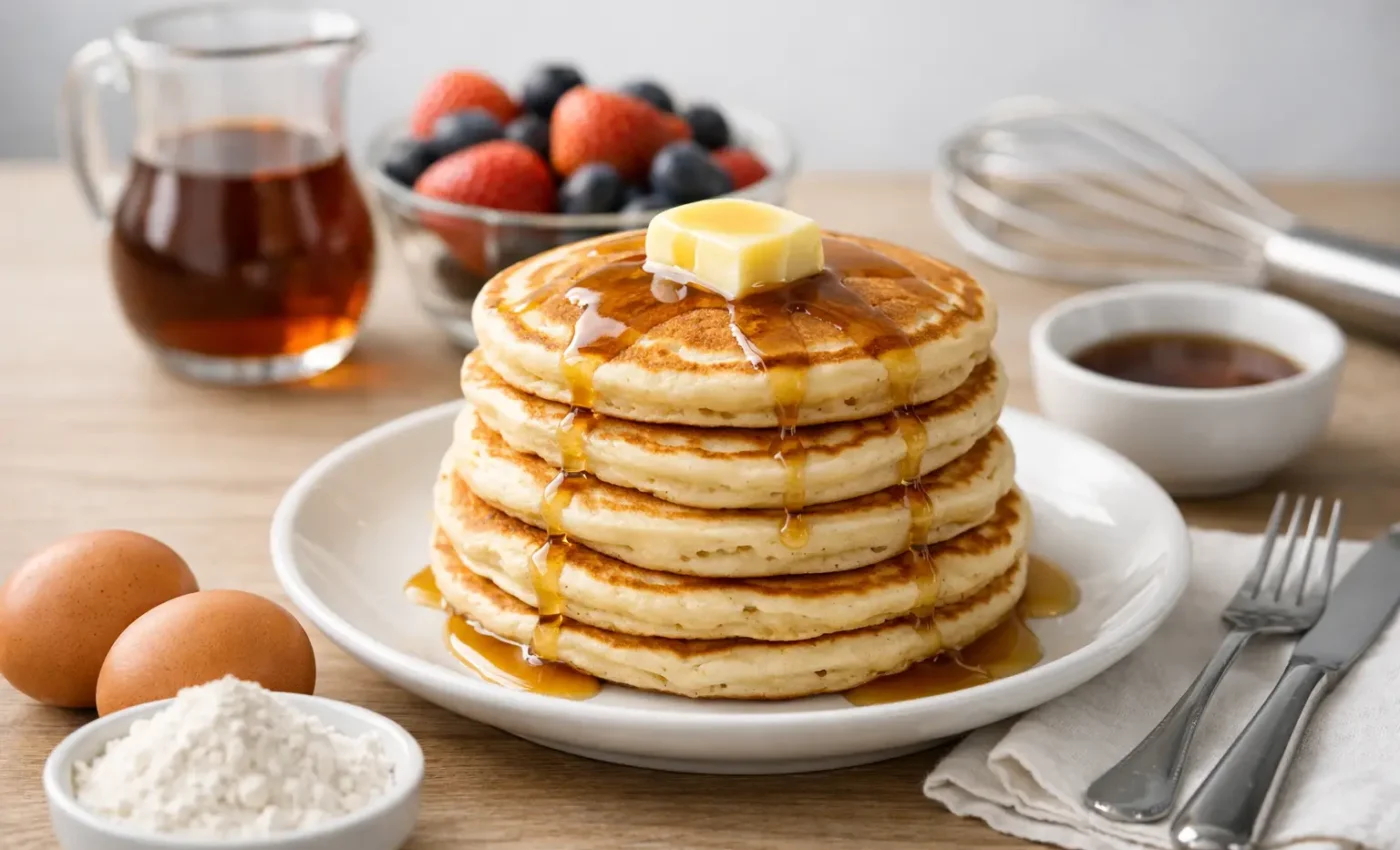
A box mix can be handy, but easy pancakes from scratch take only a few extra minutes and give you more control over the flavor and texture. With basic pantry ingredients, you can make a warm stack that is fluffy in the center, lightly crisp at the edges, and ready for syrup before the coffee gets cold.
This is the kind of breakfast recipe worth keeping close. It works for a busy school morning, a slow Saturday, or a simple breakfast-for-dinner night when everyone wants something familiar. The method is forgiving, the ingredients are affordable, and the batter comes together in one bowl.
Easy Pancakes From Scratch: The Reliable Recipe
Makes: 10 to 12 medium pancakes Prep time: 10 minutes Cook time: 15 minutes
Ingredients
- 1 1/2 cups all-purpose flour
- 2 tablespoons granulated sugar
- 2 teaspoons baking powder
- 1/2 teaspoon salt
- 1 1/4 cups milk
- 1 large egg
- 3 tablespoons melted butter, plus more for the skillet
- 1 teaspoon vanilla extract
The sugar gives the pancakes a gentle sweetness and helps them brown. If you prefer a less-sweet breakfast, reduce it to 1 tablespoon, especially if you are serving the pancakes with sweet toppings.
How to make them
In a large bowl, whisk together the flour, sugar, baking powder, and salt. Make a small well in the center, then add the milk, egg, melted butter, and vanilla.
Whisk just until the dry flour disappears. The batter should look a little lumpy, not completely smooth. A few small lumps are a good sign because they mean you have not worked the flour too much. Overmixing develops gluten, which can turn tender pancakes chewy.
Let the batter rest for five minutes while you heat a nonstick skillet or griddle over medium heat. This short pause gives the flour time to absorb the liquid and lets the baking powder begin doing its job. You do not need to wait longer than that for a reliable batch.
Lightly butter the hot pan. For each pancake, pour about 1/4 cup of batter onto the surface, leaving room for it to spread. Cook until bubbles rise and begin to pop across the top and the edges look set, usually two to three minutes. Flip once and cook the second side for another one to two minutes, until golden and cooked through.
Move finished pancakes to a plate and cover loosely with foil or a clean kitchen towel while you cook the rest. Add a small amount of butter between batches as needed. If the pan starts smoking or the pancakes are browning before the centers cook, lower the heat slightly.
The Small Details That Keep Pancakes Fluffy
The best easy pancakes from scratch are less about fancy ingredients and more about a few dependable choices. Start with fresh baking powder. It is the main lift in this recipe, so old baking powder can leave you with flat, heavy pancakes even when every other step is right. If yours has been open for a long time and you are unsure, replacing it is usually the simplest fix.
Medium heat matters, too. High heat gives pancakes dark outsides and undercooked middles. Low heat can make them pale and dry. Every stove runs a little differently, so use the first pancake as your test. If it cooks evenly and turns golden in about two minutes per side, your pan is ready.
Avoid pressing the pancakes down with your spatula after flipping. It is tempting, especially when cooking for a hungry family, but pressing pushes out air and moisture. Let the pancake cook undisturbed until the underside is set.
Milk also affects the final texture. Whole milk makes a slightly richer pancake, while 2% milk works very well and is what many home cooks already have. Non-dairy milk can work in a pinch, though unsweetened varieties are the easiest swap. The flavor may be a little different, but the technique stays the same.
Simple Mix-Ins Without Changing the Batter
Once you have the basic recipe down, it is easy to make breakfast feel less repetitive. Add mix-ins after you pour the batter into the skillet rather than stirring a large amount into the bowl. This keeps the batter even and lets everyone choose their own favorite.
Blueberries are a classic choice. Sprinkle a small handful over each pancake before flipping. For chocolate chip pancakes, use mini chips if you have them, since they melt more evenly and are less likely to scorch on the pan. Thinly sliced bananas, chopped strawberries, or a pinch of cinnamon are good options, too.
For a cozy fall-style batch, add 1/2 teaspoon cinnamon and a tiny pinch of nutmeg to the dry ingredients. For lemony pancakes, stir 1 teaspoon of finely grated lemon zest into the batter and serve with berries. Keep additions modest. Too much fruit or too many chips can weigh down the pancakes and make flipping harder.
Toppings That Make Breakfast Feel Complete
Warm maple syrup and a pat of butter are hard to beat, but a stack of pancakes can also become a more filling meal with what is already in your refrigerator. Try Greek yogurt and berries for a creamy, fresh topping, or add sliced banana and peanut butter for extra staying power.
If you are feeding a group, set out a few choices instead of making separate batches. Fresh fruit, yogurt, chopped nuts, syrup, and a little whipped cream give everyone an easy way to build their own plate. Serve eggs, sausage, turkey bacon, or a simple fruit salad alongside the pancakes if you want breakfast to carry everyone through a busy morning.
Common Pancake Problems, Solved
If your pancakes are dense, the most likely reason is overmixed batter or weak baking powder. Mix only until combined, then give the batter its short rest before cooking. A batter that seems slightly thick and lumpy generally makes a better pancake than one whisked completely smooth.
If the pancakes spread too much and look thin, check your measuring. Too much milk or too little flour makes loose batter. Spoon flour into your measuring cup and level it off rather than scooping directly from the bag, which can pack in more flour than intended. If the batter still seems unusually runny, whisk in 1 tablespoon of flour at a time until it is thick enough to mound slightly when poured.
If they stick, the pan may not be hot enough, or it may need a light coating of butter. You do not need a pool of butter, which can make the surface brown unevenly. A thin layer is enough. A well-seasoned griddle or nonstick skillet makes weekday cooking especially easy.
If your pancakes are browned outside but raw in the middle, lower the heat. Pancakes need steady, moderate warmth so the center has time to cook before the outside gets too dark.
Make-Ahead and Freezer Tips
Pancakes are one of the easiest breakfasts to prepare ahead. Let cooked pancakes cool completely, then place them in a single layer on a baking sheet or plate until cold. Stack them with small pieces of parchment or wax paper between them, then store in a freezer-safe bag for up to two months.
Reheat one or two pancakes in the microwave for about 30 seconds, adding time as needed. For a slightly crisper edge, warm them in a toaster or toaster oven. This works best with plain pancakes or pancakes with small mix-ins. Very juicy fruit can make reheated pancakes softer, but they will still be tasty.
A homemade stack does not need to be perfect to be a win. Keep the first batch simple, adjust the heat if needed, and enjoy the kind of breakfast that makes an ordinary morning feel a little more cared for.