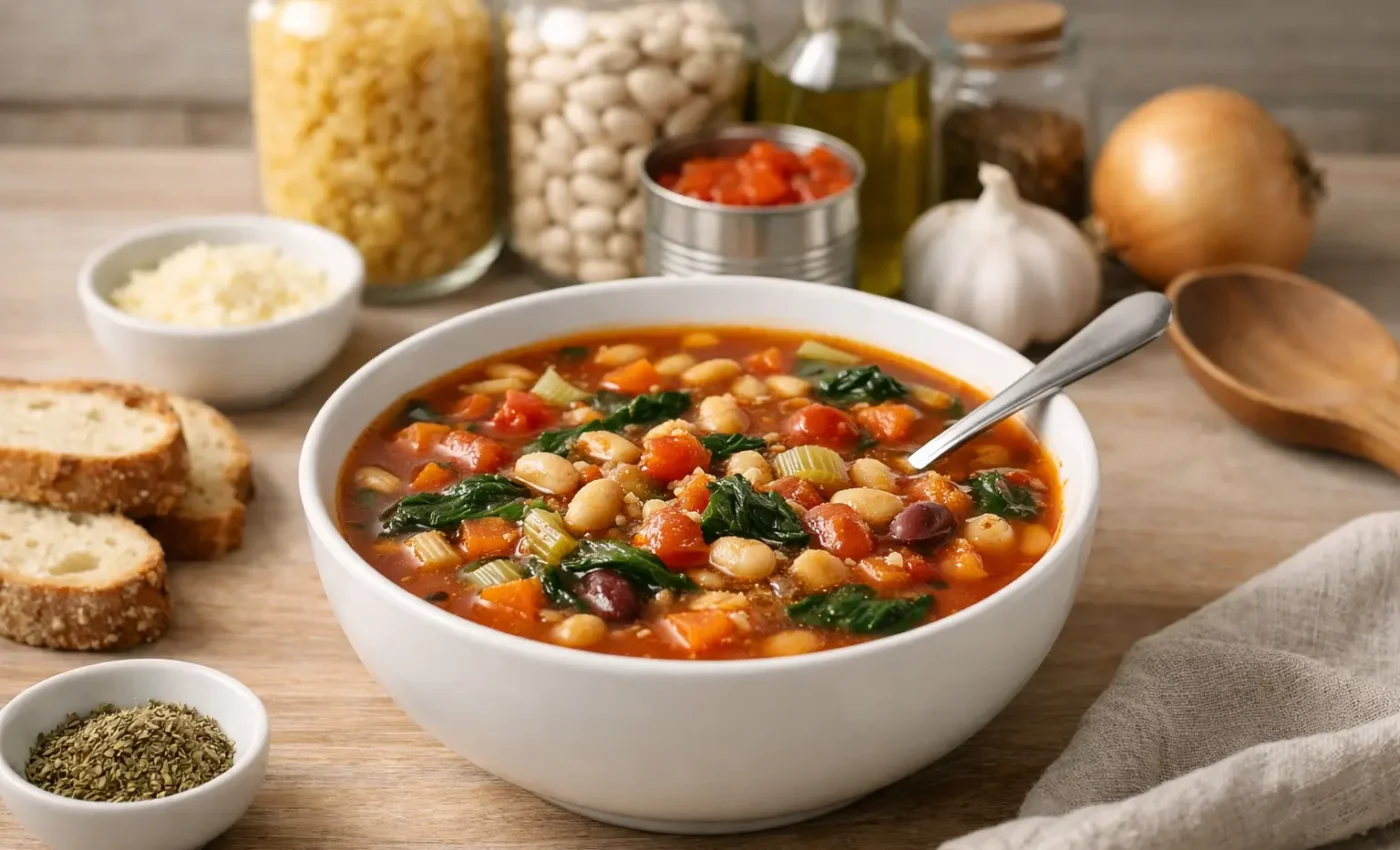
A can of beans, a carton of broth, and the last onion in the drawer can become dinner faster than delivery can arrive. An easy soup with pantry ingredients is one of the most useful meals to keep in your back pocket: warm, filling, flexible, and easy to adjust for whoever is at the table.
The goal is not to follow a complicated recipe when the fridge looks sparse. It is to build a good, dependable pot of soup from what you already have, then make it taste like you planned it that way. Tonight made easy starts with a few simple building blocks.
The pantry soup formula that works
Most satisfying pantry soups follow the same basic pattern: a flavorful base, something hearty, liquid, and a finishing touch that brightens the pot. Once you understand that rhythm, you can make a different version every week without buying specialty ingredients.
Start with a small amount of oil and any aromatic you have. Onion and garlic are classic, but dried onion, garlic powder, celery salt, or a pinch of red pepper flakes can carry the flavor when fresh produce is gone. Cook fresh onion for a few minutes if you have time. If you do not, add the dried seasonings directly to the broth and keep moving.
Next, add a main ingredient with substance. Canned beans, lentils, chickpeas, canned chicken, tuna, pasta, rice, potatoes, or canned vegetables all work. Beans are especially helpful because they add protein and make broth feel more like a meal. A can of tomatoes gives the soup body and a familiar, comforting flavor.
Then pour in broth, stock, or water. Broth gives the quickest result, but water is completely fine when you season it well. Bouillon cubes, soup base, soy sauce, Worcestershire sauce, or a little tomato paste can add the depth that plain water needs. Simmer until the ingredients taste like one dish instead of separate items from the cupboard.
Finally, add contrast. A squeeze of lemon, a splash of vinegar, grated Parmesan, black pepper, hot sauce, or a handful of crushed crackers can make a simple soup taste finished. This small step is often the difference between “fine” and “please make this again.”
Easy soup with pantry ingredients: a 20-minute method
This is a flexible base recipe for four bowls. It works best with white beans, kidney beans, black beans, or chickpeas, but use what is on your shelf.
Heat 1 tablespoon olive oil in a soup pot over medium heat. Add 1 small chopped onion if you have one and cook until softened, about 4 minutes. Stir in 2 cloves minced garlic, or use 1 teaspoon garlic powder, along with 1 teaspoon Italian seasoning and a pinch of red pepper flakes if your family likes gentle heat.
Add one 14- to 15-ounce can diced tomatoes, one 15-ounce can drained and rinsed beans, and 3 to 4 cups chicken or vegetable broth. Stir in 1 tablespoon tomato paste if available. Bring the soup to a gentle boil, then reduce the heat and simmer for 10 minutes.
For a heartier dinner, add 1 cup small pasta, quick-cooking rice, or canned potatoes. Pasta needs a little more broth and should simmer until tender. Leftover cooked rice can be stirred in during the final few minutes instead. Frozen vegetables, such as corn, peas, green beans, spinach, or a mixed vegetable blend, can go in near the end and only need a few minutes to heat through.
Taste before adding salt, especially if you used canned beans, broth, bouillon, or Parmesan. Finish with black pepper and a squeeze of lemon or a teaspoon of vinegar. Serve with toast, grilled cheese, quesadillas, or crackers, and dinner is handled.
Choose a flavor direction, not a complicated recipe
The same pantry staples can taste very different depending on the seasonings you choose. Pick one direction rather than adding every spice you see. A clear flavor profile keeps quick soup from tasting muddled.
Tomato and Italian-style bean soup
Use diced tomatoes, white beans or kidney beans, broth, Italian seasoning, garlic, and a small pasta shape. Finish with Parmesan or dried basil. If you have a jar of marinara sauce open in the fridge, a few spoonfuls can replace some of the tomatoes and add extra flavor quickly.
Southwest black bean soup
Use black beans, corn, diced tomatoes, broth, cumin, chili powder, and garlic. Mash some of the beans against the side of the pot to make the broth thicker without cream. Top bowls with crushed tortilla chips, shredded cheese, sour cream, or a spoonful of salsa if available.
Cozy lentil soup
Canned lentils are the fastest choice, but dry red lentils cook quickly too. Add broth, canned tomatoes, garlic, cumin, and a pinch of smoked paprika. Red lentils soften into the broth and make a naturally thick, comforting soup. Brown or green lentils hold their shape more, but they take longer and may not suit a 20-minute night.
Chickpea and curry soup
Combine chickpeas, broth, canned tomatoes, curry powder, garlic, and a spoonful of peanut butter or coconut milk if you have either. Peanut butter may sound unexpected, but a small amount adds richness and helps round out the spices. Serve it over leftover rice for a filling bowl.
How to make pantry soup taste richer
Quick soups sometimes need a little help because they have not simmered all afternoon. The fix is usually not more salt. Look for depth, texture, or brightness instead.
Tomato paste is one of the most useful pantry ingredients for soup. Let it cook in the pot for a minute before adding liquid, and it will taste sweeter and fuller. A little soy sauce or Worcestershire sauce can do the same job, but start with a small amount because both are salty.
Texture matters just as much. Blend one or two cups of the soup and stir it back in, or mash some beans with a fork. This makes a thin broth feel more substantial without adding extra ingredients. If you prefer a clear, brothy soup, skip blending and add noodles, rice, or toast on the side instead.
Acid is the final adjustment. Lemon juice, lime juice, apple cider vinegar, red wine vinegar, or even pickle brine can wake up a flat-tasting soup. Add it a teaspoon at a time after the heat is off. You should notice more flavor, not a sharp vinegar taste.
Smart substitutions when the pantry is uneven
A good soup does not require every ingredient on a list. Broth can become water plus bouillon. Canned tomatoes can become tomato sauce, crushed tomatoes, or a few tablespoons of tomato paste mixed with water. Beans can be swapped for lentils, chickpeas, canned chicken, or leftover cooked meat.
If you have no onion, use onion powder. If you have no garlic, use garlic powder. If there are no herbs, use black pepper and one spice blend you already enjoy. Taco seasoning, curry powder, Italian seasoning, Cajun seasoning, and poultry seasoning can each set the direction of the whole pot.
The one substitution to watch is pasta or rice. Both absorb liquid as they sit, so leftovers can become very thick by the next day. Store extra broth separately when possible, or add a splash of water or broth while reheating. For meal prep, beans and vegetables hold up better than pasta.
Keep a small soup-ready shelf
You do not need a perfectly stocked pantry to make reliable weeknight meals. Keeping a few practical items on hand makes the “what can I make tonight?” question much easier.
- Canned beans, chickpeas, and lentils
- Canned diced tomatoes and tomato paste
- Chicken or vegetable broth, bouillon, or soup base
- Small pasta, rice, or quick-cooking grains
- Frozen vegetables and frozen spinach
- Garlic powder, onion powder, Italian seasoning, cumin, and chili powder
Buy the versions your household already uses. A pantry is only helpful when the ingredients are familiar enough to reach for on a busy night. If your family loves chicken noodle soup, keep noodles and broth. If taco night is a regular win, black beans, corn, and salsa may be the better foundation.
A pot of soup also gives you permission to use the odds and ends that might otherwise go to waste. Half a bag of frozen peas, a few cooked meatballs, leftover rotisserie chicken, or the final scoop of rice can all find a place in the pot. Start with the formula, taste as you go, and let what you have decide dinner. Good food, made practical, can be as simple as turning a few pantry staples into something warm enough to gather around.