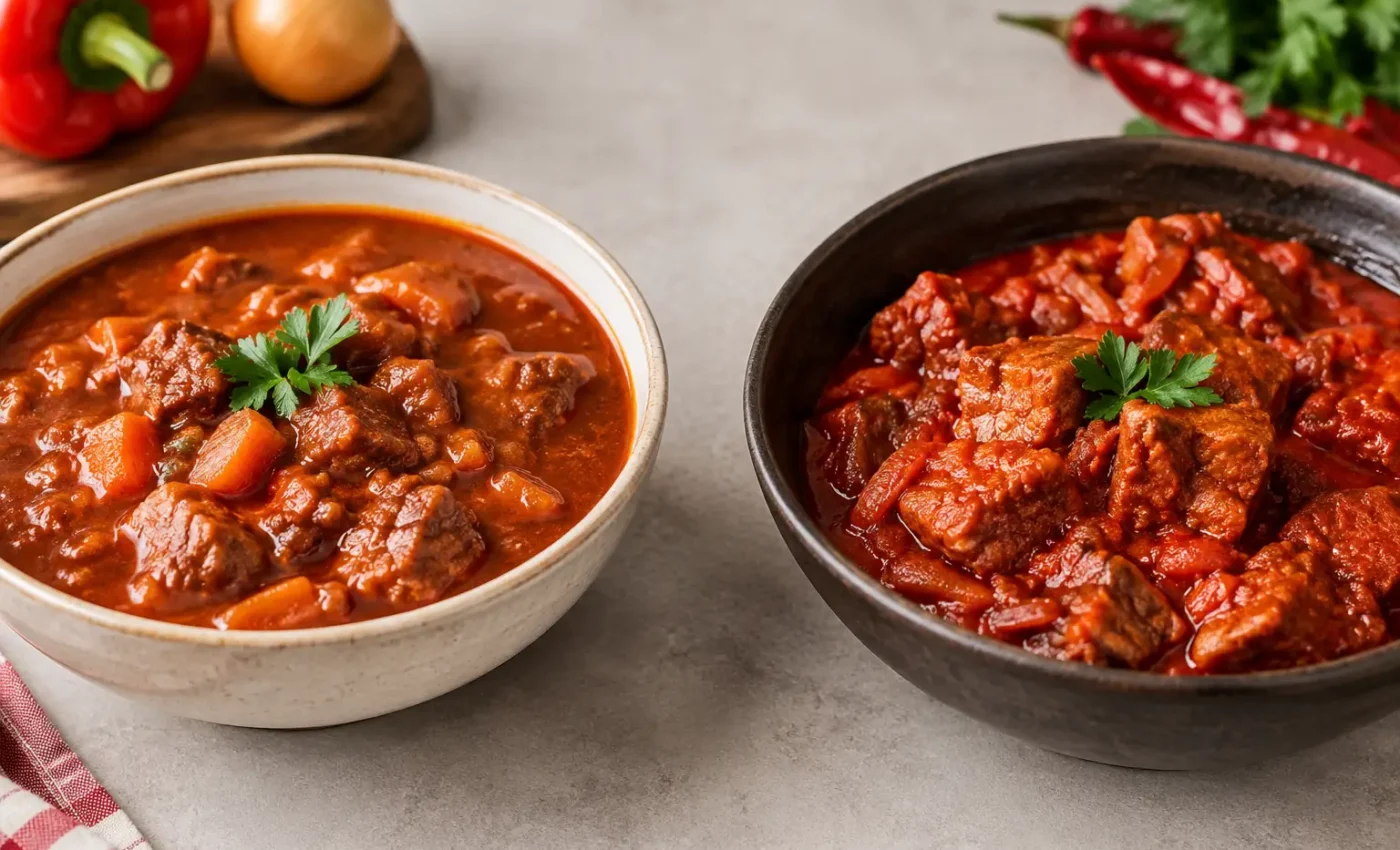
A pot of red paprika broth and tender beef can be called several things outside Hungary, which is why goulash versus pörkölt is a common kitchen question. They share comforting ingredients and deep, slow-cooked flavor, but they are not the same dish. The simplest distinction is this: Hungarian goulash is a soup, while pörkölt is a thick meat stew.
Knowing the difference makes it easier to choose the right dinner for the night ahead. Want something spoonable with potatoes and vegetables built in? Make goulash. Want tender meat in a rich sauce to serve over noodles, potatoes, or rice? Pörkölt is your answer.
Goulash Versus Pörkölt at a Glance
Both dishes come from Hungarian cooking and rely on paprika, onions, and meat. Both are warm, savory, and especially welcome when you want a meal that feels homemade. Their cooking methods and finished textures are where they part ways.
Traditional Hungarian goulash, called gulyás in Hungary, has enough liquid to be served in a bowl as soup. Beef is the classic choice, though other meats can be used. Potatoes, carrots, parsnips, celery root, and small dumplings may join the pot, turning it into a full, satisfying meal.
Pörkölt is much thicker. It begins with a generous amount of onions cooked down with meat and paprika, then simmers with just enough liquid to keep everything tender. The onions break down and help create a glossy, concentrated sauce. It is usually served with a side dish rather than treated as a soup.
For busy home cooks, think of goulash as a hearty one-pot soup and pörkölt as a saucy main dish.
What Hungarian Goulash Really Is
The word goulash can mean different things in the United States. Some people picture a thick beef stew. Others think of American goulash, a quick skillet meal made with ground beef, tomatoes, macaroni, and cheese. Those dishes can be delicious, but they are different from Hungarian gulyás.
Hungarian goulash starts with onions cooked in fat, often oil or lard. The pot is briefly taken off the heat before sweet Hungarian paprika is stirred in. This small step matters because paprika can turn bitter if it hits very hot oil for too long. Cubed beef, garlic, caraway seeds, and water or broth are added next, then the soup simmers until the meat begins to soften.
Vegetables usually go in later so they stay recognizable rather than disappearing into the broth. Potatoes make the soup filling, while carrots and other root vegetables add sweetness. The final result should be brothy, not watery, with a warm red color and enough substance to make dinner feel complete.
The flavor of goulash
Good goulash tastes savory and gently sweet from onions and paprika, with earthy notes from beef and caraway. It does not need to be fiery. Hungarian sweet paprika brings color and fragrance more than heat, although a little hot paprika can be added if your household likes spice.
Because it contains vegetables and potatoes, goulash is practical for a weeknight when you would rather not make several separate sides. A piece of crusty bread is usually all it needs.
What Makes Pörkölt Different
Pörkölt is closer to what many Americans expect from a stew, though its sauce is often simpler and more paprika-forward than a typical beef stew. It can be made with beef, pork, chicken, veal, or lamb. Chicken pörkölt is a useful option when you want the same comforting flavor with a shorter cooking time.
The foundation is still onions, paprika, and meat, but the ratio changes. Pörkölt uses less added liquid, and it does not typically include potatoes and a large mix of vegetables in the pot. As it cooks, the meat releases juices and the onions soften into the sauce. A longer simmer gives beef or pork a tender texture; chicken needs far less time.
The sauce should cling to the meat and have enough body to coat a spoon. If it looks like soup, it needs more simmering. If it becomes dry before the meat is tender, add a small splash of water or broth at a time. The goal is concentrated flavor, not a heavy flour-thickened gravy.
The flavor of pörkölt
Pörkölt is rich, meaty, and deeply savory, with a fuller paprika presence than goulash. Since there are fewer vegetables in the pot, the meat and onion sauce take center stage. It is a good choice when you want a comforting main dish that can stretch across a few meals with different sides.
Serve pörkölt with buttered egg noodles, mashed potatoes, boiled potatoes, rice, or a simple cucumber salad. For a family dinner, egg noodles are especially easy because they catch the sauce without adding much extra prep.
Paprika Is the Shared Essential
The paprika aisle can make this dish feel more complicated than it is. For the most familiar Hungarian flavor, use sweet Hungarian paprika as your main seasoning. It is bright red, mildly sweet, and earthy. Smoked paprika has a different character and can overpower the dish if used as a direct substitute.
If you only have standard sweet paprika, use it. Your meal will still be flavorful and satisfying. A pinch of hot paprika or cayenne can add heat, but add it gradually. It is easier to warm up a finished pot than to rescue one that is too spicy for the table.
Fresh paprika makes a noticeable difference. If yours has been open for years and smells faint or dusty, it will not give goulash or pörkölt the color and flavor these dishes need.
How to Avoid the Most Common Mistakes
The first mistake is rushing the onions. They do not need to brown deeply, but they should soften well before the meat goes in. That slow start creates the savory base that makes both dishes taste rounded rather than flat.
The second is scorching the paprika. Turn down the heat, or briefly move the pot away from the burner, before stirring it into the onions. Follow quickly with the meat or a splash of liquid. This protects its sweet, peppery flavor.
The third is choosing the wrong amount of liquid. For goulash, add enough broth or water to create a proper soup and leave room for vegetables. For pörkölt, start with much less. You can always add a little liquid during cooking, but reducing an overly thin sauce takes extra time.
Finally, give the meat the cooking time it needs. Beef chuck and pork shoulder become tender through a gentle simmer, not a hard boil. Keep the heat low enough that the pot bubbles quietly. This is the kind of dependable cooking that rewards patience without requiring complicated technique.
Which One Should You Make Tonight?
Choose goulash when the weather calls for soup, you have root vegetables to use up, or you want a complete meal from one pot. It is also a smart option when serving people with different appetites because everyone can take more broth, potatoes, or beef as they like.
Choose pörkölt when you want a more substantial, sauce-centered dinner. It works well for Sunday cooking, casual guests, or meal prep because the flavor often gets even better after a night in the refrigerator. Make a simple starch while it simmers, and dinner is handled.
There is one nearby Hungarian dish worth recognizing: paprikás. It is often made with chicken and finished with sour cream, giving it a creamy sauce. Pörkölt does not usually rely on sour cream in the cooking pot, though you can certainly offer it at the table if your family enjoys it.
Whether you choose brothy goulash or thick pörkölt, keep the approach simple: good paprika, patient onions, tender meat, and the right amount of liquid. Put a pot on the stove when you have a little extra time, and tomorrow’s lunch may be just as welcome as tonight’s dinner.