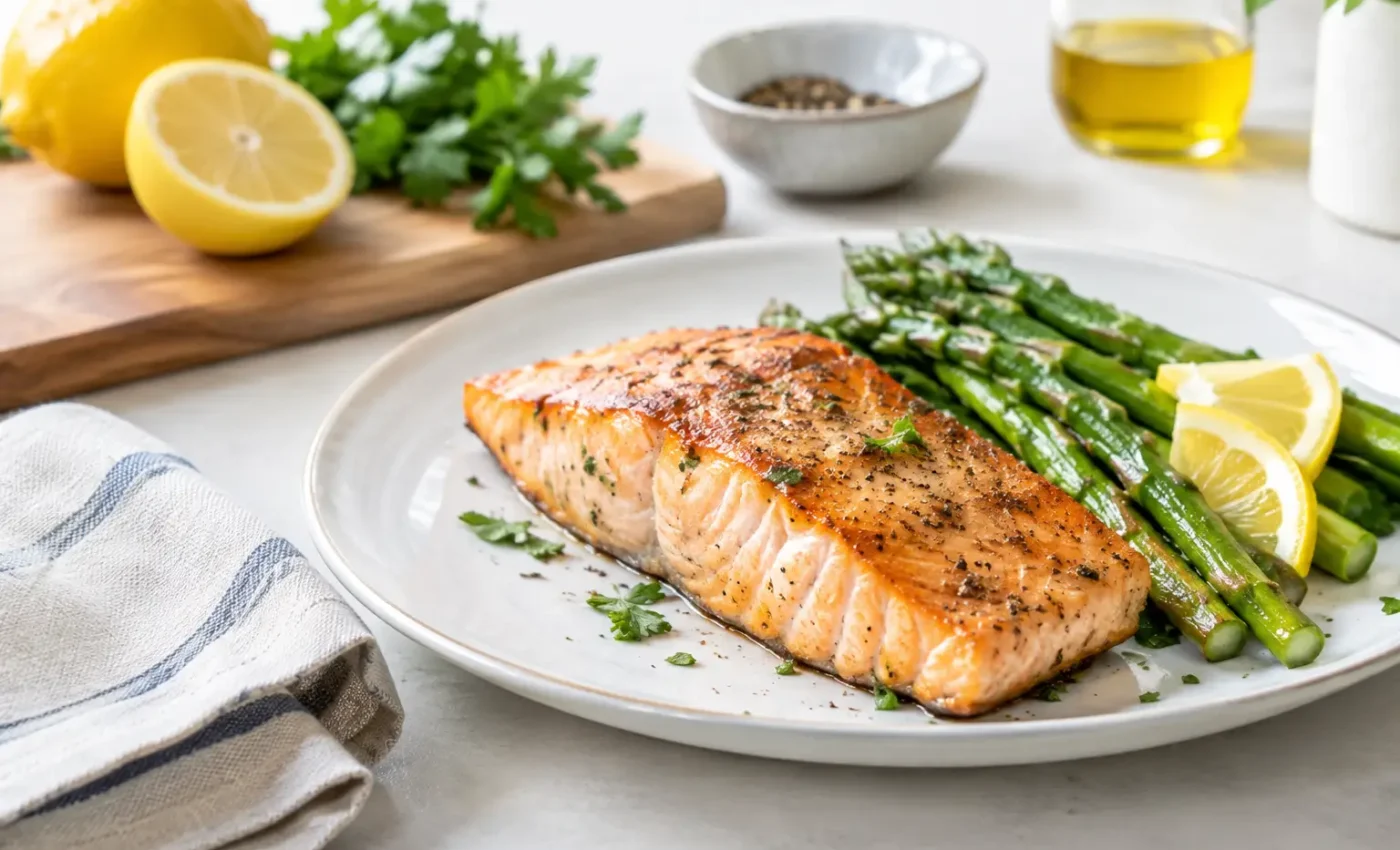
A salmon dinner can be one of the fastest ways to put something fresh and satisfying on the table, but it is also easy to overcook when the evening is moving fast. The good news: once you know how to cook salmon fillets with the right heat and a simple timing check, it becomes a dependable weeknight meal rather than a kitchen gamble.
Salmon does not need a long marinade, complicated sauce, or special equipment. A little oil, salt, pepper, and lemon can take you a long way. From there, choose the cooking method that fits your night: a skillet for crisp skin, the oven for hands-off cooking, or an air fryer for quick cleanup.
Start with the right salmon fillets
For the most even cooking, look for fillets that are close in thickness. A center-cut fillet usually cooks more evenly than a thin tail piece, though either will work with a small adjustment in timing. Most grocery-store fillets are between 1 and 1 1/2 inches thick, which is a useful range for the timings below.
Fresh salmon should smell clean and mild, not strongly fishy. Frozen fillets are a practical choice too, especially for busy households. Thaw them overnight in the refrigerator when you can. If dinner plans changed, place the sealed fillets in a bowl of cold water and change the water every 30 minutes until thawed. Do not thaw salmon on the counter.
Skin-on salmon is especially forgiving in a skillet because the skin protects the flesh from direct heat and becomes pleasantly crisp. Skinless fillets work well in the oven, in foil, or in the air fryer. Either kind can make a great dinner.
Before cooking, pat the fish dry with paper towels. This small step matters most for pan-seared salmon, where surface moisture gets in the way of browning. Rub the fillets with a little olive oil, then season with salt and black pepper. Add garlic powder, paprika, Italian seasoning, or lemon zest if you want a little more flavor without adding another task.
How to cook salmon fillets in a skillet
A skillet is the best choice when you want salmon with crisp skin and a quick pan sauce from lemon, butter, or herbs. Use a large nonstick or well-seasoned cast-iron skillet so the fillets have room to cook without crowding.
Set the skillet over medium-high heat and add enough oil to lightly coat the surface. Once the oil looks shiny, place skin-on fillets in the skillet skin-side down. Lay them in away from you to avoid splatters. Then leave them alone. Moving the fish too early is the main reason skin sticks or tears.
Cook skin-side down for about 4 to 6 minutes, depending on thickness. You will see the salmon change from translucent to opaque around the bottom and sides. When the skin releases easily, flip the fillets and cook for another 1 to 3 minutes on the flesh side. Thin fillets may need less time after flipping.
For a simple finish, lower the heat and add a small pat of butter, a squeeze of lemon, and a few chopped herbs. Spoon the melted butter over the fish for 30 seconds, then take the pan off the heat. The fish will continue cooking slightly as it rests.
If your salmon is skinless, use medium heat rather than high heat and give the pan a little extra oil. Cook about 3 to 4 minutes on the first side and 2 to 3 minutes on the second. It will be tender, though it may be more delicate to flip than skin-on fillets.
Bake salmon when you need a hands-off dinner
Oven-baked salmon is a calm, reliable option when you are also making rice, vegetables, or a salad. Heat the oven to 400°F and line a sheet pan or baking dish with parchment paper or foil for easy cleanup.
Place the salmon skin-side down, if it has skin, and brush the top lightly with oil. Season simply, then add lemon slices, thin onion slices, or a spoonful of Dijon mustard if those are already in your kitchen. A little honey mixed with mustard makes a family-friendly sweet-savory glaze, but keep sugary coatings light so they do not burn.
Bake 1-inch-thick fillets for about 10 to 14 minutes. Thicker pieces can take 14 to 18 minutes. Because ovens vary, start checking at the lower end of the range instead of setting a timer and walking away until the last minute.
For an all-in-one sheet-pan meal, surround the salmon with quick-cooking vegetables such as asparagus, green beans, zucchini, or thin bell pepper strips. Potatoes and carrots take longer, so give them a head start before adding the fish. This is one of those small timing choices that keeps dinner easy instead of turning it into two separate meals.
Use the air fryer for quick, tender salmon
The air fryer cooks salmon quickly and gives the outside a lightly browned finish. It works particularly well for individual fillets on nights when you want dinner on the table with very little cleanup.
Preheat the air fryer to 400°F if your model recommends preheating. Lightly oil the basket or use a perforated liner, then place the fillets in a single layer. Cook for 7 to 10 minutes, depending on thickness. Start checking thin fillets at 7 minutes.
Avoid adding a lot of wet sauce at the beginning. A thick glaze can drip and scorch in the basket. Instead, season the salmon before cooking and brush on teriyaki sauce, maple-Dijon sauce, or lemon butter during the final minute or after cooking. Serve it with microwave rice, couscous, or a bagged salad, and dinner is handled.
Know when salmon is done
The best way to avoid dry salmon is to check it early. Salmon is ready when it flakes gently with a fork at its thickest point and the center is mostly opaque. A little translucency in the very center can be appealing to some people, but it depends on personal preference and who is at the table.
For the most reliable food-safety check, use an instant-read thermometer in the thickest part of the fillet. The FDA food-safety guideline is 145°F. If you prefer a softer texture, some cooks remove salmon from the heat earlier and let carryover heat finish it, but serving fish to young children, older adults, pregnant people, or anyone with a weakened immune system calls for following the 145°F guideline.
Color alone is not a perfect test, especially with richly colored sockeye salmon or pale farm-raised fillets. Texture, thickness, and temperature give you a better answer than the clock alone.
Easy sides that make salmon feel like dinner
Salmon has enough flavor to work with very simple sides. Think roasted broccoli and rice, green beans and buttered noodles, or a chopped salad with warm bread. For a lighter plate, pair it with cucumber, tomatoes, avocado, and a lemony dressing.
If you are seasoning the salmon with paprika and garlic, try corn, black beans, and rice on the side. If you are using lemon and herbs, potatoes and asparagus are an easy match. The goal is not a perfect restaurant plate. It is a meal that works with what is already in the refrigerator.
Store leftovers without losing the texture
Let leftover salmon cool, then refrigerate it in a covered container within two hours. It keeps well for up to three days. Cold salmon is excellent flaked into a salad, stirred into pasta with peas, or tucked into a wrap with greens and a creamy dressing.
When reheating, use low heat so it does not dry out. Cover it loosely and warm it in a 275°F oven for about 10 to 15 minutes, or microwave it gently at reduced power. A splash of water, broth, or lemon juice helps keep the fish moist.
The next time salmon is on the menu, choose the method that suits your evening and keep the seasoning simple. A well-cooked fillet, a fast side, and a few quiet minutes around the table can make tonight feel a little easier.