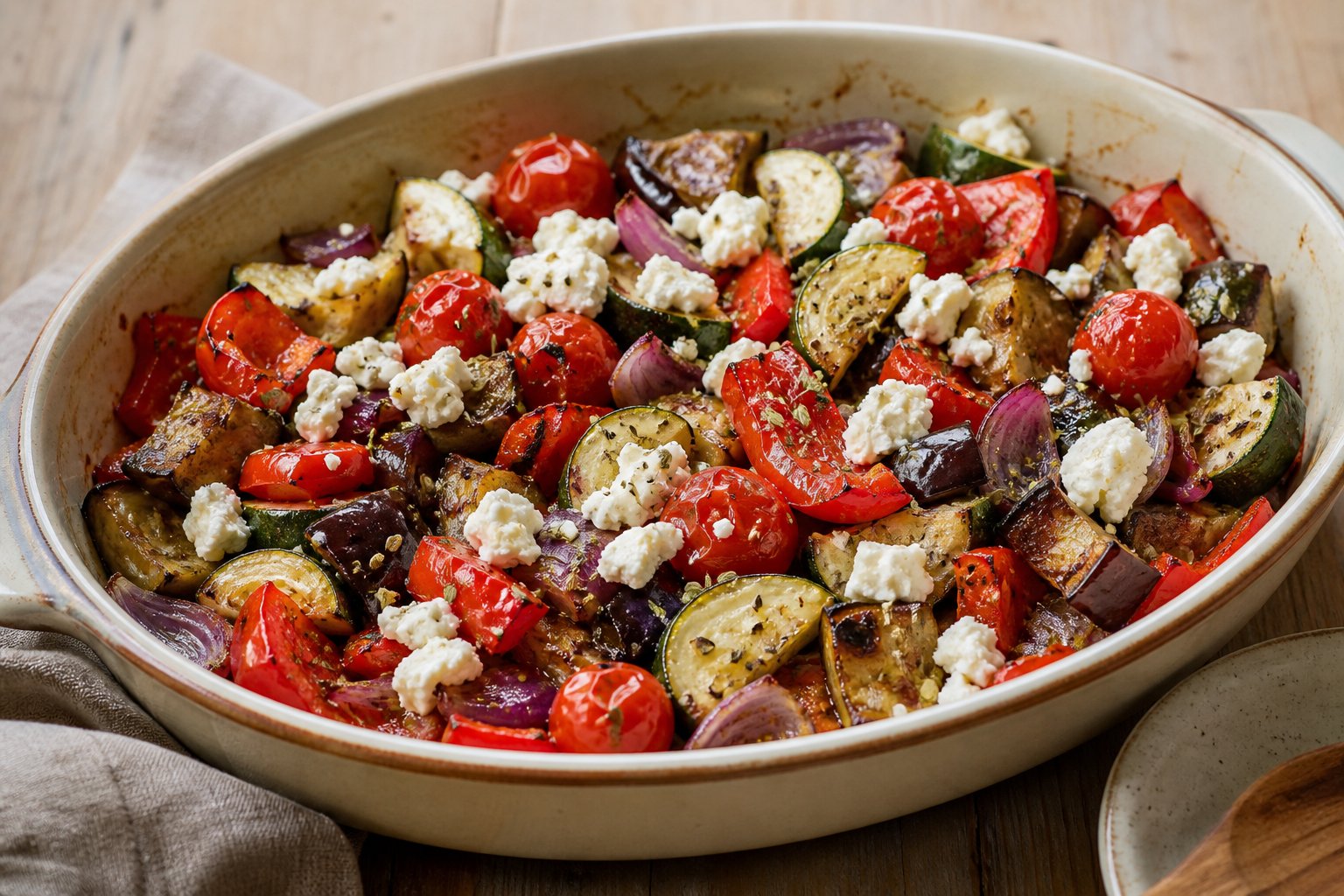
Why roasting suits this combination
This is the kind of tray bake that works as a relaxed main course with warm bread, but it is just as useful beside grilled chicken or fish. The vegetables cook at slightly different speeds, so the size of the pieces matters more than perfect knife work.
Choosing the vegetables and feta
Small, firm zucchini and glossy eggplant contain fewer mature seeds and hold their shape better during roasting. Use block feta in brine rather than pre-crumbled cheese: it stays creamy inside and browns more attractively. Drain it well before crumbling so it does not add excess liquid to the tray.
Cut size and tray setup
Cut the eggplant into roughly 2 cm pieces, the zucchini a little thicker, and keep the onion wedges joined at the root where possible. Use the largest tray you have: crowded vegetables release steam and stay pale instead of developing sweet, browned edges.
Useful swaps for the roasting tray
Add a drained can of chickpeas for a more substantial meat-free dinner. In cooler months, replace the zucchini with small cubes of pumpkin. Goat cheese works in place of feta, although it will melt more readily and should be added only for the final few minutes.
What to serve alongside
Serve with lemon wedges, toasted sourdough or a spoonful of plain yogurt. Leftovers are excellent folded through couscous or spooned into a warm flatbread.
How to avoid a pale, watery tray
The main problem is crowding. If the vegetables overlap, divide them between two trays and rotate the trays halfway through cooking. Add the tomatoes later as directed because their juice slows browning. Do not season heavily at the beginning; feta concentrates the saltiness during the final minutes.
Keeping the vegetables at their best
Cool completely and refrigerate in a covered container for up to 3 days. Reheat on a tray at 190°C so the vegetables regain some texture; a microwave is convenient but will make them softer.