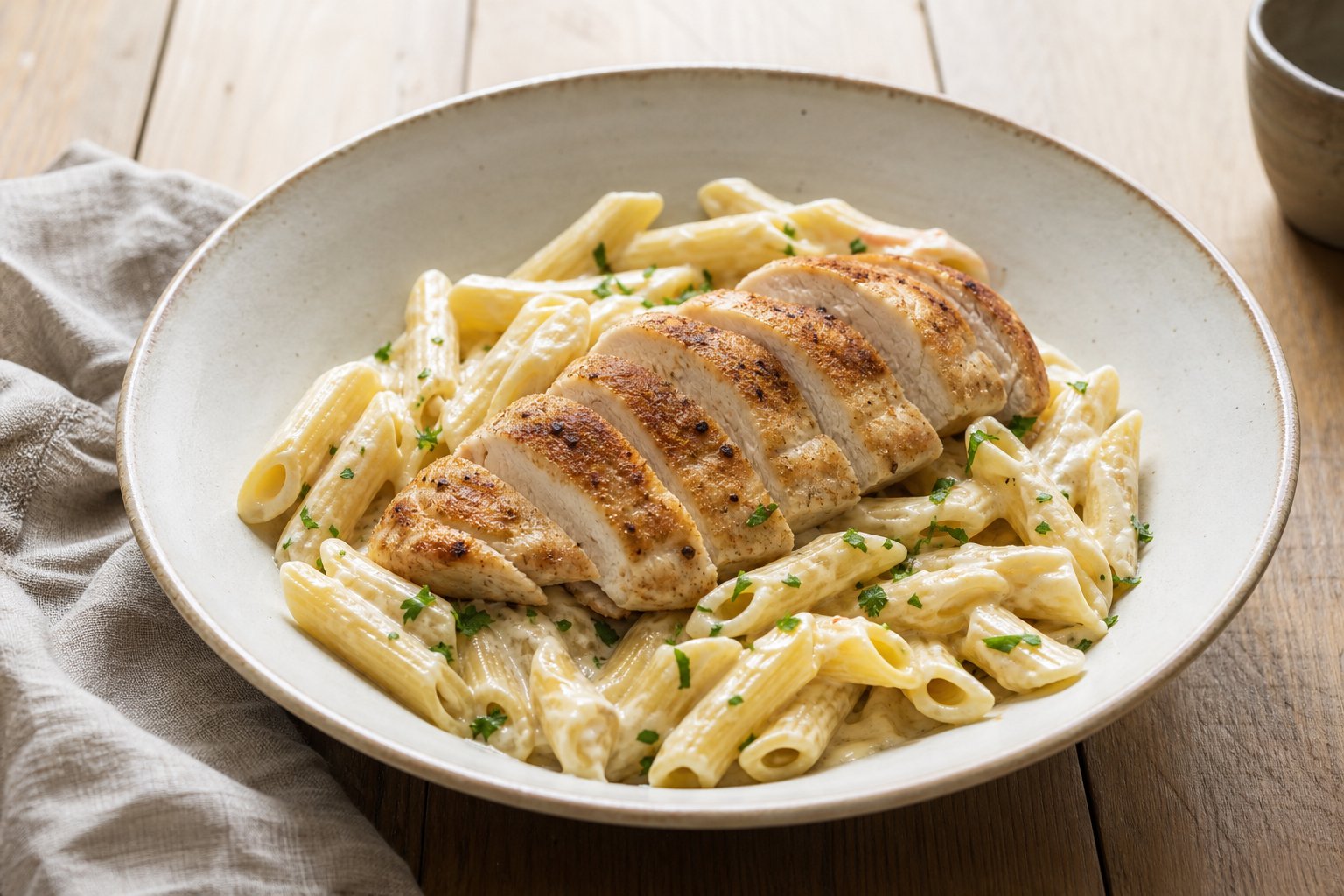
How the sauce becomes glossy
This pasta is creamy without being heavy, because starchy cooking water and parmesan do much of the work. Thin pieces of chicken brown quickly, making it a realistic half-hour dinner rather than a sauce that needs a long simmer.
Coordinating the pasta and chicken
Slice the chicken across the grain into even strips and pat it dry before seasoning. Grate the parmesan finely so it melts without clumping. Reserve more pasta water than you think you need; the sauce tightens as it sits.
Ways to vary the creamy sauce
Add baby spinach at the end, sauté sliced mushrooms before the chicken, or replace parsley with basil. Boneless chicken thigh is slightly richer and more forgiving. For a fresher finish, add a teaspoon of lemon juice off the heat.
Parmesan, cream and pasta water
Finely grated Parmesan melts more evenly than coarse shreds and brings enough salt that final seasoning should wait. Cooking cream is stable and convenient, but regular cream also works over gentle heat. Starchy pasta water is not just a thinner: it helps the fat and cheese form a sauce that clings to penne.
Serving before the sauce tightens
A sharp green salad or steamed broccoli balances the sauce. Warm the bowls if possible, as creamy pasta is at its best immediately after tossing.
Avoiding dry chicken and a split sauce
Crowded chicken steams instead of browning, so use a wide pan or cook in two batches. Once the Parmesan is added, keep the pan off direct high heat; vigorous boiling can make the cheese clump and the sauce oily. Stop cooking the penne at al dente because it softens further while being tossed.
Reheating creamy pasta gently
Refrigerate for up to 2 days. Reheat gently with a splash of milk or stock, stirring often. Freezing is not recommended because the cream sauce may split and the pasta softens.