Why the pan sauce has depth
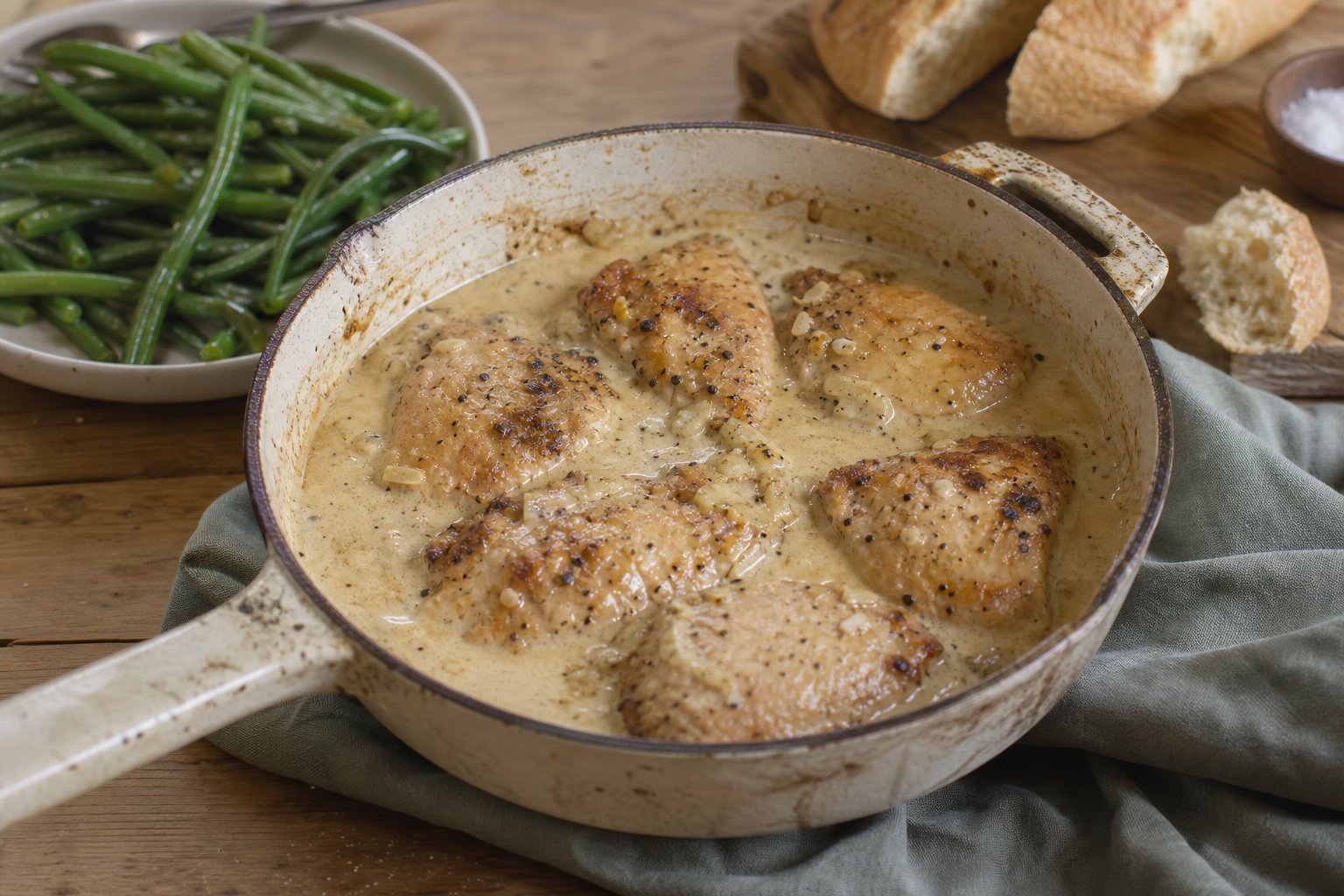
Golden chicken and a smooth garlic pan sauce make this taste more elaborate than the short ingredient list suggests. Mustard adds depth rather than obvious heat, and thyme keeps the cream from tasting overly rich.
Garlic, mustard and cream
Fresh garlic should smell firm and clean, without green shoots that can taste harsh. Dijon mustard provides acidity and helps the sauce feel balanced rather than mustard-heavy. A pourable cooking cream is easy to simmer, while full-fat cream makes a richer sauce and may need a little extra stock.
Preparing evenly sized chicken
Choose small chicken breasts or slice large ones horizontally so every piece is an even thickness. Pat them dry for better browning. Have the stock and cream measured before the garlic goes into the pan, as minced garlic can burn quickly.
Protecting the garlic and cream sauce
Garlic burns within seconds in a hot pan, so reduce the heat before adding butter and garlic. Let the stock loosen the browned layer before the cream goes in. Keep the sauce at a quiet simmer, and return the chicken only long enough to warm through so the lean meat stays juicy.
Flavor changes for the sauce
Add sliced mushrooms after removing the chicken, or stir in a handful of spinach just before serving. Boneless chicken thighs also work; allow a few extra minutes. For a lighter sauce, replace half the cream with additional stock.
Side dishes that catch the sauce
Spoon the sauce over mashed potatoes, rice or pasta, with green beans or broccoli alongside. Crusty bread is useful for the last of the sauce.
Storing chicken without drying it
Refrigerate for up to 2 days. Reheat in a covered pan over low heat with a splash of stock, stopping as soon as the chicken is hot. Avoid boiling the sauce during reheating.
Why did the creamy sauce look separated?
The heat was probably too high after the cream was added. Take the pan off the heat and whisk in one or two tablespoons of warm stock; next time keep the sauce below a hard boil.