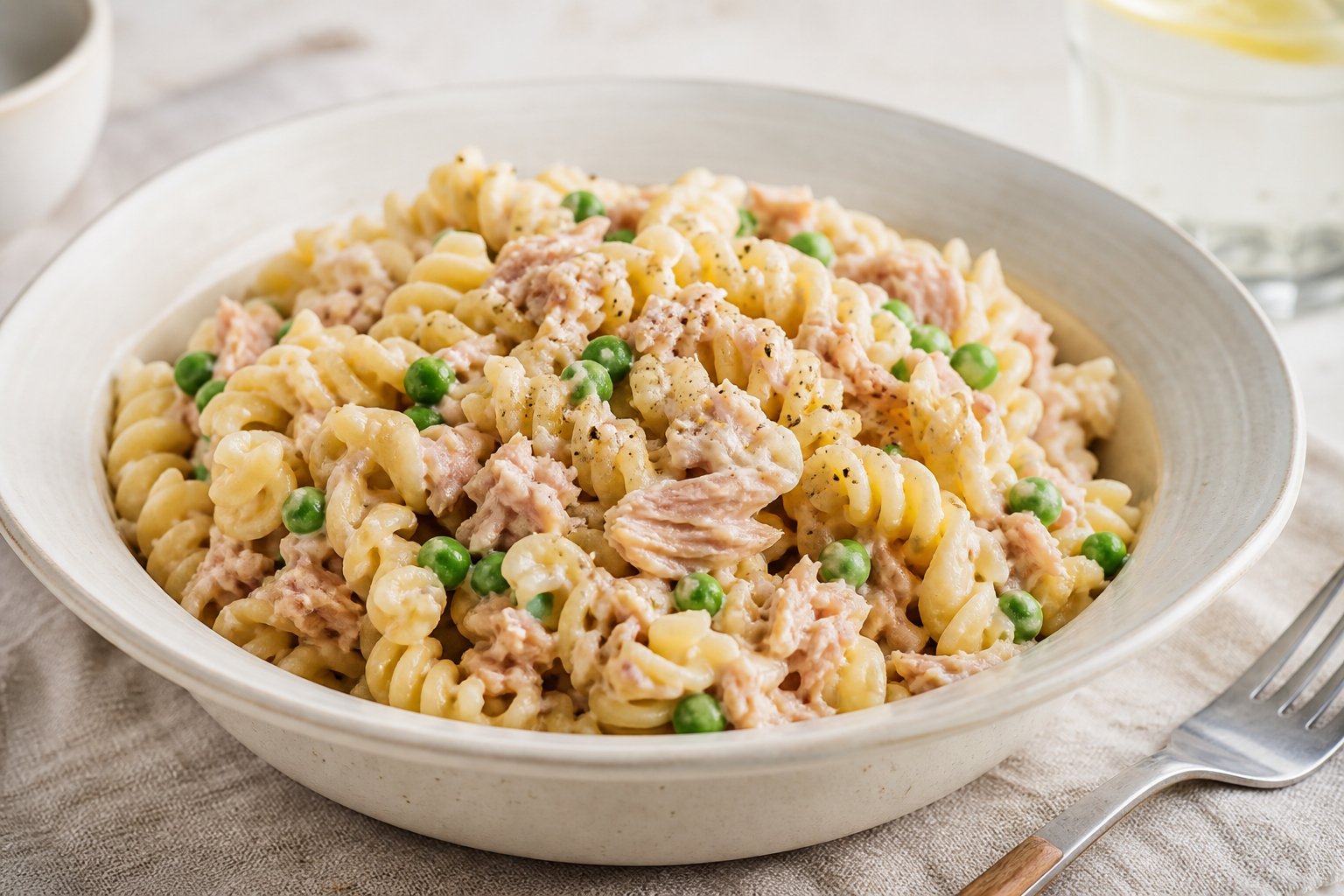
Balancing creamy sauce with lemon
This is a useful pantry dinner: the sauce comes together while the pasta cooks, and lemon keeps the tuna and cream tasting fresh. Peas add sweetness and color without requiring another pan.
Keeping tuna pasta creamy
Boiling the cream hard or stirring the tuna repeatedly can leave an oily sauce with dry, tiny fish flakes. Warm both gently and toss only as much as needed. Reserve pasta water before draining, since a spoonful added at the end is the easiest way to loosen sauce absorbed by the fusilli.
Timing peas, pasta and tuna
Drain the tuna thoroughly but leave it in fairly large flakes. Zest the lemon before squeezing it, and add the juice only after the pan is off the heat so the cream remains smooth.
Choosing tuna and using lemon
Tuna packed in spring water gives a lighter result; oil-packed tuna is richer and should be drained very well. Keep the fish in broad flakes so it remains noticeable in the finished dish. Lemon zest adds aroma without thinning the sauce, while the juice belongs off the heat to preserve its fresh taste.
Easy variations for the cupboard
Add capers, chopped parsley or a handful of spinach. Canned salmon can replace the tuna. For a tomato version, swap the cream for 250 ml passata and leave out the lemon juice until tasting.
Serving while the sauce is loose
Serve with a cucumber salad or simply with extra black pepper and lemon wedges. This pasta is best taken straight to the table while the sauce is loose.
Safe storage for fish pasta
Refrigerate for up to 1 day and reheat gently with a spoonful of water or milk. Do not leave fish pasta at room temperature for more than 2 hours, and avoid freezing the finished cream sauce.