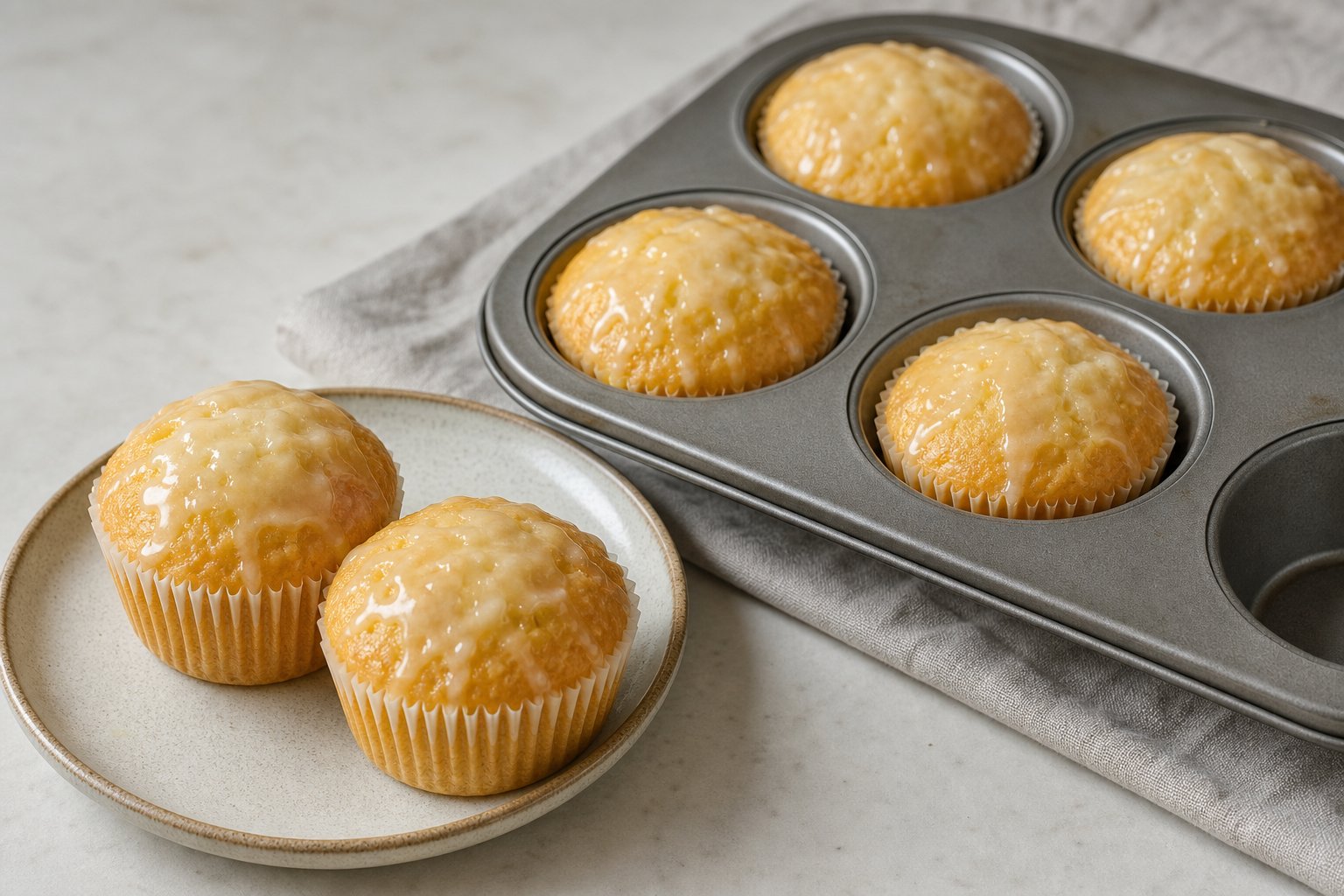
Where the bright lemon flavor comes from
These muffins have a light crumb and a clean lemon flavor from zest in the batter and a sharp little glaze on top. Oil keeps them soft for longer than butter-based muffins, which makes them practical for baking ahead.
Mixing and filling the muffin cases
Finely grate only the yellow part of the lemon skin; the white pith is bitter. Bring the eggs and milk close to room temperature, and line the tin before mixing because the baking powder begins working as soon as the batter is wet.
Flavor ideas beyond the basic batch
Add 100 g blueberries, poppy seeds or a handful of white chocolate chips. Orange zest and juice make an easy variation. For a crunchy top, skip the glaze and sprinkle coarse sugar over the batter before baking.
Using zest, juice and neutral oil
Most lemon aroma is in the colored outer zest, not the juice. Grate only the yellow surface and rub it into the sugar to release the oils; the white pith underneath is bitter. A neutral oil keeps the crumb soft after cooling, whereas strongly flavored olive oil can dominate the citrus.
Serving muffins at their best
Serve once the glaze has set, with tea or coffee. Split-day-old muffins and toast the cut side lightly for breakfast.
Preventing tunnels and a disappearing glaze
Overmixing creates long tunnels and tough edges, so fold only until the final flour streak disappears. Fill the cases evenly for consistent baking. Muffins must be completely cool before glazing; on a warm surface the icing melts, soaks in and loses both its white finish and fresh lemon bite.
Freezing and refreshing muffins
Keep unglazed muffins airtight at room temperature for 2 days or freeze for 2 months. Glazed muffins are best refrigerated in warm weather, then brought back to room temperature before serving.