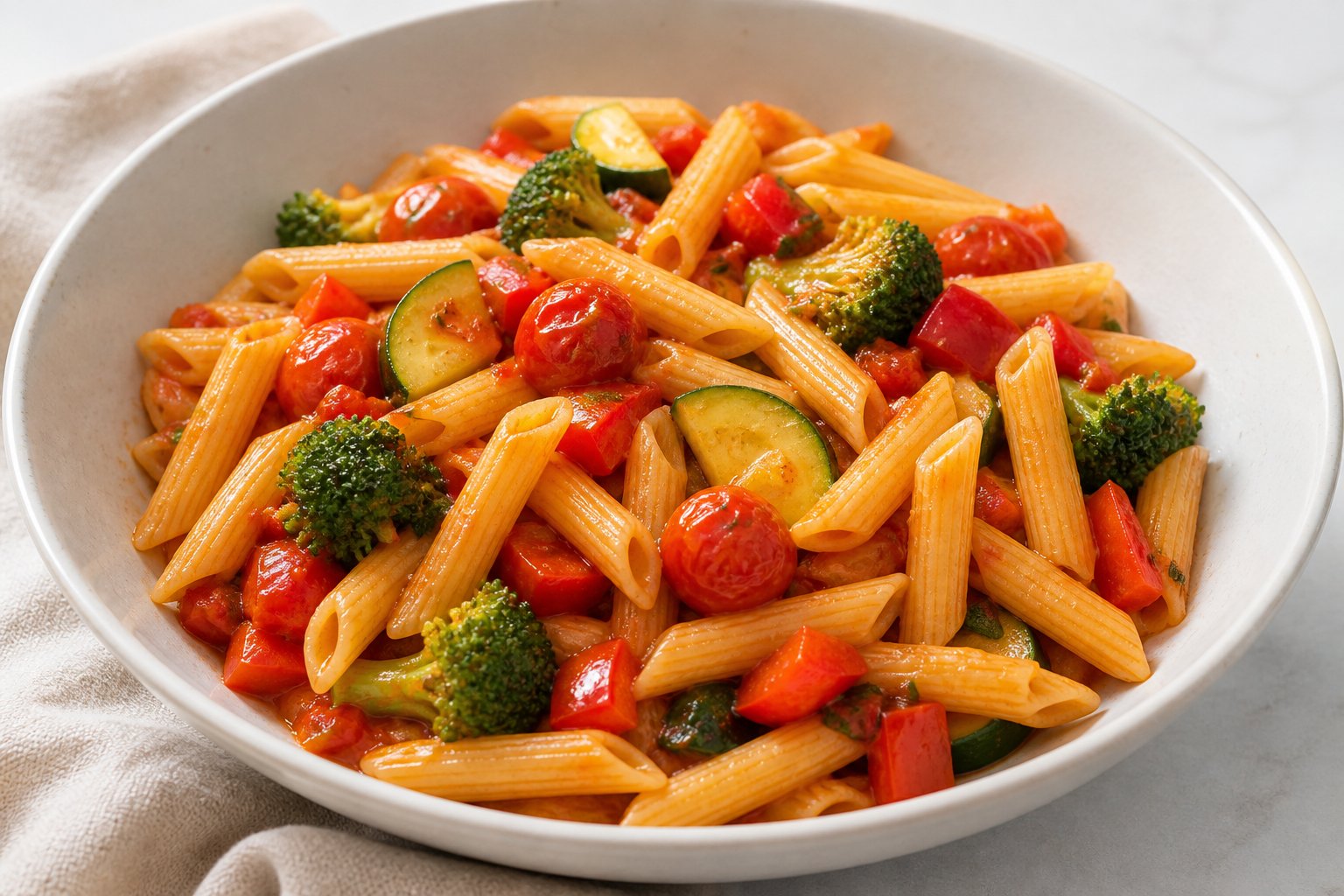
Keeping vegetables distinct in the sauce
This colorful pasta uses vegetables with different textures rather than hiding them in a heavy sauce. A small amount of passata and starchy cooking water brings everything together while keeping the dish light enough for lunch or a warm evening.
Choosing vegetables with different textures
Broccoli and pepper need a head start, while zucchini and tomatoes cook quickly and belong in later. Keep the pieces small enough to eat with penne but not so small that they collapse. Passata binds the vegetables into a light sauce without hiding their color or turning the dish into a heavy tomato pasta.
Organizing the cooking order
Cut the zucchini and pepper to roughly the same size as the penne, but keep the broccoli florets small so they cook quickly. Use a wide pan and fairly high heat to color the vegetables instead of steaming them.
Seasonal vegetables that work
Use asparagus, peas or green beans according to the season. Add white beans for protein, or finish with feta, parmesan or toasted breadcrumbs. A pinch of chili flakes is good with the tomatoes.
Serving a colorful pasta bowl
Serve with a green salad and lemon wedges. A spoonful of pesto on each bowl adds richness without turning the whole sauce heavy.
Preventing steamed vegetables and mushy pasta
A narrow pan traps moisture and softens the vegetables before they brown. Use a wide pan, keep the heat fairly high and follow the staged order. Drain the penne while it still has bite, then finish it in the passata with reserved water so the pasta and vegetables reach the right texture together.
Saving leftovers without softness
Refrigerate for up to 3 days. Reheat in a covered pan with a splash of water. It is also pleasant at room temperature, but do not leave it out for more than 2 hours.