Why a composed plate feels complete
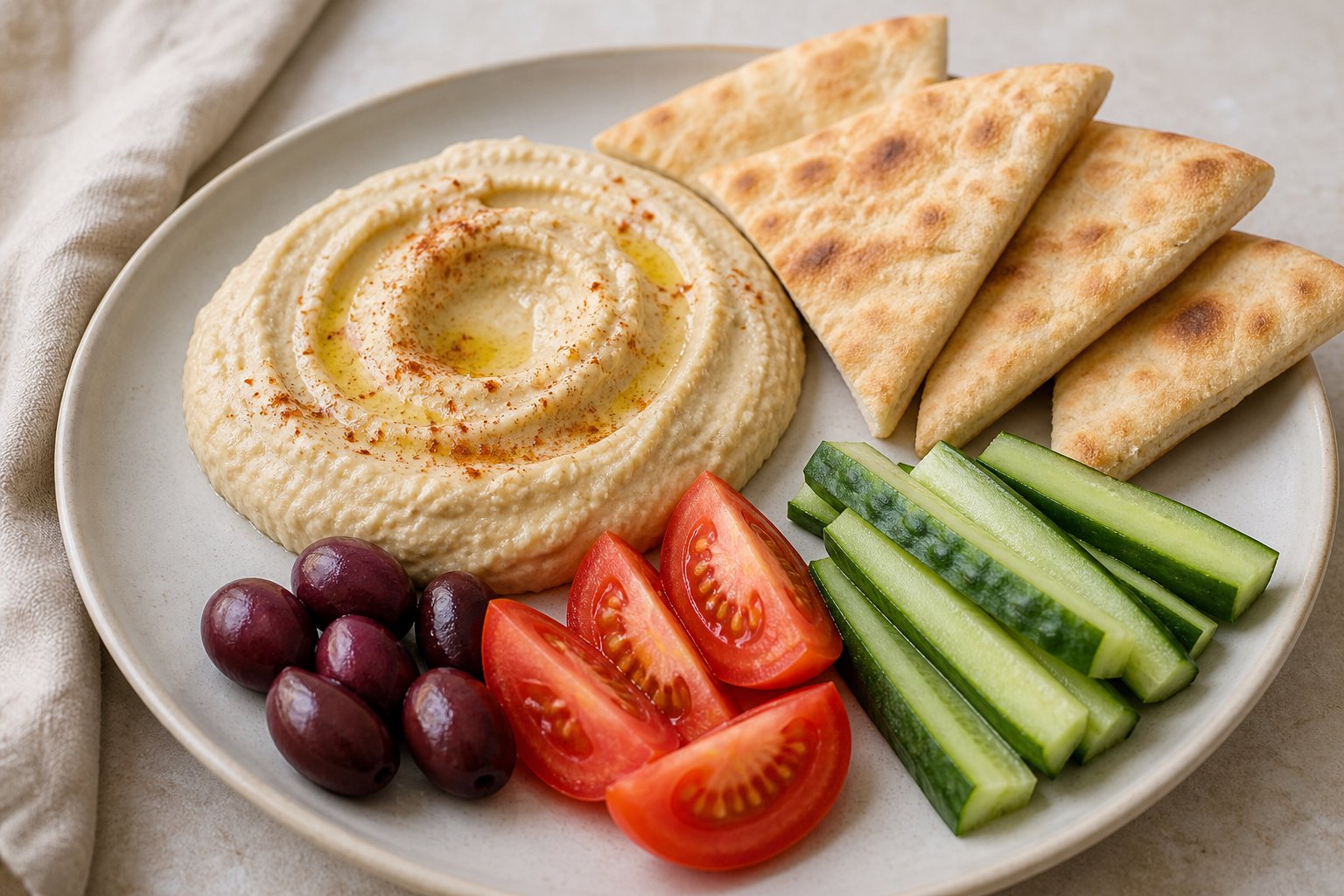
A well-built hummus plate is more than a collection of snacks: creamy, crisp, salty and warm elements make it feel like a complete lunch. It is also one of the easiest meals to scale for one person or a casual table of friends.
Keeping the plate fresh and well balanced
Very cold flatbread becomes tough and a heavily salted plate overwhelms the hummus. Warm the bread briefly, use only a tiny pinch of salt on the tomatoes and provide lemon for individual adjustment. Keep wet vegetables at the edge rather than piling them directly on top of the hummus.
Preparing crisp vegetables and warm bread
Take the hummus from the refrigerator 15 minutes before serving because its flavor is muted when very cold. Dry the vegetables after washing and warm the bread last so it reaches the table soft and flexible.
Choosing hummus and balancing salty elements
Use a smooth hummus with a clear tahini and lemon flavor, whether homemade or bought. Taste the olives before seasoning the tomatoes because their salt level varies. Pat cucumber and tomato dry so water does not run into the hummus, and warm the flatbread only when the plate is nearly ready.
Ideas for expanding the plate
Add boiled eggs, roasted peppers, falafel or drained chickpeas. Use carrots, radishes or celery for extra crunch. Za’atar can replace smoked paprika, and toasted seeds add texture.
Arranging everything for sharing
Put everything on one large platter for sharing or divide between two plates. Keep extra flatbread wrapped in a clean towel so it remains soft.
Storing the separate components
Store the components separately. Hummus keeps according to its package or homemade storage guidance, usually 3–4 days; cut vegetables are best within 2 days. Warm only the amount of bread you need.