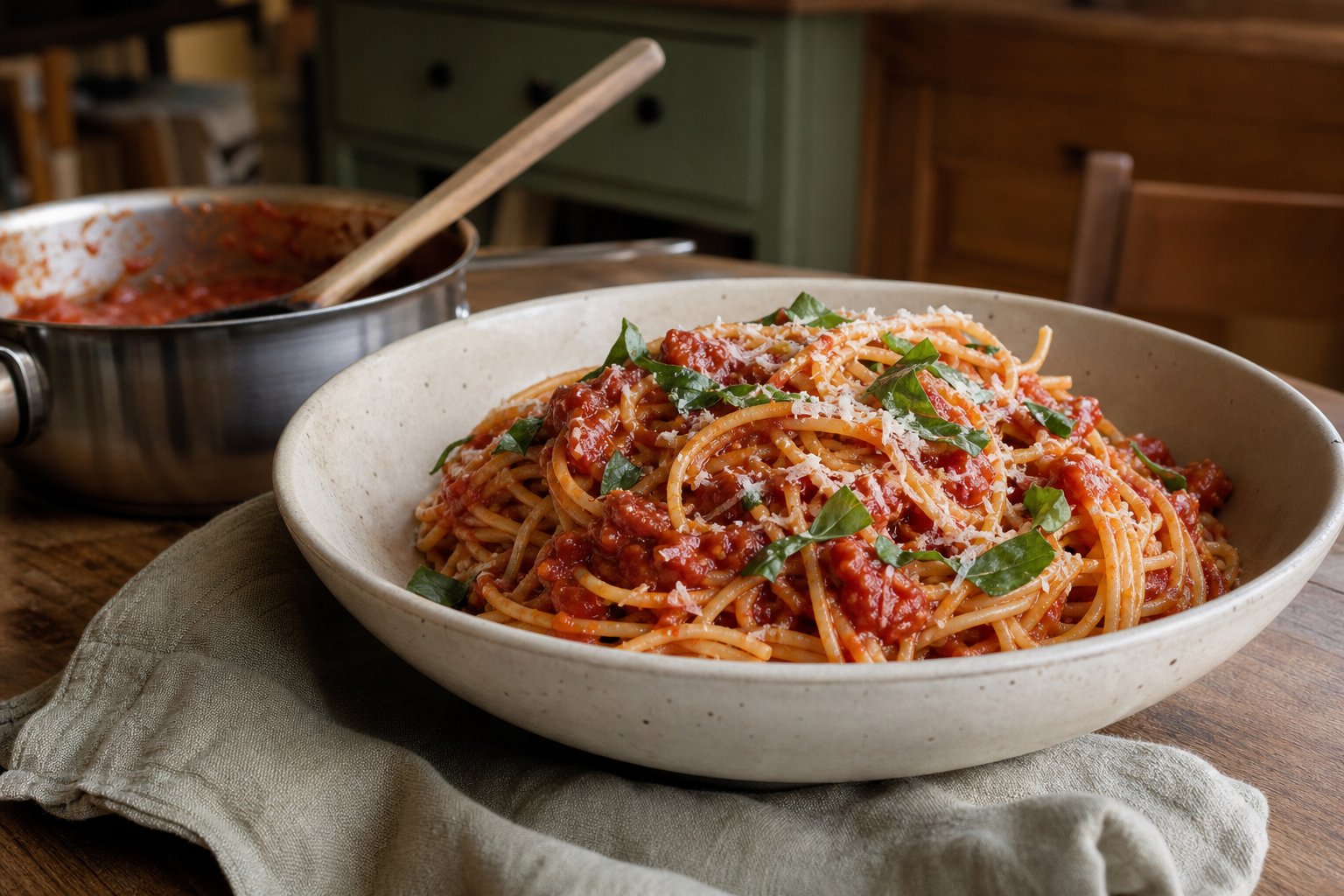
What the slow simmer changes
This deeper tomato sauce earns its flavor from a slow foundation of onion and carrot followed by crushed whole tomatoes. It takes longer than the quick pantry version, but most of that time is an unattended simmer and the result is rounder and naturally sweeter.
Building sweetness from onion and carrot
Dice the onion and carrot very finely so they melt into the sauce. Use a wide pan so the tomatoes reduce rather than simply boil, and crush them in a bowl before they reach the hot oil to avoid splashing.
Whole tomatoes and a patient soffritto
Canned whole tomatoes are often less processed and more consistent than pre-diced tomatoes; crush them by hand so you control the texture. Finely diced carrot sweetens the sauce naturally but should not be obvious in the final bowl. Fresh basil is reserved for the end, while dried oregano can withstand simmering.
Ways to adapt the cooked sauce
Add anchovy with the garlic for savory depth, or olives and capers for a briny version. Chili flakes are a natural addition. For a vegan plate, leave out the parmesan and finish with toasted breadcrumbs.
Why a long-cooked sauce can still taste raw
Rushing the onion and carrot leaves a harsh base that extra sugar cannot correct. Cook them slowly until genuinely soft before adding garlic and tomatoes. Simmer uncovered at a gentle pace so water evaporates without scorching. If sauce slides off the spaghetti, finish the pasta in the pan with starchy water.
Coating every strand before serving
Serve as soon as the sauce clings to the strands, with basil and parmesan at the table. A fennel or rocket salad makes a crisp contrast.
Making tomato sauce in advance
Tomato sauce keeps for 4 days refrigerated and freezes for 3 months. If storing the finished pasta, reserve a little sauce separately to loosen it when reheating.