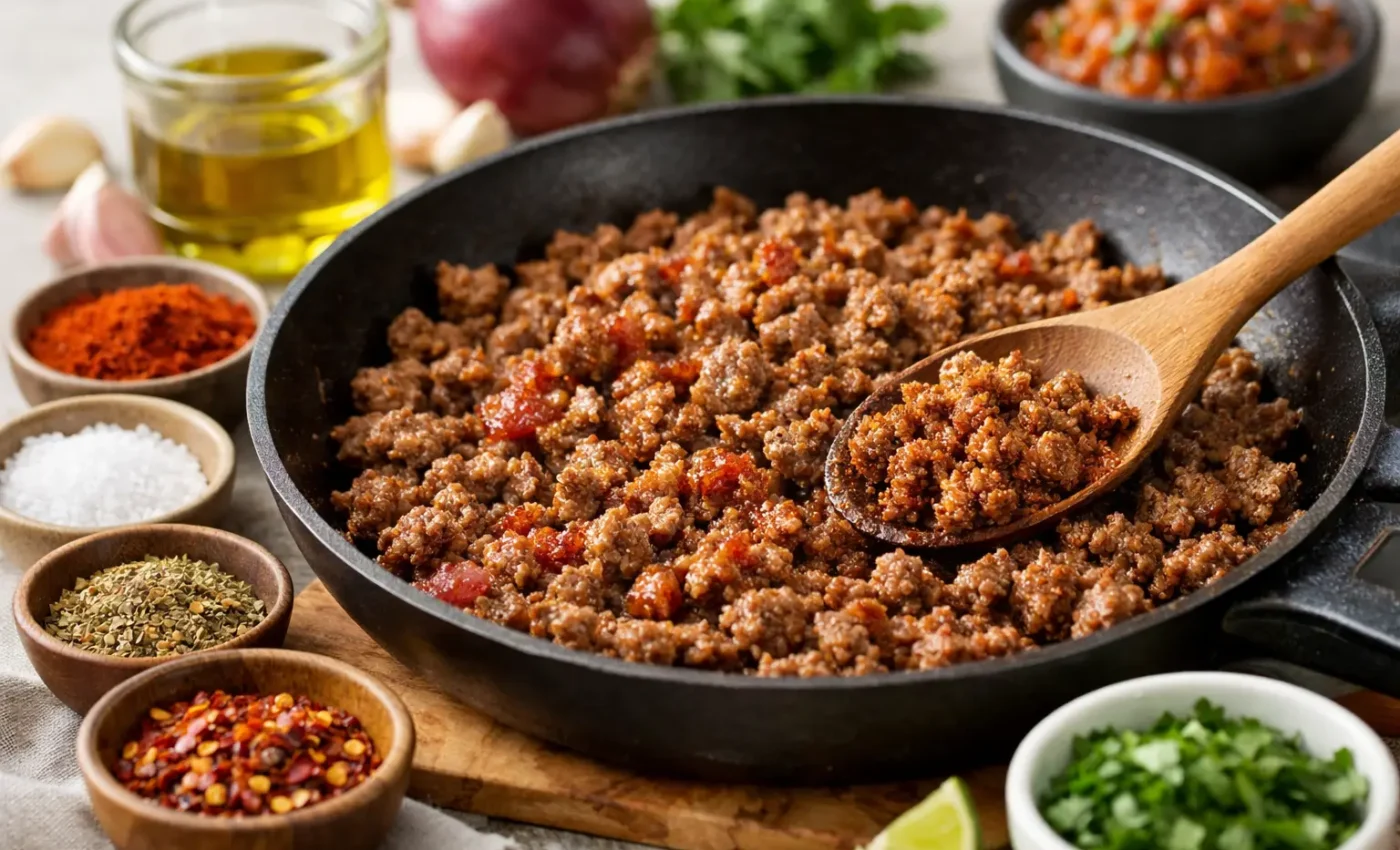
A pound of ground beef can become tacos, spaghetti sauce, rice bowls, sloppy joes, or a quick skillet dinner. The difference between plain beef and a dinner everyone wants seconds of often comes down to knowing how to season ground beef at the right time.
You do not need a crowded spice cabinet or a complicated recipe. Salt, pepper, onion powder, garlic powder, and one or two flavor-building ingredients can take you a long way. Start with a simple base, then adjust the seasoning to match the meal you are making.
Start With a Simple Ground Beef Seasoning Base
For 1 pound of ground beef, a dependable everyday seasoning blend is 3/4 teaspoon kosher salt, 1/2 teaspoon black pepper, 1 teaspoon garlic powder, and 1 teaspoon onion powder. This gives the meat savory flavor without steering it toward one specific cuisine.
If you are using table salt instead of kosher salt, use about 1/2 teaspoon. Table salt has smaller crystals, so it tastes saltier by volume. You can always add a little more at the end, but it is hard to fix beef that has become too salty.
The fat level of the beef matters, too. Leaner ground beef, such as 90/10, can benefit from a little extra seasoning and a splash of broth, tomato sauce, or Worcestershire sauce to keep it from tasting dry. Ground chuck or 80/20 beef has more richness, so simple seasoning often goes further.
How to Season Ground Beef While It Cooks
For most skillet meals, season the beef after it hits the pan and begins to break apart. This lets you see how much meat you are working with and helps the spices spread more evenly.
Heat a large skillet over medium-high heat, then add the ground beef. If the pan is dry and you are using very lean beef, add a small amount of oil first. Break the meat into crumbles with a spoon or spatula. Once the outside is no longer pink, sprinkle in your salt, pepper, garlic powder, and onion powder.
Continue cooking until the beef is browned and reaches 160°F in the center. Browning matters because it creates deeper, roasted flavor. If there is a lot of grease in the skillet, carefully drain some off before adding sauces or final seasonings. Leave a little behind if you can, since it carries flavor and keeps the meat from feeling dry.
Taste the beef after it is fully cooked, especially if it will be mixed into a sauce, casserole, or filling. A spoonful of taco meat might need more salt than beef that is headed into a salty jarred pasta sauce. Seasoning is not a one-time step. Think of it as building flavor in layers.
Do you season ground beef before cooking?
You can, but it depends on the result you want. Mixing salt into raw ground beef and letting it sit can make the texture firmer, which is useful for meatballs, burgers, or meatloaf. For loose, tender crumbles in tacos, pasta, and skillet meals, add the salt once the beef starts cooking instead.
Dry spices can be added earlier without much trouble, but they are most effective when they get a minute in the hot pan. That brief contact with heat wakes up spices like cumin, chili powder, paprika, and Italian seasoning.
Match the Seasoning to Dinner
The basic blend works almost anywhere, but a few easy additions give ground beef a clear direction. Use these amounts per pound of beef, then taste before serving.
For tacos, burritos, and taco bowls
Add 1 tablespoon chili powder, 1 teaspoon ground cumin, 1/2 teaspoon smoked paprika, and 1/4 teaspoon dried oregano to the basic seasoning. A pinch of cayenne adds heat if your family likes it. Stir in 1/4 cup water or broth after the spices, then let the mixture simmer for two to three minutes.
That small amount of liquid helps the spices coat every crumble instead of falling to the bottom of the pan. For a brighter finish, squeeze in a little lime juice just before serving.
For spaghetti, lasagna, or pasta sauce
Use the basic seasoning, then add 1 teaspoon Italian seasoning and 1/2 teaspoon dried basil or oregano if you have it. Cook the beef with diced onion first when time allows, then add garlic during the last 30 seconds before the beef is finished.
Tomato sauce brings acidity, so taste after the sauce simmers. A small pinch of sugar can soften a sharp canned-tomato flavor, while red pepper flakes add gentle warmth. If the sauce tastes flat, it usually needs a little more salt rather than more herbs.
For burgers and cheeseburger bowls
Keep it simple: salt, black pepper, garlic powder, and onion powder are plenty. For loose beef in a cheeseburger bowl or a sandwich filling, add a teaspoon of Worcestershire sauce and a small squirt of mustard near the end of cooking.
If you are forming burger patties, do not overmix the seasoning into the meat. Shape the patties gently, then season the outside right before cooking. Overworking ground beef can make burgers dense instead of tender.
For Asian-inspired rice bowls or lettuce wraps
Brown the beef with black pepper and a little garlic. Once it is cooked, add soy sauce, a small drizzle of sesame oil, and a touch of brown sugar or honey. Fresh ginger, red pepper flakes, or sriracha can add more character, but they are optional.
Use less salt at the beginning for this version because soy sauce is already salty. Serve with rice, shredded carrots, cucumber, or steamed broccoli for a fast dinner that feels fresh without adding much work.
For chili, soups, and hearty skillet meals
Ground beef for chili needs warmth and depth. Add chili powder, cumin, smoked paprika, garlic powder, onion powder, and oregano. A little tomato paste cooked with the beef before you add beans or broth gives the finished dish a fuller flavor.
For vegetable beef soup or a simple skillet with potatoes, use the everyday base plus paprika and a pinch of thyme. These dishes benefit from seasoning in stages: season the beef, then taste again after the broth, vegetables, or potatoes have cooked.
Small Ingredients That Make Beef Taste Better
Spices do the main job, but a few pantry ingredients can make seasoned ground beef taste more complete. Worcestershire sauce adds savory depth. Tomato paste brings sweetness and concentrated tomato flavor. Soy sauce adds salt and richness, while a splash of broth helps carry seasonings through a sauce or filling.
Acid is useful when beef tastes heavy. Lime juice works well with taco seasoning, while a small splash of red wine vinegar can lift a rich pasta sauce or chili. Add acidic ingredients at the end so their fresh flavor stays noticeable.
Fresh onion and garlic are worth using when you have a few extra minutes, but powders are reliable for busy nights. There is no need to choose one over the other. Use fresh ingredients for texture and aroma, then use dried seasonings to make sure every bite is flavorful.
Common Seasoning Mistakes to Avoid
The most common problem is seasoning too lightly. Ground beef needs enough salt to taste like itself, especially when it is mixed with rice, beans, pasta, or vegetables. Start with the suggested amount, then taste a small spoonful before serving.
Another mistake is adding every spice you own. Chili powder, cumin, Italian seasoning, soy sauce, and rosemary do not all belong in the same skillet. Pick a flavor direction first, then use two to four supporting seasonings that make sense together.
Finally, do not let the beef steam. An overcrowded pan releases moisture and keeps the meat gray instead of browned. Cook in batches if needed, especially when doubling a recipe. Better browning means better flavor before the seasoning even goes in.
A well-seasoned skillet of ground beef is one of the easiest ways to make tonight’s dinner feel handled. Keep a few dependable spices nearby, taste as you go, and let the meal you are making guide the final flavor.