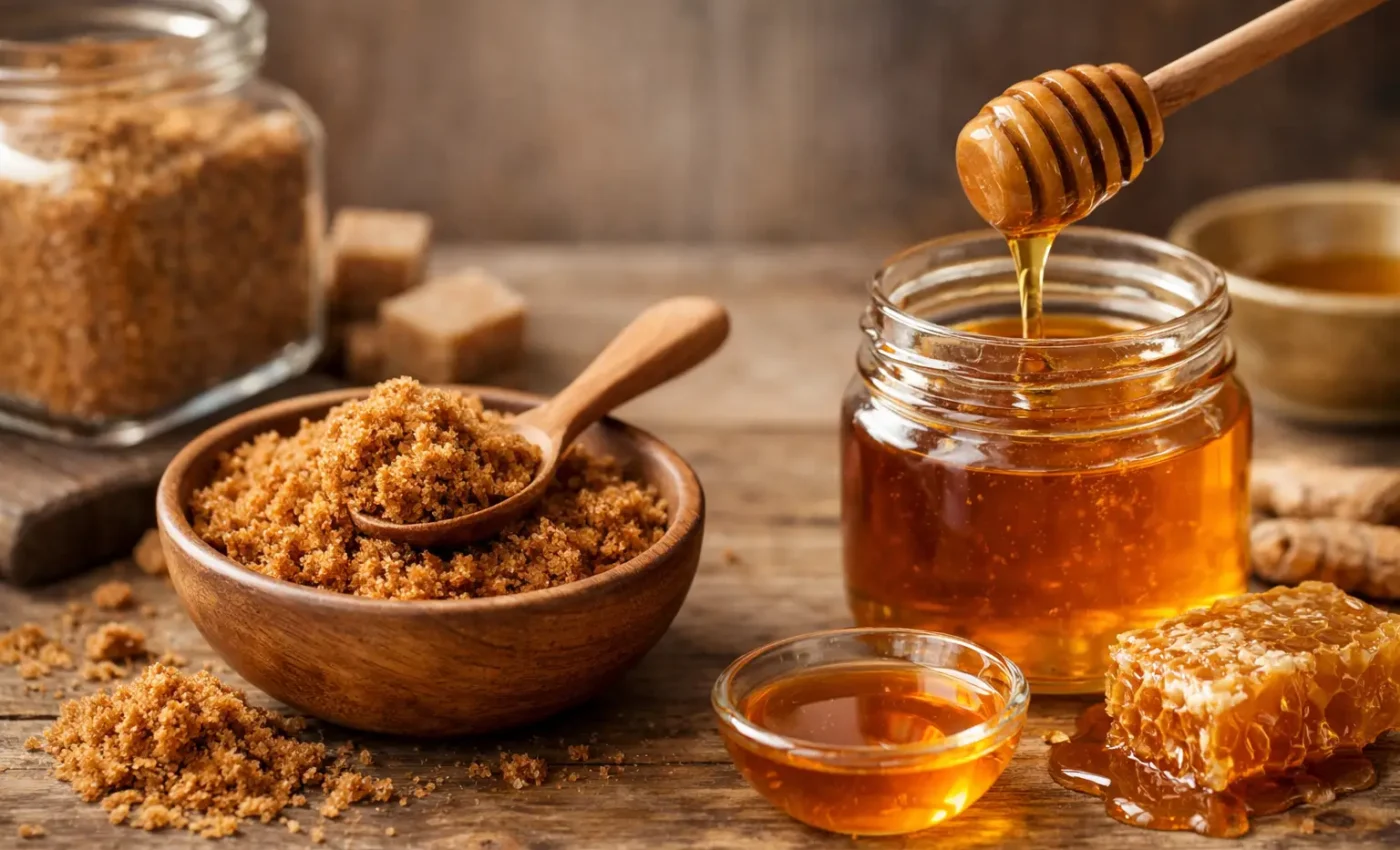
A teaspoon can change more than sweetness. In the brown sugar versus honey choice, the better option depends on whether you need crisp cookie edges, a glossy chicken glaze, a moist quick bread, or a fast cup of tea. Both add sweetness and warmth, but they behave very differently once heat, flour, and other ingredients enter the picture.
For everyday cooking, there is no single winner. Brown sugar is predictable and easy to measure for baking. Honey brings floral flavor and moisture, but it can brown quickly and shift the texture of a recipe. Knowing where each one shines makes substitutions less risky and weeknight cooking easier.
Brown Sugar Versus Honey: The Everyday Difference
Brown sugar is granulated sugar mixed with molasses. Light brown sugar has a mild caramel flavor, while dark brown sugar contains more molasses and tastes deeper, richer, and slightly more pronounced. It is dry, scoopable, and familiar in cookies, crumb toppings, barbecue sauce, and baked beans.
Honey is a liquid sweetener made by bees, with flavor that can range from delicate and mild to bold and earthy. A clover honey may disappear easily into a simple vinaigrette, while a darker wildflower honey can become a noticeable part of a glaze or dressing. Because honey contains water and natural acids, it does more than sweeten.
The practical difference is texture. Brown sugar adds sweetness without adding much liquid, so it works well when a recipe needs a thicker dough, a sandy crumb topping, or a caramel-like chew. Honey contributes moisture, which can keep muffins and snack cakes soft but may make cookies spread more.
Honey also browns faster than brown sugar. That can be a good thing when you want roasted carrots or salmon with a shiny, caramelized finish. It can be less helpful in the oven if the outside of a loaf or batch of cookies darkens before the center is done.
Which One Tastes Sweeter?
Honey generally tastes sweeter than brown sugar, so you often need less of it. The exact difference depends on the honey and the recipe, but a useful starting point is to replace 1 cup of brown sugar with 2/3 to 3/4 cup honey. Since honey is liquid, reduce another liquid in the recipe by about 2 to 4 tablespoons.
Taste matters as much as sweetness. Brown sugar gives foods a familiar molasses note that works especially well with cinnamon, oats, chocolate, pecans, bacon, and savory tomato sauces. Honey has a cleaner, sometimes floral sweetness. It pairs naturally with lemon, mustard, yogurt, carrots, sweet potatoes, and warm spices.
If a dish already has several strong flavors, brown sugar can blend into the background. Honey is more likely to stand out. That is useful when the honey flavor is part of the point, such as honey-mustard dressing, but not always when you simply need a little sweetness to balance a sauce.
When Brown Sugar Is the Better Choice
Choose brown sugar when the recipe needs a dry sweetener or relies on a familiar chewy, caramel-like result. It is usually the easier choice for beginner bakers because it does not require changes to the amount of liquid or baking temperature.
Brown sugar is especially dependable in chocolate chip cookies, oatmeal cookies, blondies, streusel toppings, cinnamon fillings, and homemade barbecue sauce. Packed brown sugar also creates the dense, moist texture many families expect in classic cookies and coffee cakes.
For savory cooking, it works well in a quick glaze for pork chops or meatloaf because its molasses flavor holds up against ketchup, Worcestershire sauce, chili powder, and garlic. Stir it into warm sauces so it dissolves fully rather than leaving a grainy texture.
Keep in mind that brown sugar can harden in the pantry. Store it tightly sealed. If it has turned into a firm block, soften a small amount briefly in the microwave with a damp paper towel, or place a slice of bread in the container overnight.
When Honey Is the Better Choice
Honey is a smart choice when you want a smooth sweetness that dissolves quickly, adds moisture, or gives food a golden finish. It is especially handy for dressings, marinades, tea, oatmeal, yogurt bowls, and no-bake treats.
For a fast weeknight glaze, combine honey with mustard, soy sauce, garlic, and a little oil. Brush it on chicken thighs or salmon near the end of cooking rather than at the beginning. This gives you color and flavor without giving the honey too long to scorch.
Honey can also make simple baked goods feel a little more special. It works well in banana bread, muffins, quick breads, and soft breakfast bars. If you are adapting a standard recipe, lower the oven temperature by about 25 degrees Fahrenheit and start checking for doneness early. The lower temperature helps prevent over-browning.
Crystalized honey is still good to use. Set the jar in warm water and stir until it loosens. Avoid overheating it in a plastic container, and never use honey for children under 1 year old.
How to Substitute Honey for Brown Sugar in Baking
Substitutions work best in forgiving recipes, not recipes that depend on precise sugar structure. Quick breads, muffins, sauces, and simple cakes are usually flexible. Meringues, candy, crisp cookies, and delicate layer cakes are less forgiving.
When using honey in place of brown sugar, start with these adjustments:
- Use 2/3 to 3/4 cup honey for every 1 cup packed brown sugar.
- Reduce other liquids by 2 to 4 tablespoons for each cup of honey used.
- Lower the oven temperature by 25 degrees Fahrenheit.
- Add a small pinch of baking soda, about 1/4 teaspoon per cup of honey, when the recipe does not already include much. This can help balance honey’s natural acidity and encourage proper browning.
These are starting points, not hard rules. A banana muffin batter can handle a little extra moisture. A thin cookie dough cannot. If you want crisp edges and a controlled spread, use brown sugar or follow a recipe written specifically for honey.
Can You Replace Honey With Brown Sugar?
Yes, but the result will usually be less moist and less glossy. For every 1 cup of honey, use about 1 1/4 cups packed brown sugar and add 1/4 cup of liquid, such as water, milk, apple juice, or the liquid already used in the recipe. Warm the mixture briefly if you need it to dissolve into a sauce or dressing.
In a marinade or glaze, brown sugar is often an easy swap because heat helps it melt. Add a splash of water, citrus juice, or soy sauce to recreate the loose consistency of honey. The flavor will be darker and more molasses-forward, which can be delicious with grilled meats and roasted vegetables.
For cold drinks, yogurt, or salad dressing, brown sugar may stay gritty unless dissolved first. Honey is usually the more convenient choice there.
Nutrition Without the Confusion
Brown sugar and honey are both added sugars. Honey has tiny amounts of naturally occurring compounds, while brown sugar contains trace minerals from molasses, but neither is a meaningful source of nutrition in the amounts most recipes use. The bigger question is how much sweetness the dish needs and what flavor and texture you want.
If you are trying to cut back on added sugar, reduce it gradually in foods where sweetness is not structural. You can often use less in oatmeal, sauces, smoothies, and vinaigrettes without anyone missing it. Baking is different: sugar affects moisture, browning, tenderness, and spread, so large reductions can change the final result.
A Simple Way to Decide
Reach for brown sugar when you are baking cookies, making a crumb topping, or building a rich barbecue-style sauce. Reach for honey when you need a liquid sweetener for tea, dressing, a quick marinade, or a moist loaf cake. If you are substituting, choose a recipe with some flexibility and make the small liquid and temperature adjustments that honey requires.
Good food, made practical, often comes down to using what is already in your pantry with confidence. Let the texture you want make the decision, then taste as you go. A small spoonful of the right sweetener can turn an ordinary dinner or bake into something your family looks forward to.