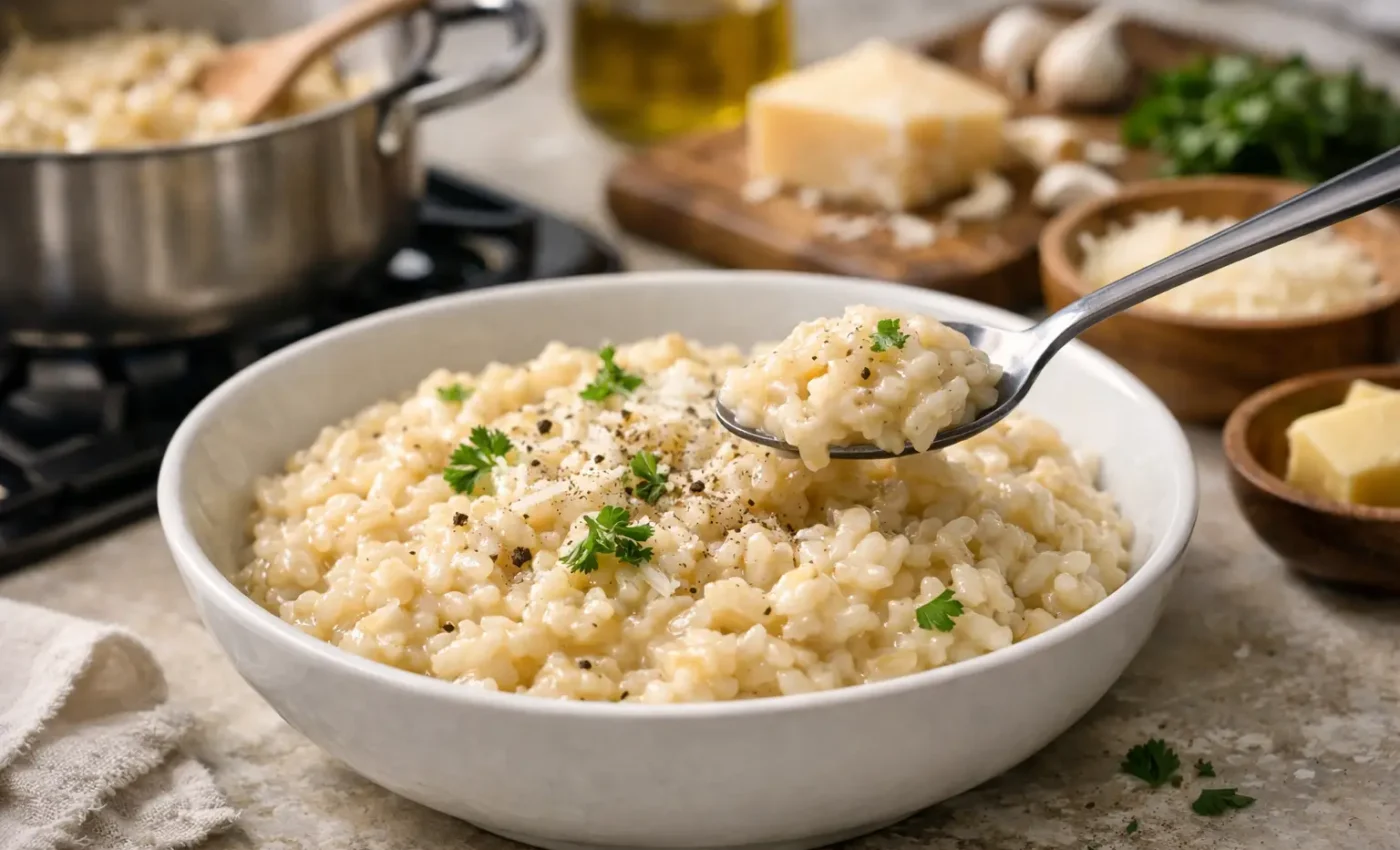
A good risotto feels like a restaurant dinner, but it is built from a few ordinary ingredients and about 30 minutes at the stove. Once you know how to make creamy risotto, it becomes a dependable answer for nights when you want something warm, filling, and a little more special than pasta.
The key is not adding heavy cream. Risotto gets its signature texture from the starch released by the rice as it cooks slowly in warm broth. A little butter and Parmesan at the end make it richer, but the real magic comes from patience, steady heat, and adding liquid at the right pace.
What you need to make creamy risotto
For a simple main-dish risotto that serves four as a side or two to three as a light dinner, gather 1 1/2 cups Arborio rice, 4 to 5 cups low-sodium chicken or vegetable broth, 1 small onion or two shallots, 2 tablespoons olive oil, 2 tablespoons butter, 1/2 cup dry white wine, and 1/2 to 3/4 cup finely grated Parmesan cheese. You will also need salt, black pepper, and a little extra butter if you like a looser, silkier finish.
Arborio is the easiest rice to find and works well for everyday cooking. Carnaroli and Vialone Nano are also great choices if you have them, but there is no need to make a special trip for a more expensive variety. Long-grain rice, jasmine rice, and basmati rice will not give you the same creamy texture.
Use broth you would be happy to sip on its own. Since it is the main seasoning in the pan, bland broth can lead to bland risotto. Low-sodium broth gives you more control, especially because Parmesan brings saltiness at the end.
Start with warm broth and a wide pan
Pour the broth into a saucepan and keep it warm over low heat while you cook. It does not need to boil. Warm broth keeps the rice cooking at a steady pace, while cold liquid drops the temperature of the pan and can make the process take longer.
Choose a wide, heavy skillet, Dutch oven, or deep sauté pan. The rice should have room to cook in a shallow layer rather than pile up in a narrow pot. This helps the liquid reduce evenly and makes stirring easier.
Finely chop the onion or shallot so it softens into the finished dish without leaving large pieces. Heat the olive oil and 1 tablespoon of butter over medium heat, then cook the onion with a small pinch of salt for about 3 to 5 minutes. You want it soft and translucent, not browned.
Add the rice and stir for 1 to 2 minutes. Every grain should look lightly coated in oil and butter, with the edges beginning to turn translucent. This step, often called toasting the rice, adds a gentle nutty flavor and helps the grains stay distinct instead of turning mushy.
How to make creamy risotto, one ladle at a time
Pour in the wine and stir until it is mostly absorbed. The wine adds brightness, but you can replace it with broth if you prefer not to cook with alcohol. Let the liquid cook down until the pan is not soupy before adding more.
Add warm broth about 1/2 to 3/4 cup at a time. Stir often, especially as the liquid gets low, but do not feel tied to the stove every second. A slow, relaxed stir every 20 to 30 seconds is usually enough. The goal is to keep the rice moving, encourage it to release starch, and prevent it from sticking to the bottom.
Wait until most of each addition has been absorbed before adding the next. The rice should look moist and gently bubbling, not dry and not swimming in broth. Continue this rhythm for roughly 18 to 22 minutes after the first liquid goes in.
Taste a grain near the end. Properly cooked risotto is tender with a small, pleasant firmness at the center. If the rice is still chalky, add another splash of broth and keep cooking. If you run out of broth before the rice is ready, hot water works perfectly well.
The finished risotto should spread softly when spooned onto a plate. Italians sometimes describe this as all’onda, or moving like a wave. For a busy home kitchen, just remember this: it should be creamy and loose enough to settle on the plate, not stiff enough to sit in a mound.
Finish off the heat for the best texture
When the rice is tender, take the pan off the heat. Stir in the remaining tablespoon of butter and the grated Parmesan. This final step gives risotto its glossy, comforting finish. Add a splash of warm broth if it has thickened too much, then season with black pepper and salt if needed.
Let it rest for one minute before serving. That brief pause allows the cheese and butter to settle into the rice without making it heavy. Serve right away, because risotto continues absorbing liquid as it sits.
Cream is not necessary, but there are exceptions. If you are using a lighter broth, skipping cheese, or making a dairy-free version, a small spoonful of cream or a plant-based alternative can add body. Just use it as a finishing touch, not as a substitute for cooking the rice properly.
Easy additions that fit a weeknight dinner
A plain Parmesan risotto is satisfying on its own with a simple green salad. It also works as a flexible base for ingredients you may already have in the refrigerator.
For mushroom risotto, brown sliced mushrooms separately in a skillet until deeply golden, then stir them in near the end. Cooking them separately matters because mushrooms release water. Adding them too early can make the rice steam instead of toast.
For a spring-style version, add frozen peas during the last 3 to 4 minutes of cooking. Stir in lemon zest and a squeeze of lemon juice after the Parmesan for a fresher finish. Asparagus pieces can go in at the same point, although thicker stalks benefit from a quick blanch first.
For a heartier meal, top the risotto with cooked chicken, shrimp, or shredded rotisserie chicken. Add cooked protein at the end rather than simmering it with the rice, which keeps it from becoming dry or overcooked. Roasted vegetables, such as broccoli, butternut squash, or cherry tomatoes, are another easy way to turn it into dinner.
Common risotto problems and quick fixes
If your risotto is thick and sticky, it probably needs more warm liquid. Stir in broth a few tablespoons at a time until it loosens. A risotto that seems perfect in the pan can tighten quickly by the time it reaches the table, so it is fine to leave it slightly looser than you think it should be.
If it is watery, keep it over medium heat and stir for another minute or two. The liquid should look creamy and cling to the rice, not pool around it. Avoid raising the heat too high, though. Aggressive boiling can cook the outside of the grains too quickly while the centers stay firm.
If the rice is crunchy after 25 minutes, the pan may have been too hot, the broth may not have been added gradually enough, or the rice simply needs more liquid. Keep going with hot broth or water until the center is tender. Cooking time is a guide, not a rule.
If the flavor falls flat, add salt carefully, then try a little more Parmesan, black pepper, lemon juice, or fresh herbs. Salt brings out the savory flavor of the broth, while acid can wake up a rich dish that tastes dull.
Make risotto work for your schedule
Risotto is best served fresh, but you can make dinner easier by doing the prep ahead. Chop the onion, grate the cheese, measure the rice, and warm the broth while you clear the counter or help with homework. Once the cooking starts, it needs attention, but not complicated technique.
Leftovers will thicken in the refrigerator, which is normal. Reheat them in a skillet with a splash of broth or water until creamy again. Or shape cold risotto into patties, coat lightly with breadcrumbs, and pan-fry them until crisp for an easy lunch.
Keep the first batch simple. A warm bowl of Parmesan risotto teaches you what the rice should look and feel like at every stage, and that confidence makes future dinners much easier. Good food, made practical, can start with one pan, one ladle, and a dinner worth slowing down for.