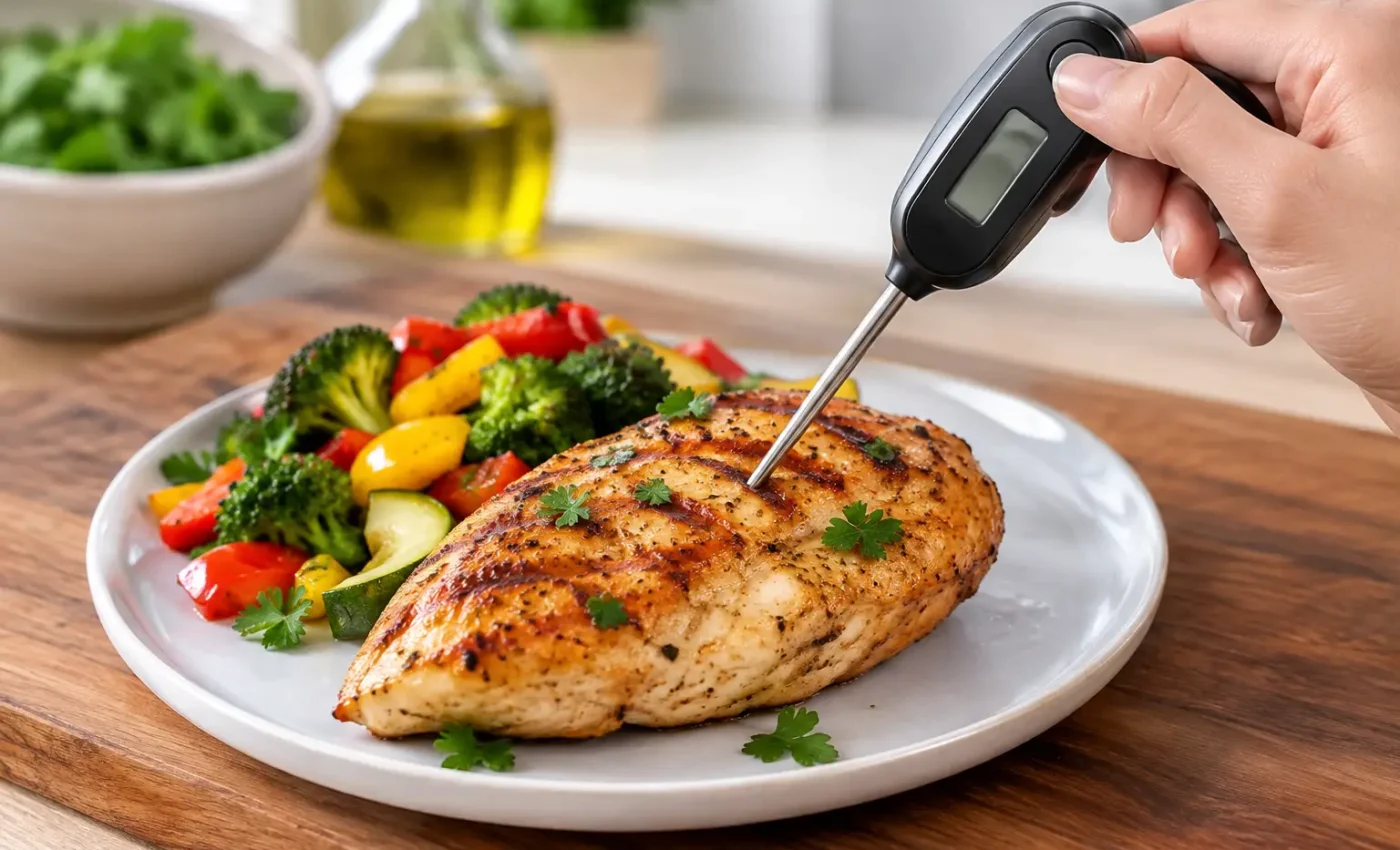
A chicken breast can look beautifully browned, a thigh can feel tender, and the juices can run clear – but none of those signs can confirm it is safe to eat. The chicken safe temperature is 165°F, measured at the thickest part of the meat with a food thermometer. It is one small check that takes the guesswork out of a busy dinner.
For weeknight cooking, that number is more useful than cutting into the chicken repeatedly or relying on the clock. Ovens run a little differently, chicken pieces vary in size, and a pan that is crowded with food cooks more slowly. A quick temperature check helps you serve dinner with confidence while keeping the meat as juicy as possible.
The chicken safe temperature is 165°F
Chicken is safe when its internal temperature reaches 165°F. This applies to chicken breasts, thighs, drumsticks, wings, whole chicken, ground chicken, and chicken casseroles.
That temperature matters because proper heat destroys harmful bacteria that may be present in raw poultry. The goal is not to cook chicken until it is dry or stringy. It is simply to make sure the center of the thickest portion has reached 165°F.
If you are cooking several pieces at once, check more than one. A package of chicken breasts may include one thick piece and one much thinner piece, and they will not finish at exactly the same time. Remove smaller pieces as they reach temperature, then give thicker pieces a few extra minutes.
Use a thermometer, not the color test
Chicken can stay slightly pink near a bone even when it is fully cooked. It can also turn white before the center is hot enough. Juices may look clear before the chicken reaches a safe temperature, especially with thin cuts.
A digital instant-read thermometer is the most dependable tool for the job. It is quick, easy to use, and especially helpful for cooks who want dinner to work without extra stress. If you cook chicken often, it earns a permanent spot in the kitchen drawer.
To get an accurate reading, insert the probe into the thickest part of the chicken without touching bone, the pan, or a pocket of stuffing. Bone and hot metal can give a misleadingly high number. For a chicken breast, insert the thermometer from the side toward the center when possible. For thighs and drumsticks, aim for the meatiest section close to, but not against, the bone.
Clean the thermometer after checking raw or partially cooked chicken. Wash the probe with hot, soapy water before putting it away or using it on finished food.
Chicken breasts: avoid the dry-dinner problem
Boneless, skinless chicken breasts are lean, convenient, and easy to overcook. Their thickness is the biggest variable. A thin cutlet may be ready in minutes, while a large, uneven breast can be undercooked in the middle when the outside is already browned.
For more even cooking, lightly pound very thick chicken breasts to a more consistent thickness before seasoning. You do not need to flatten them completely. Just reducing the thickest end helps the whole piece cook at a similar pace.
Start checking the temperature a few minutes before your recipe’s expected finish time. Once the center reaches 165°F, take the chicken off the heat and let it rest for about five minutes before slicing. Resting gives the juices time to settle back into the meat, so they stay on the plate instead of running out onto the cutting board.
Some cooks pull chicken breasts from the heat just before 165°F and rely on carryover cooking during the rest. This can work with a thick breast coming from a hot skillet, grill, or oven, but it is less predictable with thin pieces. On a rushed weeknight, the simplest approach is to confirm 165°F before serving.
Thighs, drumsticks, and wings can cook longer
Chicken thighs and drumsticks are more forgiving than breasts because they contain more fat and connective tissue. They are safe at 165°F, but many home cooks prefer dark meat cooked a little higher, often around 175°F to 185°F. At that point, the texture is often more tender and the meat pulls from the bone more easily.
That does not mean every thigh needs to reach 185°F. If you like the texture at 165°F and the thermometer confirms it has reached that temperature, it is safe to eat. The higher range is about tenderness and personal preference, not an added safety requirement.
Wings are small and can be tricky to test accurately. Check the thickest part of the meatiest wing section, avoiding the bone. If you are baking a large batch, test a few wings from different areas of the pan, particularly if the pieces are crowded.
How to check a whole chicken
A whole chicken needs temperature checks in more than one spot. The breast and thighs cook at different speeds, and the thickest areas need the most attention.
Check the thickest part of the breast and the innermost part of the thigh, taking care not to touch bone. Both areas should reach 165°F. If the breast is ready but the thigh is not, return the chicken to the oven and check again after several minutes.
A whole chicken should also rest before carving, usually 10 to 15 minutes. Cover it loosely with foil if you want to hold the heat, but do not wrap it tightly. Tight covering traps steam and can soften crisp skin.
If your chicken is stuffed, the center of the stuffing must also reach 165°F. For the easiest, most even result, consider cooking stuffing separately in a baking dish. It gives you a crisp top, makes serving simpler, and removes one more variable from roasting the chicken.
Ground chicken and chicken dishes need the same target
Ground chicken should always be cooked to 165°F. Because the meat has been ground, any bacteria on the surface can become mixed throughout. That makes a thermometer especially useful for burgers, meatballs, lettuce-wrap filling, and skillet meals.
For chicken meatballs or patties, check one from the center of the batch rather than the smallest piece near the edge of the pan. In a saucy dish, pull out a piece and test the middle rather than trying to judge the sauce temperature alone.
Casseroles, chicken pot pie filling, and other mixed dishes should also reach 165°F in the center. The edges of a baking dish heat first, so check near the middle. Letting a casserole stand for a few minutes after baking makes it easier to scoop and gives the heat time to settle through the dish.
Reheating cooked chicken safely
Leftover chicken should be reheated to 165°F before eating. This includes roasted chicken, grilled chicken, shredded chicken for tacos, and chicken added to soup or pasta.
The best reheating method depends on the meal. A skillet with a small splash of broth or water works well for sliced chicken, while the oven is useful for larger pieces. In the microwave, cover the food loosely and stir or turn it halfway through when possible. Microwaves heat unevenly, so check the thickest portion after allowing the food to stand for a minute.
Do not leave cooked chicken sitting out for hours while dinner winds down. Refrigerate leftovers within two hours, or within one hour if the room or outdoor temperature is above 90°F. Store them in shallow containers when you can, so they cool more quickly.
A few habits that make chicken dinners easier
The thermometer is the main safety tool, but simple prep habits make a difference, too. Keep raw chicken and its juices away from produce, cooked food, and ready-to-eat sides. Use a separate cutting board when practical, then wash hands, utensils, and work surfaces with hot, soapy water.
There is no need to rinse raw chicken. Rinsing can splash bacteria onto the sink, counter, and nearby dishes. Pat the chicken dry with paper towels instead if you want better browning, then discard the towels right away.
Finally, give yourself permission to check early and check again. A thermometer reading is not a test you can fail; it is simply useful information. If the chicken is at 158°F, it needs a few more minutes. If it is at 165°F, dinner is ready. That calm, practical check can turn chicken from the meal everyone second-guesses into an easy favorite for tonight.