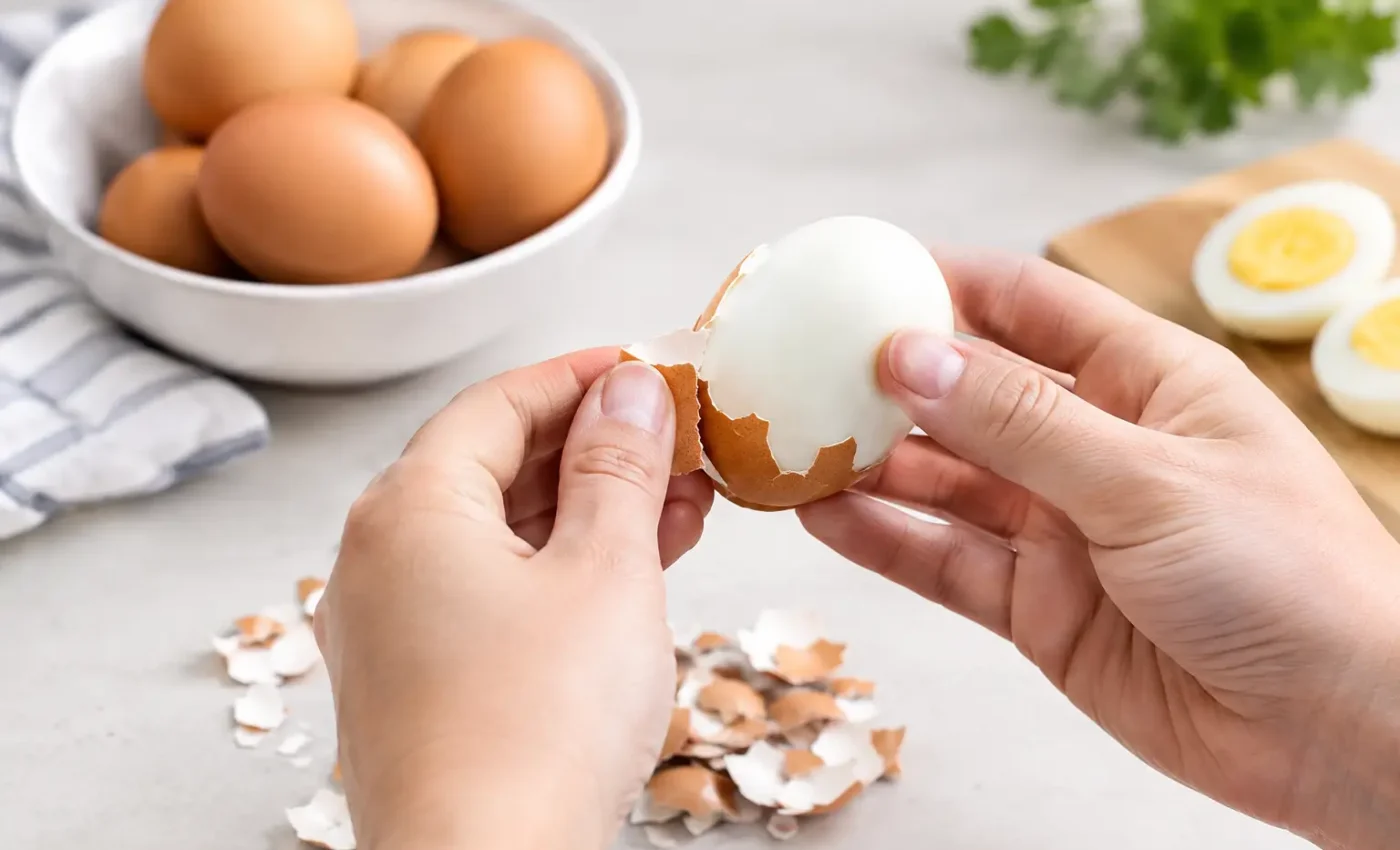
A hard-boiled egg should not leave half its white stuck to the shell. When you peel hard boiled eggs for egg salad, quick breakfasts, or a lunchbox snack, a few small choices make the job much easier. The most reliable approach starts before the eggs even go into the pot, then uses a quick cool-down and a gentle cracking method that protects the egg underneath.
Why hard-boiled eggs can be hard to peel
Eggshells are porous, and the egg white clings to a thin membrane just inside the shell. If that membrane grips the white too tightly, peeling becomes a slow, messy task. This happens most often with very fresh eggs, but cooking and cooling methods matter too.
As eggs sit in the refrigerator for a week or two, their internal chemistry changes slightly. The egg white becomes less acidic, which usually helps it release from the membrane after cooking. That does not mean you need old eggs to get good results. Fresh eggs can still peel well when they are cooked and cooled properly, but eggs that are not straight from the store tend to be more forgiving.
The temperature change after cooking also plays a major role. Moving hot eggs into cold water helps stop the cooking process and can create a little separation between the egg white and its shell. Skip that step, and you are more likely to pull away chunks of white along with the shell.
Start with a dependable cooking method
There are several ways to cook eggs, including steaming, pressure cooking, and baking. For everyday home cooking, boiling eggs in a saucepan is simple and dependable when you control the timing.
Place the eggs in a single layer in a saucepan and cover them with cold water by about an inch. Bring the water to a full boil over medium-high heat. Once it boils, cover the pan, turn off the heat, and let the eggs sit in the hot water.
For firm yolks that work well for salads, deviled eggs, and snacks, let large eggs sit for 10 to 12 minutes. Ten minutes gives you a fully cooked yolk that is a little softer in the center. Twelve minutes produces a firmer yolk. If your eggs are extra large or your stove runs gently, use the longer end of that range.
This method is practical because it avoids a long, aggressive boil, which can bounce eggs around and crack them. It also gives you a consistent starting point. Once you find the timing your family likes, stick with it.
Do not overcook the eggs
Overcooked eggs are still safe to eat, but they can have dry, chalky yolks and a gray-green ring around the center. That ring is harmless. It is simply a reaction between sulfur in the egg white and iron in the yolk caused by too much heat or too much time.
Cooling the eggs promptly keeps the yolks a sunnier yellow and gives you a better texture for eating. It also makes them comfortable enough to handle sooner.
Use an ice bath right away
While the eggs cook, fill a medium bowl with cold water and plenty of ice. As soon as the cooking time is up, use a slotted spoon to transfer the eggs from the pot into the ice bath. Leave them there for at least 10 minutes.
The ice bath does two useful things. First, it stops the eggs from continuing to cook. Second, it cools the shell and white quickly, which helps make peeling cleaner. If you are making eggs ahead for the week, you can leave them in the ice bath until fully chilled, then dry and refrigerate them in their shells.
A bowl of cold tap water is better than leaving the eggs in the hot pan, but ice water is more effective. For a small batch you plan to eat immediately, five minutes in ice water can be enough. For a dozen eggs or eggs you want to peel neatly, give them the full 10 minutes.
How to peel hard boiled eggs cleanly
Start with one cooled egg and gently tap the wider end against the counter. The wider end often has a small air pocket, making it a good place to begin. Roll the egg lightly under your palm to create a network of cracks across the shell.
Peel away a small piece of shell, then find the thin membrane beneath it. If you can lift the membrane with the shell, larger pieces should come off more easily. Work around the egg rather than digging into one stubborn spot.
Peeling under a thin stream of cool running water can help rinse away tiny shell fragments and loosen the membrane. If you would rather not run the faucet, peel the egg in a bowl of water instead. The water gets between the shell and the egg white, providing just enough help without damaging the egg.
Use a light touch. A sharply cracked shell does not need to be scraped off bit by bit. Once the membrane starts releasing, try to slide your thumb beneath it and remove a larger section. This is especially helpful when you want smooth eggs for deviled eggs or a platter.
If the shell is still sticking
Even with good timing and an ice bath, an occasional egg will be stubborn. That is normal, especially with very fresh eggs. Return the egg to the water and keep peeling from the cracked area. A little patience is better than forcing the shell and losing a large piece of white.
If you are peeling several eggs, do not crack every shell at once and leave them sitting out. Peel them in batches, then refrigerate the peeled eggs promptly. They stay fresher and are less likely to dry out.
Small tricks that are worth trying
You may hear that adding baking soda, vinegar, or salt to the cooking water guarantees easy-peel eggs. These additions are not magic fixes. Baking soda may raise the water’s alkalinity a little, which can help in some kitchens, but it can also leave an off flavor if you use too much. Vinegar is more useful for helping an egg white set if an egg cracks during cooking than for making the shell release.
The techniques that make the biggest difference are simpler: use eggs that have been refrigerated for several days when possible, avoid overcooking, and cool them quickly in ice water. Those steps are easier to repeat on a busy morning than measuring extra ingredients for every pot.
Steaming is another option worth considering if you regularly cook eggs for meal prep. Many home cooks find that steamed eggs peel very well because the hot steam sets the outer white quickly. The trade-off is that you need a pot with a steamer basket and may need to test timing once or twice for your equipment. A standard saucepan method is still a great choice for most kitchens.
Store eggs safely for easy meals
Unpeeled hard-boiled eggs can be refrigerated for up to one week. Keep them in a covered container or their original carton so they do not pick up odors from stronger foods. Mark the container with the cooking date if you are preparing several meals ahead.
Peeled eggs should also be refrigerated and are best used within a few days for the freshest texture. Store them in an airtight container. If they seem dry, place a lightly damp paper towel in the container, but replace it daily and keep everything cold.
Do not leave cooked eggs at room temperature for more than two hours. If you are packing them for work, school, or a picnic, use an insulated lunch bag with an ice pack.
Put those peeled eggs to work
A batch of neatly peeled eggs can make weekday food decisions much easier. Slice one over toast, tuck one beside fruit for a quick breakfast, or chop a few into a simple egg salad. They also add satisfying protein to a green salad, grain bowl, or snack plate without requiring another round of cooking.
If you need picture-perfect eggs for deviled eggs, cook a few extra. Even experienced cooks get the occasional rough peel, and the imperfect ones are perfect for chopping into lunch. Once you have a method that works with your pot and stove, peeling eggs becomes one of those small kitchen tasks you no longer have to think twice about.