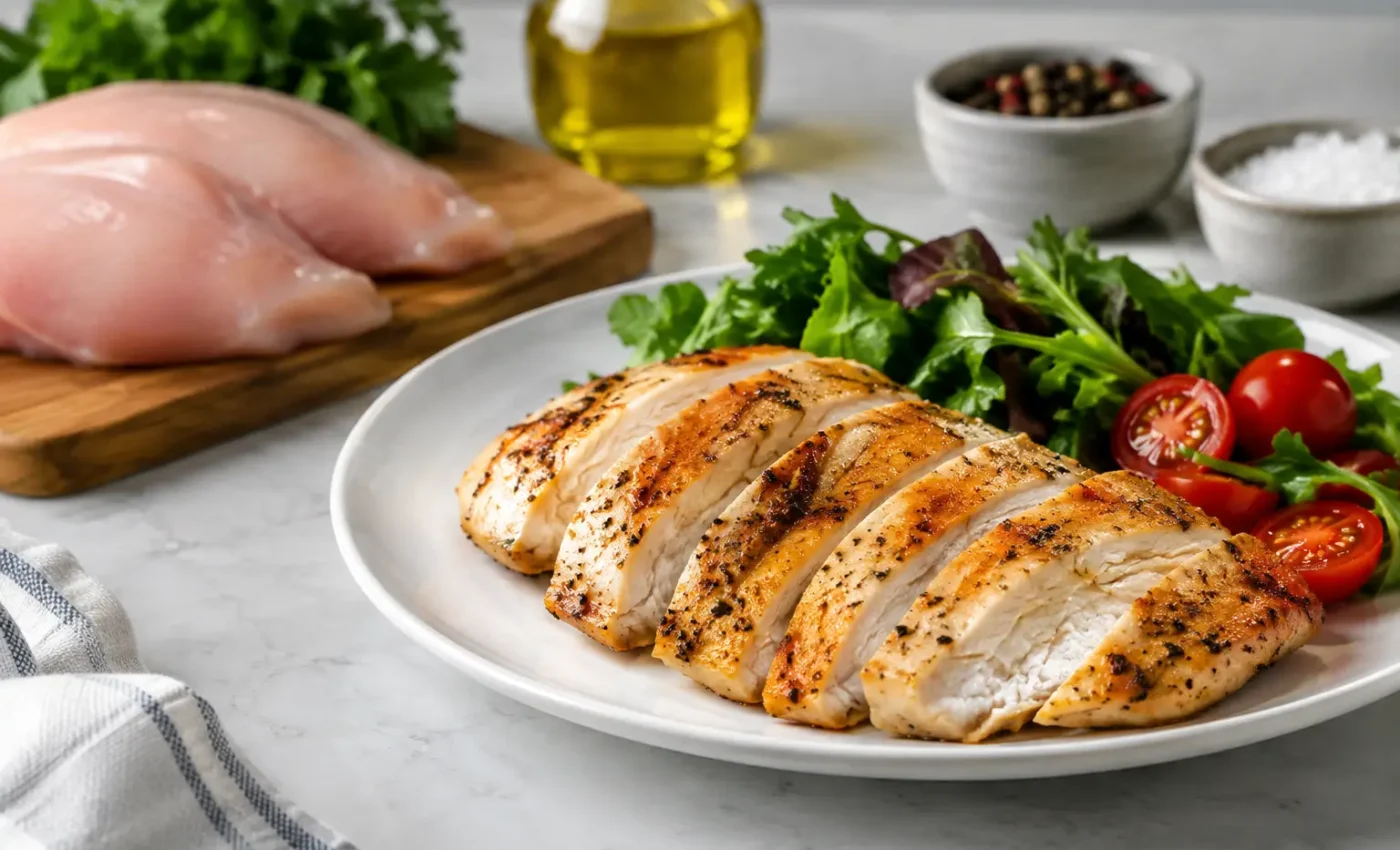
A chicken breast that looked perfect in the pan can turn dry by the time dinner reaches the table. When chicken becomes dry, the cause is usually not a complicated cooking mistake. It is often a small timing, temperature, or prep issue that is easy to correct on a busy night.
The good news is that juicy chicken does not require special equipment or restaurant-level skills. A few dependable habits – choosing the right cut, cooking to the right temperature, and letting the meat rest – make a noticeable difference. Once you know what pulls moisture out of chicken, weeknight dinners become much more reliable.
Why chicken becomes dry
Chicken is naturally lean, especially the breast. It has little internal fat to protect it from high heat, so it can go from tender to chalky quickly. As chicken cooks, its muscle fibers tighten and push out moisture. The longer it stays over heat, the more moisture it loses.
This is why a few extra minutes matter. A thick breast may need several more minutes than a thin one, but cooking both pieces for the same amount of time can leave one underdone and the other dry. Uneven thickness is one of the most common reasons a simple chicken dinner does not turn out as planned.
Dark meat, such as thighs and drumsticks, is more forgiving because it contains more fat and connective tissue. It can handle longer cooking and still taste moist. That does not mean chicken breasts are difficult, though. They simply benefit from a little more attention to heat and timing.
High heat is useful, but only for part of the job
A hot skillet gives chicken a flavorful golden crust. The problem starts when high heat is used from beginning to end, especially with boneless breasts. The outside can become deeply browned while the center catches up slowly, leaving the finished chicken overcooked.
For skillet meals, start with medium-high heat to brown the first side, then lower the heat once you flip the chicken. If the pieces are thick, cover the pan for a few minutes or finish them in a moderate oven. This gives the center time to cook without scorching the outside.
Baking can cause the same issue when the oven is too hot or the chicken stays in too long. A moderate oven temperature, around 375°F to 400°F, works well for many boneless cuts. The exact time depends on thickness, so use the clock as a guide rather than the final answer.
Cooking by appearance can lead to overcooking
Clear juices, firm texture, and no visible pink are clues, but they are not precise enough to rely on alone. By the time chicken looks unquestionably done, it may already be past its best.
An instant-read thermometer takes the guesswork out of it. Check the thickest part of the chicken without touching bone or the pan. Chicken is safe when it reaches 165°F. If you pull it from the heat a few degrees early, around 160°F to 162°F, it can finish as it rests. This approach works best when the chicken is covered loosely and given a few minutes off the heat.
Do not chase an exact number by repeatedly cutting into the chicken. Each cut lets juices run out, and frequent checking can slow down cooking. One quick thermometer check near the expected finish time is usually enough.
Set chicken up for a juicy result
The best fix starts before the chicken touches the pan. Give the pieces a quick look as you unpack them. If one end is much thicker than the other, it will not cook evenly.
For boneless breasts, place the chicken between sheets of parchment or plastic wrap and gently pound the thick end with a meat mallet, rolling pin, or heavy skillet. You are not trying to make it paper-thin. The goal is an even thickness so the whole piece finishes at roughly the same time.
Pat the chicken dry before seasoning it. This may sound backward when you are trying to keep it moist, but surface moisture prevents browning. A dry exterior and a lightly oiled pan help create better color and flavor without requiring extra cooking time.
Salt also helps. Seasoning chicken 15 to 30 minutes before cooking gives the salt time to work into the meat. For a little extra insurance, a simple brine is useful for lean breasts. Stir salt into cold water, soak the chicken for 20 to 30 minutes, then pat it very dry before cooking. It is a helpful option for baked chicken or larger batches, though it is not necessary for every quick dinner.
Marinades can add flavor, but they are not a guarantee against dryness. Oil-based marinades can help the surface brown and keep seasonings in place. Acidic ingredients such as lemon juice, vinegar, or yogurt are best used for a limited time. Leaving chicken in a strongly acidic marinade for too long can make the exterior soft or mushy rather than tender.
Choose the cut that suits the meal
If dinner needs to sit for a few minutes while you finish rice, vegetables, or a salad, thighs are often the easiest choice. They stay tender through a wider range of cooking times and work especially well in saucy dishes, sheet-pan dinners, and stir-fries.
Chicken breasts are a great fit when you want mild flavor, quick cooking, or easy slicing for salads, wraps, and pasta. Keep them even in thickness and monitor the temperature closely. Bone-in chicken takes longer but can be especially flavorful, while skin-on pieces benefit from dry skin and a hot pan or oven for crispness.
There is no single best cut. The practical choice depends on how you are cooking it and how much attention you can give it that night.
The small step that keeps chicken moist: resting
Resting is not just for holiday roasts. Even a simple chicken breast needs a short break after cooking. During that time, the juices settle back through the meat instead of spilling onto the cutting board.
Let small pieces rest for about 5 minutes. Larger breasts, bone-in pieces, or a whole roasted chicken need longer. Cover loosely with foil if your kitchen is cool, but do not wrap tightly. Tight foil traps steam, which can soften a crisp exterior.
Then slice across the grain, meaning across the visible lines in the meat rather than along them. Shorter fibers are easier to chew, so the chicken feels more tender even when it has been cooked simply.
Rescue chicken that is already dry
Dry chicken is disappointing, but it does not have to be wasted. The key is to stop cooking it further and add moisture in a way that fits the meal.
Slice or shred the chicken, then warm it gently in a sauce, broth, salsa, curry, or pan juices. Keep the heat low and only warm it until it is hot. This will not return the chicken to its original texture, but it can make it much more pleasant in tacos, pasta, grain bowls, soups, and sandwiches.
For leftovers, store chicken in an airtight container with a spoonful of its cooking juices or a little broth. Reheat covered at low power in the microwave, stopping to stir or turn pieces as needed. High microwave heat is a fast route to dry, rubbery leftovers.
A dependable routine for busy nights
When you need dinner to work, keep the method simple. Even out thick chicken pieces, season them ahead when possible, and preheat the pan or oven properly. Brown chicken briefly, reduce the heat or move it to the oven as needed, and check the temperature before it looks overdone. Then let it rest while you set the table.
These steps take very little extra time, but they remove the usual reasons chicken becomes dry. Good food, made practical, often comes down to knowing when to stop cooking. Give your chicken that short rest, and let dinner arrive at the table tender, flavorful, and ready to enjoy.