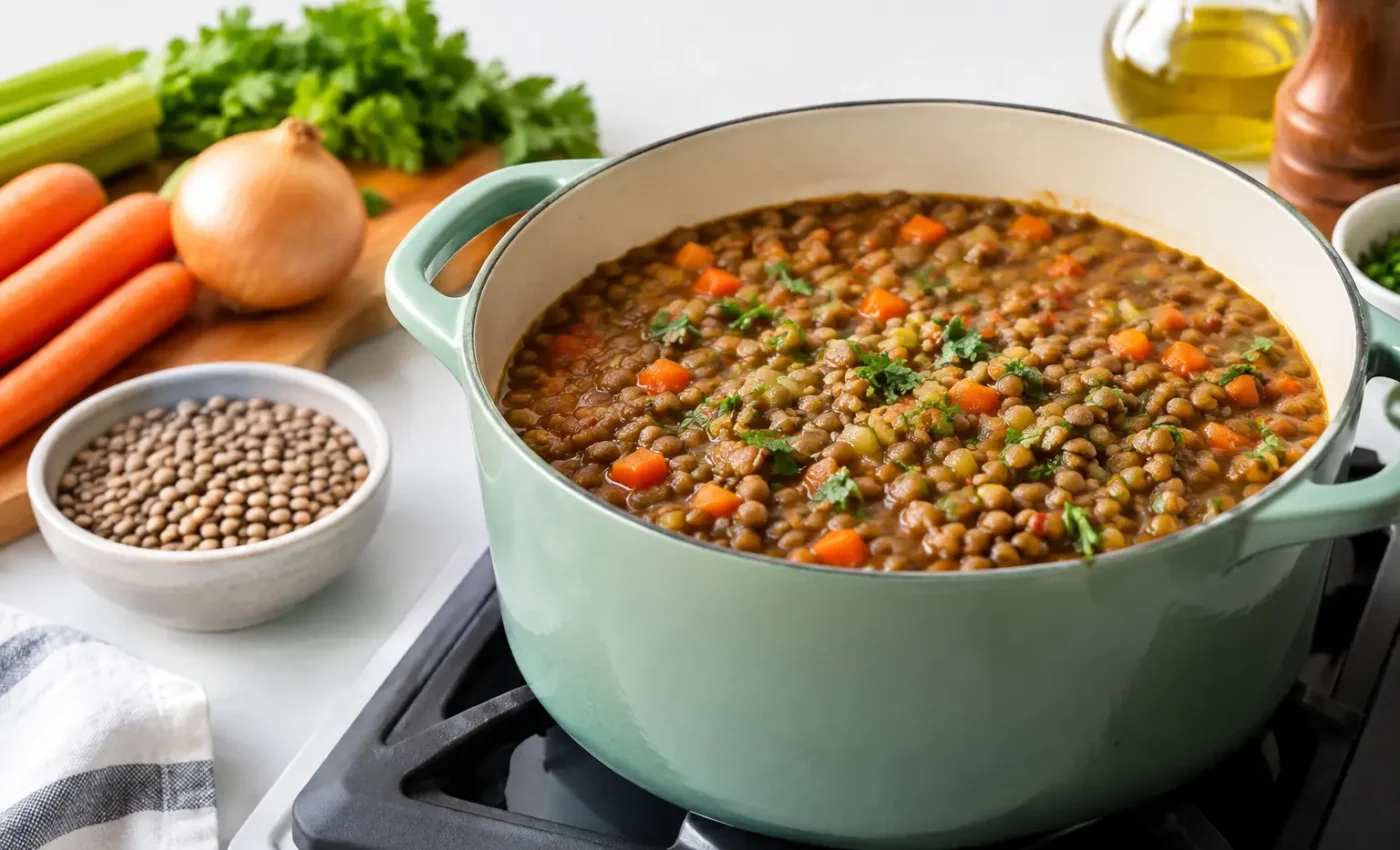
A bag of lentils can rescue dinner when the fridge looks thin. You can cook lentils without soaking and still get a tender, satisfying pot for soup, grain bowls, tacos, salads, or a simple side dish. Unlike dried beans, lentils are small and quick-cooking, so soaking is usually an extra step you can skip.
The key is choosing the right type, using enough liquid, and checking them before the package timing is up. A pot of lentils does not need much attention, but a few small choices make the difference between creamy, flavorful results and a pot that is watery or mushy.
Why Lentils Do Not Need Soaking
Soaking dried beans can shorten their cooking time because beans are large and dense. Lentils have thinner skins and a much smaller shape, so water reaches the center quickly as they simmer. Most common lentils are ready in 20 to 40 minutes straight from the pantry.
Skipping the soak also makes meal planning easier. You do not need to decide on dinner the night before to make a hearty lentil soup or a warm side for roasted chicken. Just rinse the lentils, add them to a pot, and let them simmer while you prepare the rest of the meal.
There is one trade-off: cooking times vary more than many recipes suggest. Older lentils can take longer to soften, and hard water may slow things down too. Start checking early, then keep cooking in short increments until they have the texture you want.
Choose the Best Lentil for Your Meal
Not every lentil cooks the same way. Brown and green lentils are the everyday choice for soups, salads, and simple side dishes. They hold their shape reasonably well but become tender and a little creamy around the edges.
Red and yellow lentils cook faster and break down as they soften. They are a good fit for creamy soups, curries, and dals, where a thick texture is part of the appeal. They are less useful when you want distinct lentils in a cold salad.
Black lentils and French green lentils, often called lentilles du Puy, stay firmer and keep a more polished shape. They take longer than red lentils but are especially good with vinaigrettes, roasted vegetables, or fish. If your dinner needs lentils that will not disappear into the sauce, choose one of these varieties.
How to Cook Lentils Without Soaking on the Stove
Start by measuring your lentils and looking through them quickly. Remove any small stones or shriveled pieces, then rinse the lentils in a fine-mesh strainer under cool water. This step clears away dust and helps you catch anything that does not belong in dinner.
Use the right liquid ratio
For brown, green, black, or French green lentils, use about 3 cups of water or broth for every 1 cup of dried lentils. This gives them room to cook evenly without leaving you with a large amount of liquid to drain. If you are making soup, add extra broth because the lentils will absorb some as they cook.
For red or yellow lentils, begin with 2 1/2 to 3 cups of liquid per cup of lentils. They thicken the cooking liquid as they break down, so this ratio gives you a softer, spoonable result. Add a splash more water or broth later if the pot becomes thicker than you like.
Broth adds easy flavor, but water works well when you plan to season the finished dish. A bay leaf, a halved garlic clove, a piece of onion, or a few sprigs of thyme can gently flavor the pot without making the lentils taste tied to one particular recipe.
Simmer gently, not aggressively
Bring the lentils and liquid to a boil over medium-high heat. Once bubbling, lower the heat until the liquid holds a gentle simmer. Cover the pot loosely or leave the lid slightly ajar so steam can escape.
A hard boil can toss lentils around and split them before their centers are fully tender. A calm simmer cooks them more evenly and gives you better control, especially with green and black lentils that you want to keep intact.
Start checking red lentils after 12 to 15 minutes. Brown and green lentils are often ready in 20 to 30 minutes, while black and French green varieties may take 25 to 40 minutes. Taste a few from the pot rather than relying on one lentil alone. They should be tender all the way through, without a chalky center.
Season at the right moment
Salt is fine to add early. A modest pinch in the cooking liquid helps flavor the lentils from the inside out, and it will not prevent them from softening. If you use salty broth, wait until near the end before adding more.
Hold off on strongly acidic ingredients, such as tomatoes, vinegar, lemon juice, or wine, until the lentils are nearly tender. Acid can make the skins stay firm longer, particularly if your lentils are older. For a tomato lentil soup, simmer the lentils in broth first, then stir in tomatoes once they have started to soften.
When the lentils are done, drain off any excess liquid if needed. Remove the bay leaf or larger aromatics, then season with salt, pepper, olive oil, herbs, or a squeeze of lemon. That final seasoning is what turns plain pantry lentils into something everyone wants another spoonful of.
Easy Ways to Use a Fresh Pot of Lentils
Cooked lentils are useful because they can take on different flavors without much extra work. Toss warm green lentils with olive oil, lemon, chopped parsley, and crumbled feta for a quick lunch. Stir red lentils into a curry sauce with coconut milk and spinach for a cozy meatless dinner.
For a family-friendly taco filling, sauté onion, garlic, chili powder, cumin, and a little tomato paste, then fold in cooked brown lentils. Add a splash of broth or water and mash a few lentils with the back of a spoon so the mixture holds together. Serve with tortillas, shredded cheese, lettuce, and whatever toppings are already in the refrigerator.
Lentils also make soups feel more filling without stretching the grocery budget. Add cooked brown or green lentils to vegetable soup during the last few minutes, or simmer them directly in broth with carrots, celery, onion, and herbs. Pair the bowl with crusty bread, and weeknight dinner is handled.
Common Problems and Simple Fixes
If your lentils are still hard after the expected cooking time, they probably need more time, not more heat. Add a little hot water if the pot looks dry, keep the simmer gentle, and test again in five-minute intervals. Very old lentils can take close to an hour.
If they seem tough even after a long simmer, check whether an acidic ingredient went into the pot too early. There is no quick fix once acid has slowed the process, but continued gentle cooking can still help. Next time, add tomato products and citrus near the end.
If your lentils turn mushy, they are still delicious. Turn them into soup by adding broth and vegetables, blend them for a creamy base, or season them with cumin and garlic for a spreadable sandwich filling. For a firmer result next time, begin checking sooner and drain them as soon as they reach your preferred texture.
If the finished pot tastes bland, the problem is usually not the lentils. Add salt gradually, then brighten the flavor with lemon juice, vinegar, fresh herbs, grated Parmesan, or a drizzle of olive oil. A little contrast wakes up their mild, earthy flavor.
Make Tonight Easier With Cooked Lentils
Cook a double batch when you have the pot out. Let the lentils cool, then store them in a covered container in the refrigerator for up to five days. Keep a little of their cooking liquid with them if you want them especially moist, or drain them well for salads and grain bowls.
For longer storage, freeze cooked lentils in meal-size portions for up to three months. Thaw them overnight in the refrigerator or warm them gently in soup, sauce, or a skillet with a splash of water. They are one of those low-cost staples that can turn a busy night into a homemade meal with very little effort.
The next time dinner needs a practical starting point, reach for the lentils in the pantry. A rinse, a simmer, and a few familiar seasonings are enough to put something warm and dependable on the table.