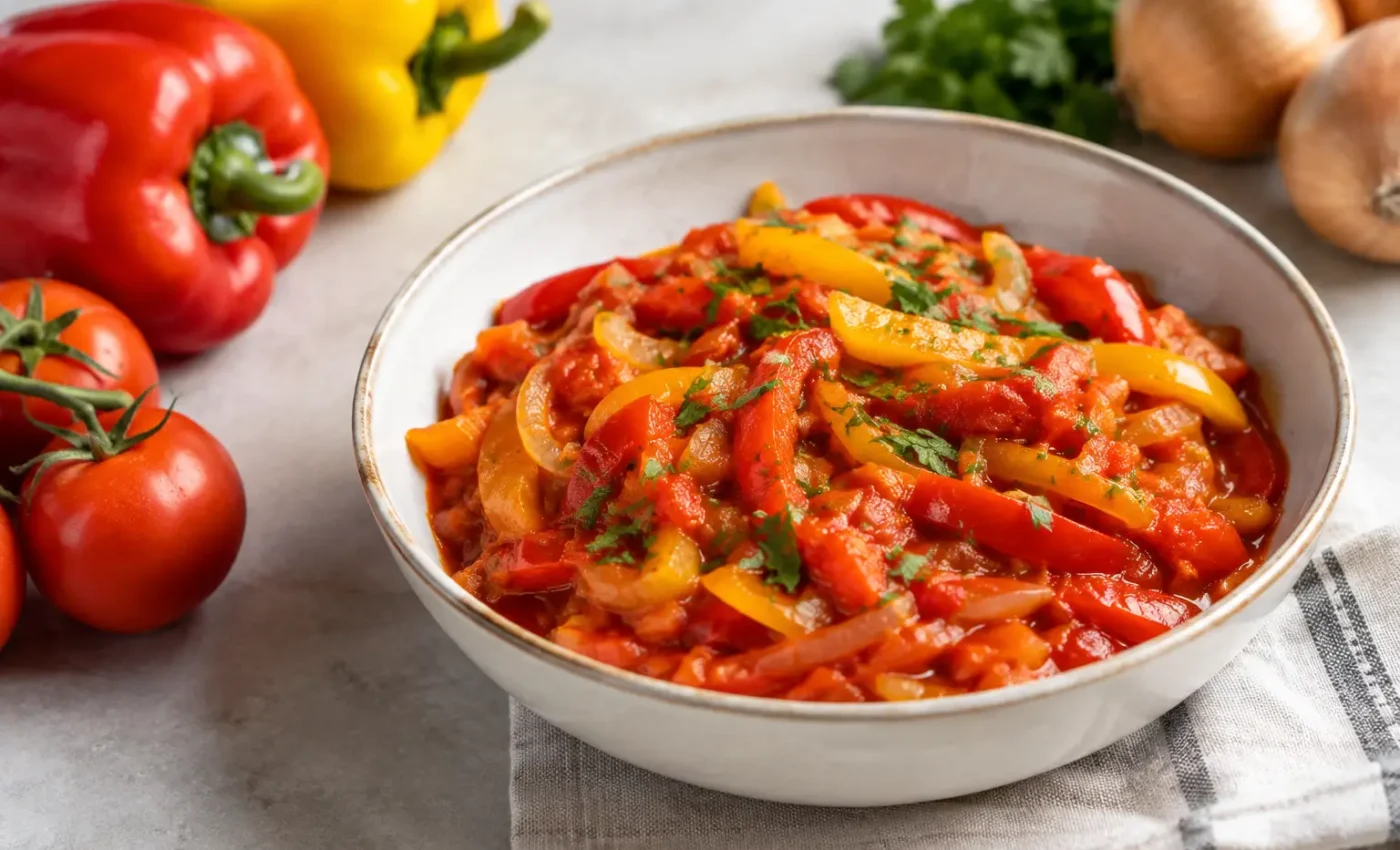
A skillet full of softened peppers, sweet onions, and juicy tomatoes can solve dinner without much planning. So, what is Hungarian lecsó? It is a home-style vegetable dish from Hungary, gently cooked with paprika until tender, rich, and full of summer flavor. It can be a light main dish, a side for grilled meat, or the base for an easy meal with eggs or sausage.
Lecsó is the kind of food that feels greater than the sum of its parts. The ingredient list is simple, the cooking is forgiving, and the result is warm, colorful, and satisfying with bread on the side. For busy home cooks, it is also a useful way to turn a few everyday vegetables into something that tastes intentional.
What Is Hungarian Lecsó, Exactly?
Hungarian lecsó, pronounced roughly “LEH-choh,” is a cooked pepper, tomato, and onion dish seasoned most often with Hungarian paprika. It is especially associated with late summer, when peppers and tomatoes are at their best, but it works well year-round with grocery-store produce.
There is no single fixed version. Some households make lecsó fairly loose and saucy, while others cook it longer until the vegetables are silky and concentrated. It may be served plain, stirred with eggs, or enriched with smoked sausage. That flexibility is part of what makes it a regular family meal rather than a dish reserved for special occasions.
The flavor is naturally sweet from the vegetables, lightly savory from the onions and paprika, and pleasantly tangy from tomatoes. It is not usually spicy, although you can add heat if your table enjoys it. Think of it as a cozy vegetable skillet with a bright, paprika-forward personality.
The Ingredients That Give Lecsó Its Character
At its core, lecsó uses onions, peppers, tomatoes, oil or rendered fat, salt, and paprika. Each ingredient has a clear job, so the dish stays simple without tasting plain.
Peppers are the main event
Traditional Hungarian lecsó often uses pale yellow Hungarian wax peppers, which are flavorful and can range from mild to hot. In a typical US grocery store, bell peppers are the easiest substitute. Yellow, orange, or red bell peppers bring sweetness and a tender texture. Green bell peppers can work too, but their sharper flavor may make the finished dish a little less sweet.
For a more traditional feel, use a mix of yellow bell peppers and mild banana peppers. Before adding banana peppers, taste a small piece if possible. Some are much hotter than others.
Tomatoes create the sauce
Fresh ripe tomatoes are classic. As they cook down, they release juice that brings everything together. Roma tomatoes are a practical choice because they are meaty and less watery, but any ripe tomato will do.
When fresh tomatoes are out of season, canned diced tomatoes are a dependable backup. The texture will be softer and saucier, which is not a problem. Just drain a little liquid first if you prefer a thicker result.
Paprika adds warmth, not just color
Sweet Hungarian paprika is the usual choice. It gives lecsó its warm red color and gentle pepper flavor without making it fiery. Smoked paprika is not traditional, but a small amount can be nice when you are making a meat-free version and want a deeper taste.
Paprika burns easily, so it is best stirred into the onions briefly over low heat before the wetter vegetables go in. Once tomatoes and peppers are added, the moisture protects the spice and helps it bloom into the dish.
How Lecsó Is Traditionally Cooked
The method is uncomplicated: onions cook first until soft, paprika goes in briefly, and sliced peppers and chopped tomatoes follow. The pan is then covered or left partly uncovered while the vegetables soften and release their juices.
This is not a dish that needs constant stirring or exact timing. The main choice is texture. Cook it for a shorter time if you want peppers that still have some shape and bite. Let it simmer longer if you want a softer, jammy mixture that is excellent spooned over rice, potatoes, or toast.
A wide skillet or Dutch oven works best because the vegetables have room to cook evenly. Start with medium heat to soften the onions, then lower the heat once the tomatoes begin to break down. If the pan seems dry before the tomatoes release their juices, add a small splash of water. If it seems too wet at the end, cook uncovered for a few more minutes.
Common Ways to Serve Hungarian Lecsó
Plain lecsó is often served as a side dish with roasted or grilled meats. It is also filling enough to become dinner with a few simple additions. A hearty slice of crusty bread is one of the best ways to catch the flavorful juices.
For a quick main dish, stir beaten eggs into the cooked vegetables and cook gently until the eggs are softly set. This makes a comforting skillet meal that works for breakfast, lunch, or a low-effort dinner.
Many Hungarian versions include smoked sausage, often added in slices after the vegetables begin to soften. The sausage seasons the whole pan as it cooks. If you are using a salty smoked sausage, taste before adding extra salt.
Lecsó also pairs well with rice, buttered noodles, boiled potatoes, or creamy polenta. These options make it more substantial when you are feeding a family or stretching dinner across a few servings. For a lighter plate, serve it alongside simple chicken, fish, or a fried egg.
Easy Adjustments for a US Home Kitchen
Lecsó is practical because you do not need specialty ingredients to make a good version. Bell peppers, a yellow onion, fresh or canned tomatoes, and sweet paprika will get you very close to the dish’s familiar flavor.
If you cannot find Hungarian paprika, use a fresh, good-quality sweet paprika from the spice aisle. Old paprika can taste dusty or flat, so this is one spice worth replacing if it has been sitting in the cabinet for years.
Bacon is sometimes used to start the dish, adding a savory foundation. Olive oil or neutral cooking oil is an easy everyday choice, especially for a vegetarian meal. Garlic is not always included in traditional versions, but one clove can be welcome if your family loves it. Keep it in the background so the peppers and tomatoes still lead.
You can also make lecsó more filling with chickpeas, white beans, or cooked lentils. These additions are not classic, but they turn the skillet into a practical meatless dinner. Add them near the end so they warm through without becoming mushy.
What Lecsó Tastes Like
If you have never tried it, expect something fresher and lighter than a heavy tomato sauce. The peppers stay at the center, with tomatoes providing brightness and paprika adding earthy warmth. Depending on how long it cooks, it can be spoonable and brothy or soft and almost spreadable.
The dish tastes best when seasoned in layers. Salt the onions lightly, then taste again after the tomatoes have cooked down. A pinch of sugar can help when tomatoes are very acidic, but it is usually unnecessary if the peppers are sweet and ripe. If the flavor seems dull, a little extra salt often helps more than extra paprika.
Make-Ahead and Leftover Tips
Lecsó keeps well in the refrigerator for about three to four days, and many people enjoy it even more after the flavors settle overnight. Reheat it gently in a skillet or microwave until hot. If it has thickened too much, loosen it with a spoonful of water.
It can also be frozen, though the peppers will be softer after thawing. That is perfectly fine for serving over rice, folding into eggs, or using as a topping for baked potatoes. Freeze it in meal-sized containers so a busy night has one less decision waiting for you.
The next time peppers and tomatoes are sitting in your kitchen, skip the pressure to make something complicated. A simple pan of lecsó turns them into a comforting meal that welcomes substitutions, feeds a table easily, and leaves room for you to make it your own.