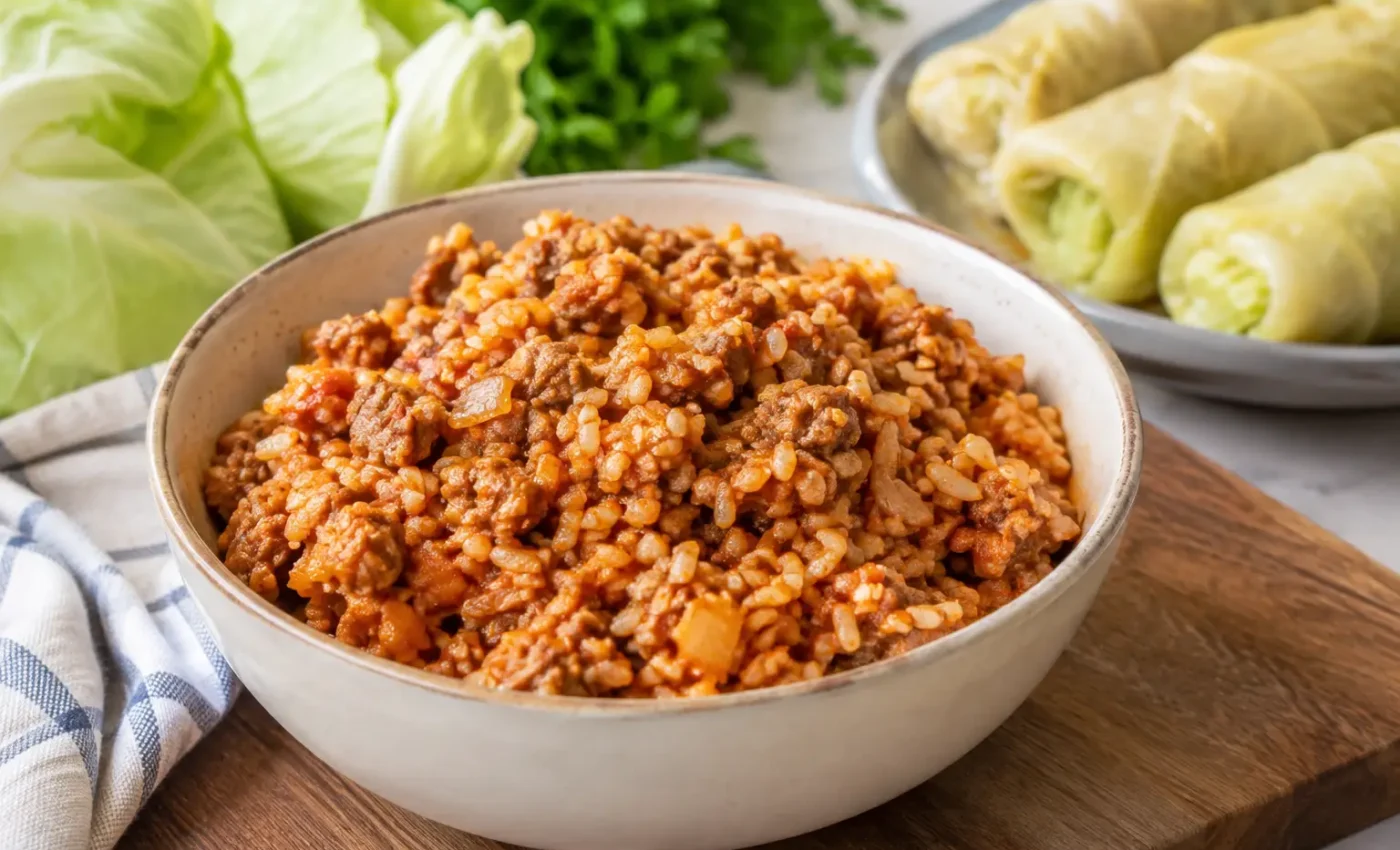
Hungarian cabbage roll filling is humble food at its best: seasoned ground meat, rice, onion, and paprika tucked into tender cabbage leaves, then cooked slowly until the flavors settle into each other. It is a comforting family dinner that feels special without requiring hard-to-find ingredients or complicated prep.
The filling matters as much as the cabbage. If it is too wet, the rolls can split or turn soft. If it is packed too firmly, the rice has no room to expand. The goal is a mixture that is moist, lightly seasoned, and easy to shape in your hand – sturdy enough to roll, but not dense.
What Makes Hungarian Cabbage Roll Filling Different
Hungarian-style cabbage rolls vary from one family and region to another, so there is no single version that every cook follows. Still, the familiar flavor base usually includes ground pork, rice, onion, sweet Hungarian paprika, salt, pepper, and garlic. Some cooks add a little tomato, while others rely more on sauerkraut or sour cabbage for tang later in the cooking process.
Pork is a practical choice because a little fat keeps the filling tender during a long simmer. Very lean ground meat can work, but it needs more care and may produce a drier center. A blend of ground pork and ground beef is also a good option for home cooks who prefer a fuller, beefier flavor.
Paprika brings warmth, color, and the recognizable character of the dish. Use sweet paprika as the main seasoning. If your household enjoys a little heat, add a small pinch of hot paprika or cayenne rather than replacing all the sweet paprika. The filling should taste gently savory, not aggressively spicy.
Ingredients for a Dependable Filling
For about 12 medium cabbage rolls, gather the following:
- 1 pound ground pork, or a half-pork, half-beef blend
- 1/2 cup uncooked long-grain white rice
- 1 small yellow onion, finely grated or minced
- 2 cloves garlic, finely minced
- 1 tablespoon sweet Hungarian paprika
- 1 teaspoon kosher salt
- 1/2 teaspoon black pepper
- 1 large egg
- 2 tablespoons water or broth
- 1 tablespoon chopped fresh parsley, optional
Long-grain white rice is the easiest choice because it cooks predictably and does not turn sticky. Do not cook the rice first. It finishes cooking inside the cabbage rolls and absorbs flavor from the sauce or broth around it. Using fully cooked rice can leave the filling overly soft after simmering.
The egg helps bind the mixture, especially if you are using a looser ground meat blend. It is useful but not always traditional in every kitchen. If you prefer to leave it out, mix the meat thoroughly and handle the rolls gently. They will still work, though the filling may be a little more delicate before cooking.
How to Mix Hungarian Cabbage Roll Filling
Start with cold ground meat in a large bowl. Add the rice, onion, garlic, paprika, salt, pepper, egg, water or broth, and parsley if using it. Mix with clean hands or a fork just until everything looks evenly distributed.
Avoid kneading the mixture like dough. Overmixing makes ground meat compact and can leave the finished rolls tough. A few gentle turns and squeezes are enough. The filling should feel moist and cohesive, not soupy. If liquid gathers at the bottom of the bowl, stir in a tablespoon of rice and let the mixture stand for five minutes.
Before rolling a full batch, cook a small spoonful of filling in a skillet until browned and cooked through. Taste it for salt and paprika. This quick check takes only a few minutes and helps prevent a whole pot of underseasoned rolls. Adjust with another pinch of salt, pepper, or paprika if needed.
The right amount for each leaf
Use roughly 2 to 3 tablespoons of filling for an average cabbage leaf. Smaller leaves need less, while large outer leaves can hold more. Place the filling near the stem end, fold the sides inward, and roll toward the top of the leaf.
Do not make the rolls tight. The raw rice needs space to absorb liquid and expand as it cooks. A roll that feels gently firm, with a little give when pressed, is about right. Tuck the seam underneath when placing each roll in the pot.
Simple Adjustments for Your Table
A traditional-inspired filling is flexible enough for everyday cooking. If you have only ground turkey, it can work, but add 1 tablespoon of olive oil to replace some of the richness lost without pork. Turkey also benefits from a little extra garlic or paprika.
Brown rice is less reliable for this dish because it takes longer to soften. It may stay chewy by the time the cabbage is tender unless you partially cook it first. If brown rice is what you have, simmer it for about 15 minutes, drain it well, then use it in the filling. Keep in mind that the finished rolls will have a heartier texture.
For a milder family meal, stay with sweet paprika and use regular green cabbage. If you enjoy the tangy flavor associated with many Hungarian cabbage roll meals, layer rinsed sauerkraut around and between the rolls as they cook. Rinsing is helpful if the sauerkraut tastes very salty or sharp.
Tomato sauce is another choice that depends on your preference. A tomato-based cooking liquid is familiar and kid-friendly, while broth with sauerkraut creates a more savory, tangy result. Both pair well with the pork and rice filling.
Common Filling Problems and Easy Fixes
If the mixture feels dry before rolling, add water or broth 1 tablespoon at a time. Ground meat brands vary, and leaner meat may need a little help. Do not add too much at once, since a wet filling is harder to keep inside the cabbage leaves.
If the filling is loose, first let it sit for five to ten minutes so the rice can start absorbing moisture. If it still will not hold a small mound when pressed together, add 1 tablespoon of uncooked rice or a spoonful of fine breadcrumbs. Breadcrumbs are not necessary in a classic-style filling, but they are a sensible fix when dinner needs to move forward.
If your cooked rolls taste bland, the issue is usually not the cabbage. The filling may need more salt, or the cooking liquid may need better seasoning. Season the sauce, broth, and sauerkraut layers as well as the meat mixture, because the rice absorbs flavor while it cooks.
Make-Ahead Tips for Busy Nights
You can mix the filling up to one day ahead, cover it tightly, and refrigerate it. Keep it cold and roll the cabbage leaves shortly before cooking. For food safety, do not leave raw meat filling at room temperature while you prepare other parts of the meal.
You can also freeze uncooked cabbage rolls. Arrange them in a single layer until firm, then transfer them to a freezer-safe container. Cook them from thawed for the most even results, adding a little extra simmer time if they are still chilly in the center.
Leftover cooked cabbage rolls reheat well in their sauce. Warm them gently on the stove or in a covered baking dish so the cabbage stays tender and the filling does not dry out. They often taste even better the next day, after the paprika, cabbage, and sauce have had more time together.
A good Hungarian cabbage roll filling does not need to be fussy. Keep the rice uncooked, season the meat with confidence, and leave a little room inside every roll. Set a pot to simmer, and you have the kind of practical, comforting dinner that makes tomorrow’s lunch easier too.