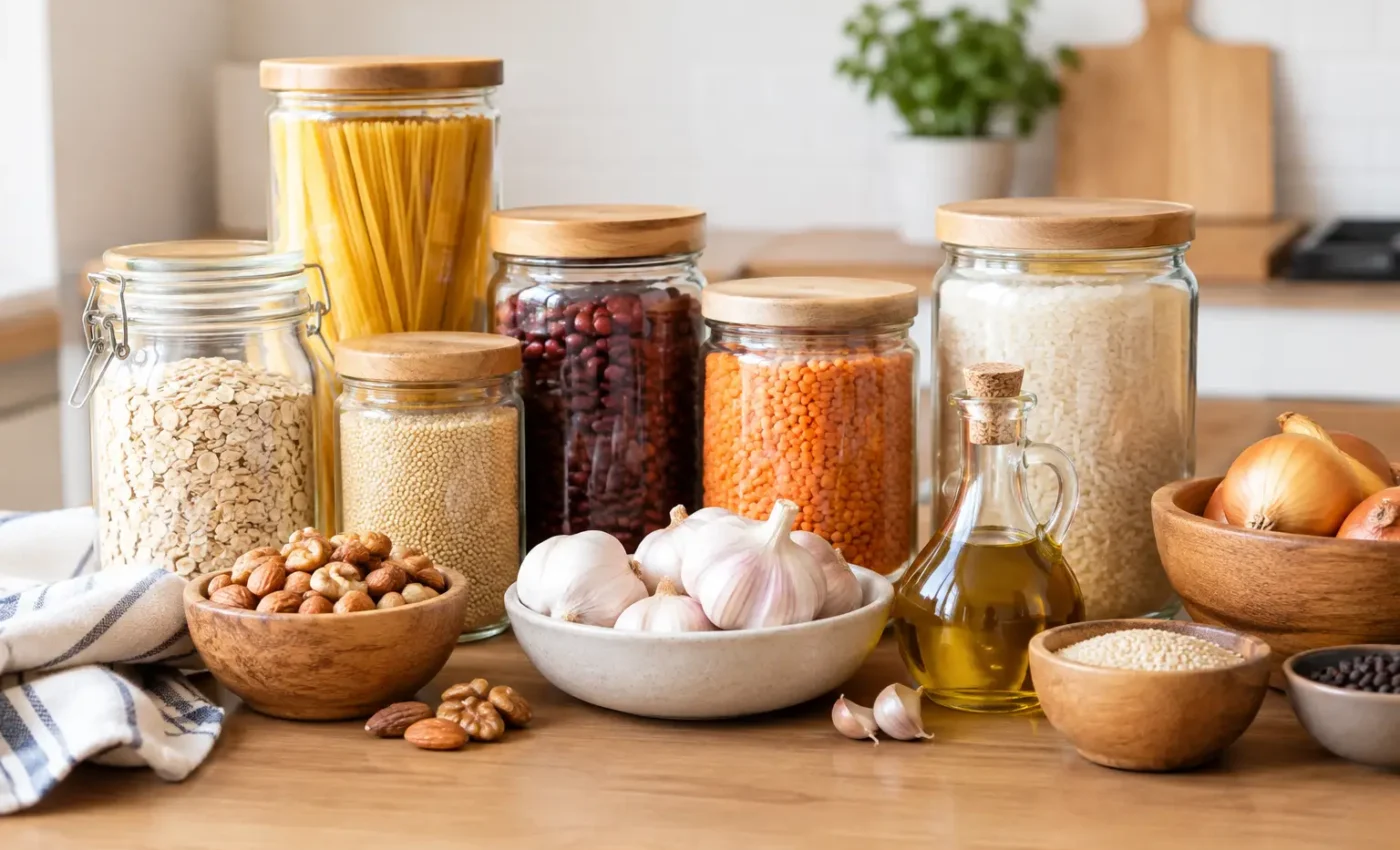
At 5:30 p.m., a well-stocked pantry can be the difference between wondering what to make and getting a warm dinner on the table. This guide to pantry staples is built for real weeknights: familiar ingredients, flexible meals, and fewer last-minute grocery runs. You do not need a huge pantry or specialty ingredients. You need a small group of dependable basics that work hard in many kinds of meals.
The goal is not to stock every possible item. It is to keep ingredients that help you turn fresh produce, eggs, chicken, or whatever is in the fridge into something satisfying. A practical pantry supports tomato pasta on Monday, bean tacos on Wednesday, and a quick soup when the schedule gets away from you.
Start With the Staples You Use Most
The best pantry is personal. A household that makes pasta twice a week needs more noodles and canned tomatoes than one that leans toward rice bowls or sandwiches. Before buying anything new, think about the meals you already make on repeat. Your pantry should make those meals easier first.
Start with enough of your everyday basics to cover several meals, then add variety slowly. Buying large packages can save money, but only if your household will use them before quality drops. If you are short on space, choose smaller containers and replace items as needed.
A useful pantry usually has a mix of five types of ingredients:
- Grains and starches, such as pasta, rice, oats, tortillas, breadcrumbs, and potatoes
- Canned and jarred basics, including beans, tomatoes, broth, tuna, and pasta sauce
- Cooking foundations, like oil, vinegar, salt, pepper, onions, garlic, and flour
- Flavor builders, such as dried herbs, spices, soy sauce, mustard, hot sauce, and broth concentrates
- Quick meal helpers, including peanut butter, canned coconut milk, shelf-stable milk, and baking supplies
You do not need every option in each group. Pick the versions your family enjoys and knows how to use.
A Guide to Pantry Staples for Weeknight Meals
Grains, pasta, and other filling bases
Keep two or three meal bases on hand rather than filling every shelf with choices. Pasta is fast, forgiving, and works with vegetables, beans, cheese, or a simple tomato sauce. Rice is useful for stir-fries, burrito bowls, curries, and leftover meals. Oats can handle breakfast, snack bars, and simple baked treats.
Couscous and quick-cooking noodles are helpful when time is especially tight, while tortillas can become tacos, quesadillas, breakfast wraps, or crisp oven-baked chips. Potatoes and sweet potatoes are technically fresh ingredients, but they store well and earn a spot in the same meal-planning conversation. They can become a quick side, soup thickener, or easy baked dinner.
Choose whole-grain options if your household likes them, but do not buy them out of obligation. A staple only helps if it gets used.
Canned goods that earn their shelf space
Canned beans are one of the most useful foods for busy cooks. Black beans, chickpeas, white beans, and kidney beans can add substance to salads, soups, grain bowls, and tacos without soaking or long cooking times. Rinse them before using to reduce excess salt and improve their clean flavor.
Canned diced tomatoes, crushed tomatoes, and tomato paste make it easy to build sauces, chili, soup, and skillet meals. Tomato paste is especially useful because a small spoonful adds deep flavor to a dish that tastes a little flat. Freeze leftover paste in small portions if you do not use the tube version.
Keep a few cartons or cans of broth for soups, rice, sauces, and braising. Low-sodium broth gives you more control, especially when you are also using cheese, canned foods, or salty condiments. Canned tuna or salmon can be a convenient lunch or a fast pantry dinner, but buy only varieties your household already enjoys.
Oils, acids, and seasonings
These are the ingredients that make basic food taste like a meal. Use a neutral cooking oil, such as vegetable, avocado, or canola oil, for sautéing and roasting. Keep olive oil for dressings, pasta, and dishes where its flavor can come through. You do not need a cabinet full of oils to cook well.
For acidity, apple cider vinegar, red wine vinegar, rice vinegar, or lemon juice can brighten rich or savory foods. Which one is best depends on what you cook. Rice vinegar is great for simple Asian-inspired dishes, while red wine vinegar works well in Italian-style sauces and salads. Even a small splash can wake up a soup, bean dish, or roasted vegetables.
Salt, black pepper, garlic powder, onion powder, paprika, chili powder, cumin, dried Italian seasoning, and cinnamon are a strong starting point. From there, add spices that match your regular meals. Curry powder, taco seasoning, crushed red pepper, or dried oregano can bring variety without making dinner more complicated.
Condiments with more than one job
A few versatile condiments prevent pantry meals from tasting repetitive. Soy sauce adds savory depth to rice, noodles, marinades, and vegetables. Mustard can flavor dressings, sandwiches, and chicken. Peanut butter works in lunches, oatmeal, cookies, and quick peanut sauces.
Hot sauce is useful if some people at the table want more heat than others. Ketchup, mayonnaise, and pickles are mostly refrigerator items after opening, but they still deserve a place in your overall kitchen plan. They can turn plain burgers, wraps, tuna, and roasted potatoes into something more appealing.
Check labels when buying sauces and seasonings. Some are high in sodium or sugar, which is not automatically a problem, but it matters when several salty ingredients land in the same dish. Taste as you cook and adjust instead of adding salt automatically.
Pair Pantry Ingredients With a Few Fresh Foods
Pantry staples work best when they meet a short list of fresh ingredients. Eggs, onions, garlic, carrots, spinach, cheese, yogurt, lemons, and a favorite protein can stretch your options all week. Frozen vegetables and fruit are also valuable here. They are easy to keep, reduce waste, and often save prep time on a busy night.
For example, pasta, canned tomatoes, garlic, and Italian seasoning become a simple sauce. Add spinach, ground beef, chicken, or white beans depending on what you have. Rice, black beans, salsa, corn, and shredded cheese can become a burrito bowl. Chickpeas, coconut milk, curry powder, and frozen vegetables can make a comforting meatless dinner with rice.
This is why a pantry should not be treated as a collection of emergency food. It is a flexible starting point. A few fresh additions help it feel like a meal you chose to make, not a backup plan.
Organize for Faster Decisions
A pantry is only helpful when you can see what is in it. Group similar foods together: keep pasta and grains in one area, canned goods in another, and baking supplies away from dinner ingredients. Put the items you use most often at eye level, and place extras behind them.
Clear containers can make rice, flour, oats, and snacks easier to find, but they are optional. Labeled bins or even a simple shelf system work just as well. The goal is less visual clutter and fewer duplicate purchases.
Once a month, take five minutes to check dates and move older items to the front. “Best by” dates usually refer to quality, not an automatic safety deadline, but use your judgment. Discard cans that are badly dented, swollen, leaking, or rusted. For dry goods, watch for stale smells, moisture, or pantry pests.
Build Your Pantry Over Time
Trying to stock a pantry all at once can get expensive fast. Start with the ingredients for three meals your household likes, then add one or two versatile items on each grocery trip. Within a few weeks, you will have a more useful kitchen without spending a lot in one visit.
Keep a short running list on your phone or refrigerator for items you are close to finishing. This is more practical than replacing everything on a fixed schedule. If you used the last can of beans or the final cup of rice, add it to the list before it disappears from memory.
A dependable pantry is not about perfection or picture-ready shelves. It is about making tonight easier. Keep the foods your family reaches for, give them a clear place, and let those simple ingredients take some pressure off the next time dinner needs to happen fast.