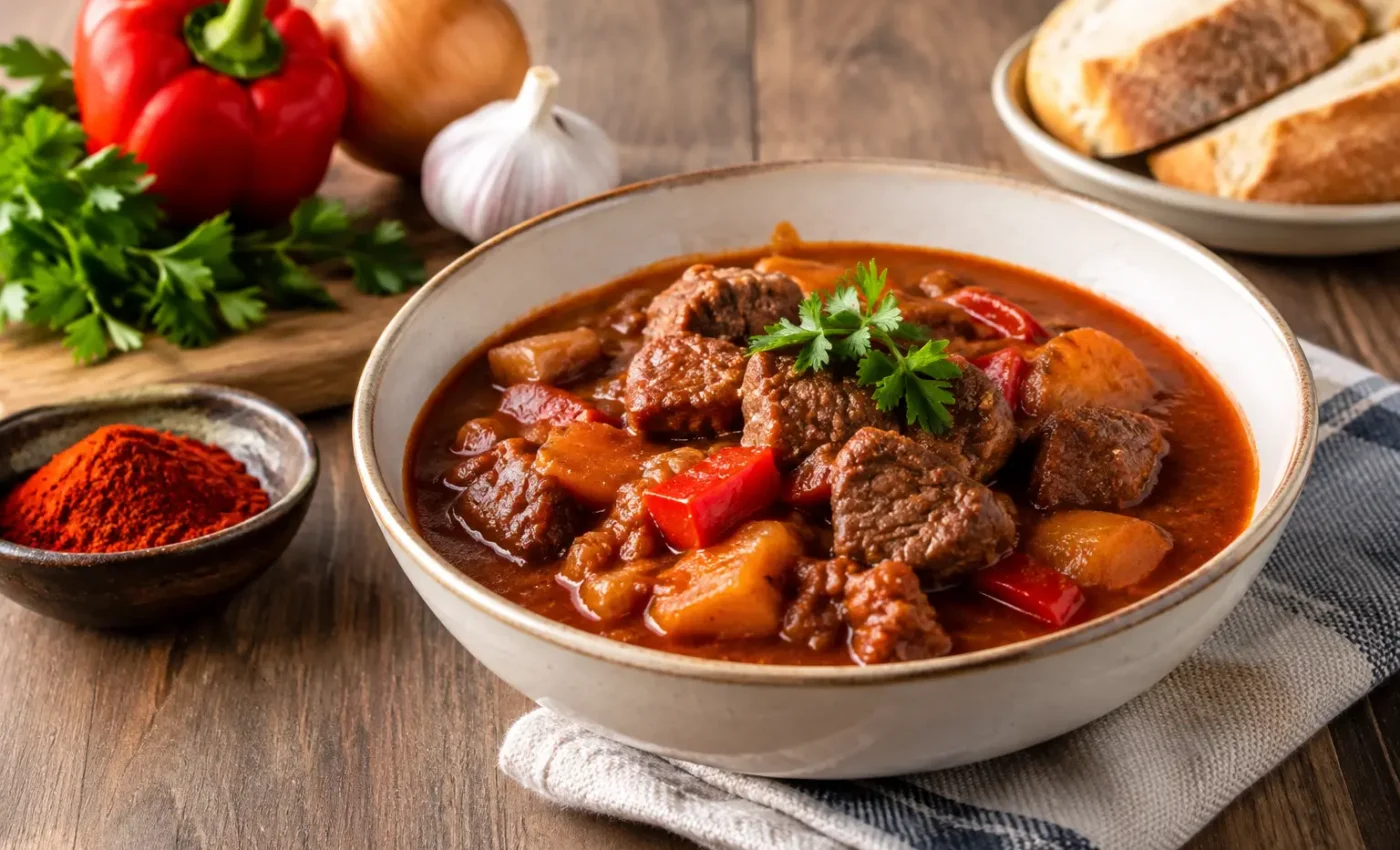
A pot of goulash should smell warmly of sweet paprika and slow-cooked onions before it ever reaches the table. That is the first clue to what makes goulash authentic: it is not about piling in every red ingredient or making it as thick as possible. Traditional Hungarian goulash is a patient, practical dish built from a few everyday ingredients that become much more than the sum of their parts.
For busy home cooks, that is good news. You do not need specialty equipment or restaurant technique to make a goulash that tastes grounded in its Hungarian roots. You do need to understand which details carry the flavor and which common shortcuts change the dish into something else.
What Makes Goulash Authentic in Hungarian Cooking?
Authentic goulash begins with Hungary, where it is called gulyás. Historically, it was associated with cattle herders who cooked meat over an open fire. Today, it remains a beloved comfort food, but it is not one fixed formula. Recipes vary by region, season, and household.
The central idea stays consistent: beef and onions are slowly cooked with paprika, then simmered until rich and tender. Depending on the version, the finished dish may be brothy like a hearty soup or thicker like a stew. Potatoes, carrots, parsnips, bell peppers, tomatoes, and small handmade noodles can all have a place.
That flexibility matters. Authenticity does not mean every Hungarian cook uses the exact same ingredient list. It means the dish follows the flavor logic of Hungarian cooking: generous onions, good paprika, slow cooking, and a savory broth or sauce that develops naturally.
Goulash Is Not Always the Thick Stew Americans Expect
In the United States, “goulash” can mean two very different dishes. Hungarian goulash is usually a beef-based soup or stew flavored with paprika. American goulash is often a quick skillet meal made with ground beef, tomatoes, macaroni, and cheese or tomato sauce.
Both are comforting, budget-friendly meals, and both deserve a spot in a home-cooking rotation. But they are not the same dish. If you are aiming for Hungarian-style goulash, skip the macaroni, ground beef, and heavy tomato sauce. Choose cubed beef and let the paprika-and-onion base do the work.
The Ingredients That Matter Most
A good goulash does not need a crowded pantry. The quality and handling of a few basic ingredients make the biggest difference.
Paprika Is the Signature Flavor
Paprika is the heart of Hungarian goulash, not a minor seasoning sprinkled in at the end. Hungarian sweet paprika is the most common choice, bringing a mellow pepper flavor, gentle warmth, and the dish’s recognizable red color. Some cooks add a small amount of hot paprika for heat, but a very spicy result is not required.
Fresh paprika makes a noticeable difference. It should smell fragrant and slightly sweet when you open the container. Paprika that has sat near the stove for years can taste dusty or flat, no matter how long the goulash simmers.
There is also one small technique that protects its flavor. Stir paprika into the cooked onions after lowering the heat, then quickly add broth or water. Paprika can burn fast in hot fat, turning bitter instead of rich. This simple pause is one of the easiest ways to get a better pot of goulash.
Onions Create the Body
A traditional goulash gets much of its thickness from onions, not flour or cream. The onions are cooked slowly in fat until soft and golden, then they break down as the meat simmers. Their natural sweetness balances the paprika and gives the cooking liquid a full, velvety texture.
This is why rushing the onion step can leave goulash tasting thin. You are building the foundation before the beef and broth go in. For a practical weeknight version, you can cook the onions until very soft rather than deeply browned. Just give them enough time to lose their sharp, raw bite.
Beef Needs Time, Not Fancy Cuts
Beef chuck is a dependable choice for goulash because it becomes tender and flavorful during a long, gentle simmer. It is also more affordable than quick-cooking steak cuts. Cut it into even chunks so it cooks at the same pace, and do not worry if it seems firm early on. Tough stew meat softens with time.
Some Hungarian versions use other meats, including pork or veal, but beef goulash is the version many US cooks recognize first. The important part is choosing a cut suited to braising rather than trying to rush a lean, expensive cut through the pot.
Broth, Vegetables, and Seasonings Stay Simple
Water is traditional in many goulash recipes, though beef broth can add extra depth in an everyday kitchen. Caraway seeds are a classic seasoning and bring a warm, slightly earthy note that pairs naturally with paprika. Garlic is common, too.
Tomatoes and green bell peppers appear in many versions, particularly when they are in season. Potatoes, carrots, and parsnips can turn the dish into a complete one-pot meal. These additions are welcome, but they should support the beef and paprika rather than overpower them.
The Cooking Method Is Part of the Flavor
Goulash rewards steady, unhurried cooking. Start by softening onions in oil, lard, or another cooking fat. Lard is traditional and adds a savory richness, but oil works well for a practical home version. Add the paprika carefully, then the beef, liquid, and seasonings.
After that, gentle simmering matters more than constant stirring. A hard boil can make the meat tighten up and can reduce the broth too quickly. Keep the pot at a low bubble, cover it partially, and let the flavors settle together. Depending on the cut and size of the beef pieces, this often takes 1 1/2 to 2 hours.
If you add potatoes or other vegetables, wait until the beef is nearly tender. That keeps them from breaking down before the meat is ready. Taste near the end and adjust salt then, since broth and reduction can change the seasoning level as the pot cooks.
What Does Not Need to Be in Authentic Goulash?
A few ingredients are often associated with goulash in American kitchens but are not essential to a Hungarian-style pot. Sour cream, for example, can be delicious with paprika dishes, but it is more closely tied to creamy preparations such as chicken paprikash. You can serve a spoonful on the side if your family enjoys it, but the goulash itself does not need to be creamy.
Flour is another optional choice. If you have cooked enough onions and simmered the dish properly, the broth should have body without a flour thickener. A thicker, stew-like result is fine, but it should come from reduced liquid and softened onions, not from turning the dish into gravy.
Tomato paste deserves a measured hand. A little can deepen color and add tang, especially when fresh tomatoes are not available. Too much shifts the flavor toward beef stew with tomato sauce and mutes the paprika.
How to Make It Work on a Busy Night
Traditional goulash is not a 20-minute dinner, but it can still fit real life. Make it on a weekend or a lower-pressure evening, then refrigerate it for another meal. Like many braised dishes, goulash often tastes even better the next day after the paprika, beef, and onions have had time to settle.
You can also prepare the onions, beef, and spices early in the day, then let the pot simmer later. Serve it with crusty bread for a simple meal, or add potatoes to the pot when you want fewer dishes to wash. If your household prefers a thicker bowl, use a little less liquid and let it reduce naturally near the end.
The goal is not to copy one family’s exact Hungarian recipe. It is to cook with respect for the dish’s essentials while making dinner manageable in your own kitchen. Start with fragrant paprika, plenty of onions, beef that has time to get tender, and a gentle simmer. Put that bowl on the table with bread, and you will have the kind of comforting meal that makes slowing down for dinner feel worthwhile.