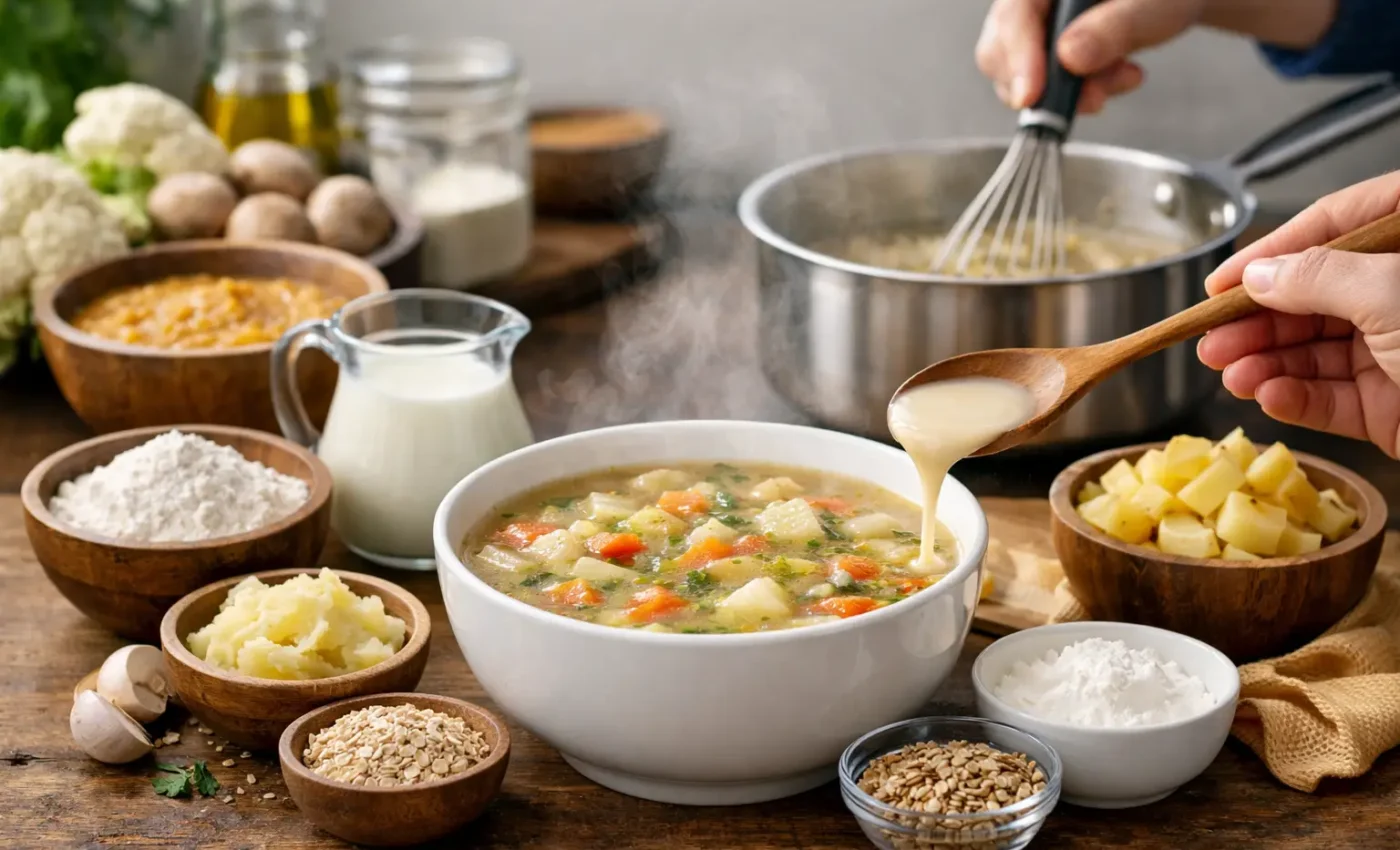
A soup can smell wonderful and still feel a little disappointing when the broth is too thin. The good news is that learning how to thicken soup naturally usually does not require a special product or a second trip to the store. A few everyday ingredients and the right timing can turn a watery pot into a cozy, satisfying dinner.
The best choice depends on the soup you are making. A potato works beautifully in chicken soup, while blended beans make more sense in a chili or vegetable soup. Start with a small amount, give the soup a few minutes to simmer, and add more only if it needs it. Thickening is easy to adjust. Over-thickening is harder to fix.
How to Thicken Soup Naturally Without Changing the Flavor
Before adding anything, let the soup simmer uncovered for 10 to 15 minutes. Evaporation concentrates the liquid and can solve a slightly thin soup without changing its flavor or texture. Stir now and then so ingredients do not stick to the bottom of the pot.
If the soup still needs more body, choose a thickener that belongs with the ingredients already in the pot. For example, blend cooked vegetables for a smooth vegetable soup, or use rice in a brothy chicken-and-rice soup. This keeps dinner tasting balanced rather than like a quick fix.
1. Blend Some of the Soup
This is one of the simplest methods for soups that already contain potatoes, beans, lentils, squash, carrots, or other soft vegetables. Scoop out 1 to 2 cups of the soup, blend it until smooth, then stir it back into the pot. An immersion blender also works well, especially when you want a partly creamy texture with some chunks left behind.
Blending adds thickness without introducing a new ingredient. It is especially useful for hearty vegetable soups and bean soups. If you use a countertop blender, let hot steam escape carefully and blend in small batches.
2. Add Mashed Potato or Potato Flakes
A cooked potato is a dependable natural thickener because its starch creates a velvety texture. Mash one small boiled potato with a little broth, then stir it into the soup and simmer for a few minutes. Leftover mashed potatoes work, too, as long as they are not heavily seasoned.
Instant potato flakes are also handy for busy nights. Start with 1 tablespoon at a time, stir well, and wait a minute before adding more. They thicken quickly, so a light hand matters. This method is best for creamy soups, chowders, and rustic vegetable soups, but it can make a clear broth look cloudy.
3. Use Beans or Lentils
Canned white beans, chickpeas, black beans, and cooked lentils all add substance, protein, and fiber. For a creamy finish, blend a portion of the beans with broth and return the mixture to the pot. White beans are especially mild, making them a good option when you want thickness without a strong added flavor.
Red lentils are another practical choice. They soften quickly and break down as they cook, naturally thickening soups with tomato, curry spices, or vegetables. Keep in mind that lentils make soup more filling and can shift the final texture from brothy to stew-like.
4. Make a Vegetable Puree
If you have carrots, cauliflower, winter squash, zucchini, or sweet potato on hand, cook them until very tender and puree them with a little soup broth. Stir the puree into the pot and let it simmer until fully combined.
Cauliflower has a mild flavor and works well in creamy soups. Carrots and squash add a gentle sweetness and a warmer color. This is a smart way to use produce that is nearing the end of its week, while giving a family meal a little more staying power.
5. Let Rice, Pasta, or Grains Do the Work
Rice, small pasta shapes, barley, and oats absorb broth as they cook, which naturally thickens the soup. If the soup already includes one of these ingredients, a few extra minutes of simmering may be all it needs.
For a soup that is already cooked, stir in a small amount of cooked rice or mashed cooked grains. You can also blend cooked rice with broth for a smooth, gentle thickener. Be aware that grains continue absorbing liquid as the soup sits. A pot that looks perfect tonight may need an extra splash of broth when reheated tomorrow.
6. Stir in Oats or Bread
Plain rolled oats are an easy pantry option for vegetable soups, lentil soups, and tomato-based soups. Add 2 to 3 tablespoons, simmer for about 10 minutes, then blend if you want a smoother texture. Oats have a mild flavor, but they are not the best choice for a delicate clear soup.
A piece of torn sandwich bread or a small handful of breadcrumbs can also thicken a rustic soup. Let the bread soften in the broth, then blend or whisk it in. Choose plain bread when possible, since sweet or strongly seasoned bread can affect the flavor.
7. Add Dairy for a Creamy Finish
Milk, half-and-half, plain Greek yogurt, sour cream, cream cheese, and heavy cream can make a soup feel thicker and richer. This option works best after the soup has finished simmering. Lower the heat first, then stir in the dairy gradually.
Greek yogurt and sour cream can curdle if boiled, so temper them by mixing a spoonful of hot soup into the dairy before adding it to the pot. Heavy cream is more forgiving, but it adds the most richness. Use it when that creamy finish suits the meal, not simply because the soup needs a little body.
8. Make a Simple Flour or Cornstarch Slurry
Flour and cornstarch are pantry staples rather than highly processed shortcuts, and both can be useful when time is short. For cornstarch, whisk 1 tablespoon with 1 tablespoon of cold water until smooth. Stir it into gently simmering soup and cook for 1 to 2 minutes. The soup should thicken quickly.
For flour, whisk 1 tablespoon with 2 tablespoons of cold water or broth before adding it. Simmer the soup for several minutes afterward so the flour taste cooks away. Cornstarch creates a glossy texture and is better for clear soups, while flour gives creamy soups and gravies a more familiar, cozy body.
Avoid These Common Thickening Mistakes
Do not sprinkle flour, cornstarch, or potato flakes directly into hot soup. They can clump before they have a chance to dissolve. Mix powders with cold liquid first, and add them slowly while stirring.
It also helps to season after thickening. As liquid cooks down, salt and spices become more concentrated. Taste once the soup reaches the texture you want, then adjust with salt, pepper, herbs, or a squeeze of lemon if it tastes heavy.
If you go too far, loosen the soup with warm broth, water, or milk, depending on the recipe. Add a little at a time and simmer briefly so the texture comes back together. A soup that is slightly too thick is not a failure. It is often just one ladle of liquid away from being exactly right.
Choose the Method That Fits Tonight’s Soup
For a clear chicken or vegetable soup, a cornstarch slurry or a small amount of blended potato is usually the least noticeable choice. For creamy soups, potatoes, cauliflower, beans, or dairy bring more comfort and body. For tomato, lentil, or vegetable soups, blended beans, red lentils, oats, and rice can make the meal feel heartier without much extra work.
The easiest answer is often already in your kitchen. Use what fits the soup, thicken gradually, and let the pot simmer long enough to show you where it is headed. Good food, made practical, can be as simple as giving a thin soup one more helpful ingredient.