A pot of Hungarian soups can solve the familiar question of what to make when the day has run long and everyone wants something warm. They are built around practical pantry staples – onions, potatoes, carrots, beans, broth, noodles, and paprika – then cooked into meals that taste far more special than the effort suggests.
For busy home cooks, Hungarian soup is less about chasing restaurant-level authenticity and more about learning a few flavor habits. Start with onions, use good sweet paprika generously but carefully, and let vegetables, meat, or beans make the bowl filling enough for dinner. Add crusty bread or a simple salad, and tonight is handled.
What Makes Hungarian Soups Taste So Good?
Hungarian cooking is closely tied to paprika, but paprika is not the only story. These soups often begin with onion softened in a little oil or butter, which creates a savory base without requiring a long list of ingredients. Caraway seeds, garlic, tomatoes, peppers, dill, parsley, and a spoonful of sour cream may appear too, depending on the soup.
The result is food that feels rich and comforting without always being heavy. A broth-based potato or bean soup can be hearty enough for cold weather, while a chilled fruit soup offers a bright change during summer. That range is one reason Hungarian flavors work so well in an everyday cooking rotation.
Paprika deserves a little attention because it can make or break the pot. Sweet Hungarian-style paprika gives soups their warm red color and mild pepper flavor. Hot paprika adds heat, so use it in small amounts unless your household enjoys spicy food. Stir paprika into the pot after the onions have softened and keep the heat low for a moment. Paprika can turn bitter if it burns.
The Hungarian Soups Worth Knowing
Gulyásleves: the original beef and vegetable soup
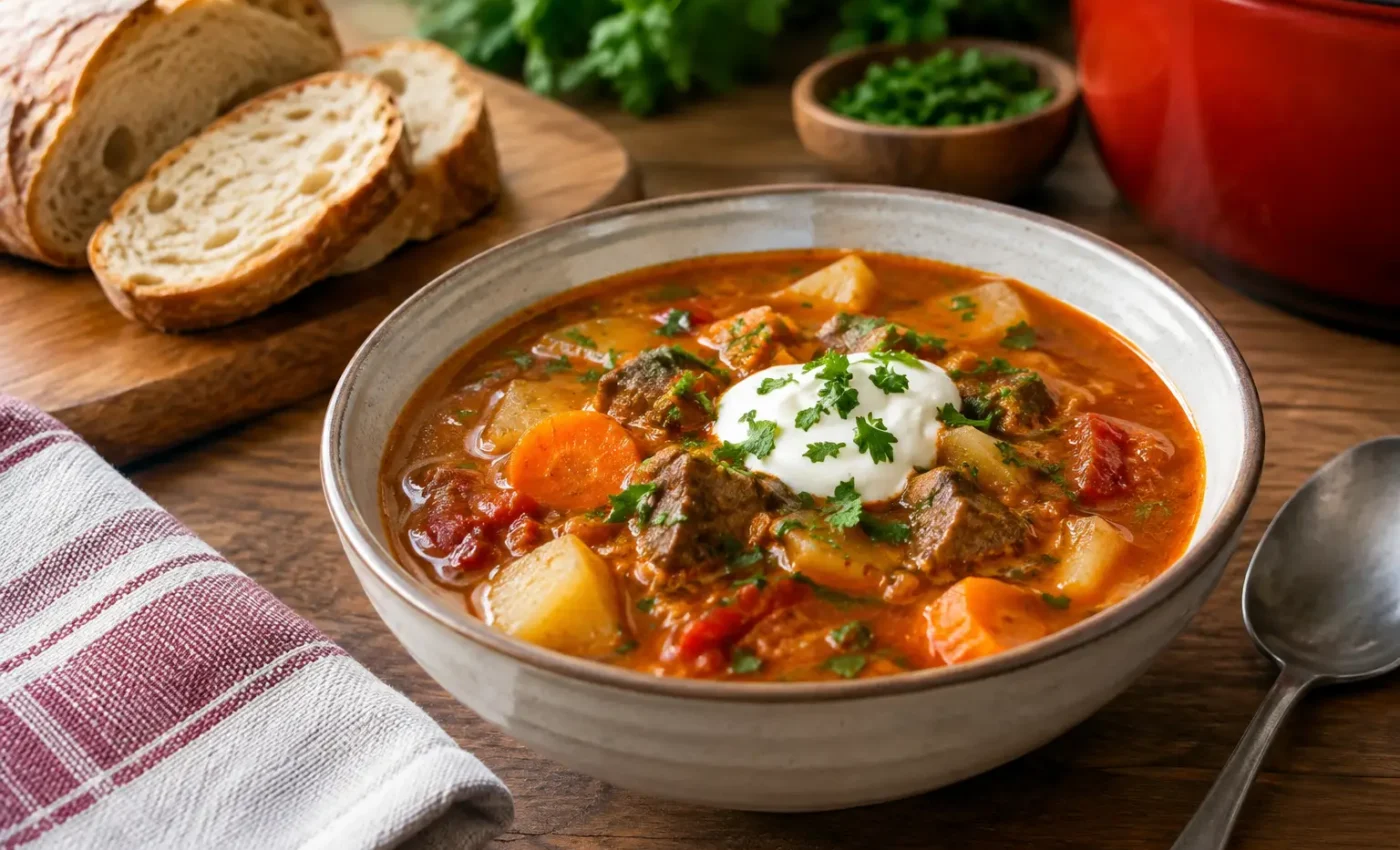
Gulyásleves, often called Hungarian goulash soup, is probably the best-known example. It is different from the thick beef stew many Americans know as goulash. This version is brothy, with beef, potatoes, carrots, onions, paprika, and often caraway. Some versions include small pinched noodles called csipetke.
It is a smart weekend meal when you have time to let tougher beef become tender, but it can fit a weekday plan with stew meat, a pressure cooker, or leftover cooked beef. The trade-off is simple: a longer simmer brings deeper flavor, while a quicker version is still satisfying but lighter and less developed. Either way, do not rush the onions. They give the broth its foundation.
Paprikás krumpli: potato soup with paprika comfort
Paprikás krumpli is a humble potato dish that can be made soupier or thicker depending on how much broth you add. It typically combines potatoes, onions, paprika, and sausage, often with tomatoes or bell peppers. Think of it as a cozy skillet dinner that becomes a one-pot meal with a little extra liquid.
For an easy family version, use smoked sausage or turkey kielbasa, then add plenty of potatoes and a can of diced tomatoes. The sausage brings salt and smoky flavor, so taste before adding more seasoning. If you need a meatless dinner, leave out the sausage and add white beans or chickpeas for protein.
Jókai bean soup: hearty, filling, and flexible
Hungarian bean soup is the kind of meal that earns a place in regular rotation. Beans, vegetables, smoky meat, and paprika create a thick, substantial bowl that tastes even better after a night in the refrigerator. Traditional versions may use ham hock or smoked pork, but leftover ham, bacon, smoked sausage, or even a vegetarian smoked seasoning can provide a similar cozy note.
Canned beans make this soup realistic for a weeknight. Rinse and drain them, then stir them in near the end so they stay intact. If you have more time, dried beans create a creamier broth, but they require planning. Both methods work, and the best choice is the one that gets dinner on the table without adding stress.
Mushroom soup with sour cream and dill
Creamy Hungarian mushroom soup is especially friendly for cooks who want a meatless meal that still feels complete. Mushrooms are browned with onion, then simmered with broth, paprika, and often a little milk or sour cream. Dill gives it a fresh, slightly tangy finish.
The key is browning the mushrooms instead of crowding them in the pan. Cook them in batches if necessary, allowing their moisture to evaporate and their flavor to deepen. For a lighter bowl, use milk or half-and-half in place of heavy cream. For a richer finish, stir in sour cream off the heat so it stays smooth rather than curdling.
Hungarian fruit soup: a cool, unexpected option
Not every Hungarian soup is savory. Gyümölcsleves is a chilled fruit soup often made with sour cherries, berries, plums, or other seasonal fruit. It is lightly sweet, gently spiced with cinnamon or cloves, and usually finished with sour cream or another creamy ingredient.
It may sound unusual if you grew up thinking of soup as dinner only, but it works beautifully as a summer starter, brunch dish, or light dessert. Frozen cherries and berries make it easy to prepare outside peak season. Keep the sweetness modest, especially if serving it before a meal.
How to Make These Flavors Work in Your Kitchen
You do not need a specialty market or a long afternoon to make a satisfying Hungarian-inspired soup. Build from ingredients you already recognize, then choose one or two signature touches. Sweet paprika is the first priority. Caraway seeds are helpful but optional, and sour cream can add the tangy finish many people associate with Central European comfort food.
A good approach is to make the soup fit your schedule. Start with rotisserie chicken in a paprika vegetable soup when time is tight. Use frozen diced onions and vegetables if prep is the barrier. Make a larger pot of bean or beef soup on Sunday, then portion it for lunches and one low-effort dinner later in the week.
Texture matters as much as seasoning. Potatoes should be tender but not falling apart unless you want a thicker soup. Beans need enough time to absorb flavor. If you are adding sour cream, ladle a little warm broth into it first, stir, then return the mixture to the pot over low heat. This simple step helps prevent splitting.
Easy Sides for a Hungarian-Style Soup Dinner
A filling soup rarely needs much beside it. Warm bread is the obvious choice for soaking up paprika-rich broth, and a buttered slice of rye or sourdough feels especially fitting. For a more balanced meal, serve a crisp cucumber salad with vinegar and a pinch of sugar, or offer sliced apples and cheese for a simple finish.
If the soup is lighter, such as mushroom or fruit soup, add a grilled cheese sandwich, egg salad toast, or a simple chicken sandwich. If it is a hearty bean or beef soup, keep the side small. The goal is a meal that feels generous without creating another hour of cooking.
Hungarian soups remind us that everyday comfort food does not need complicated steps. Keep paprika, onions, potatoes, and broth on hand, then let one dependable pot turn ordinary ingredients into a dinner everyone can look forward to.