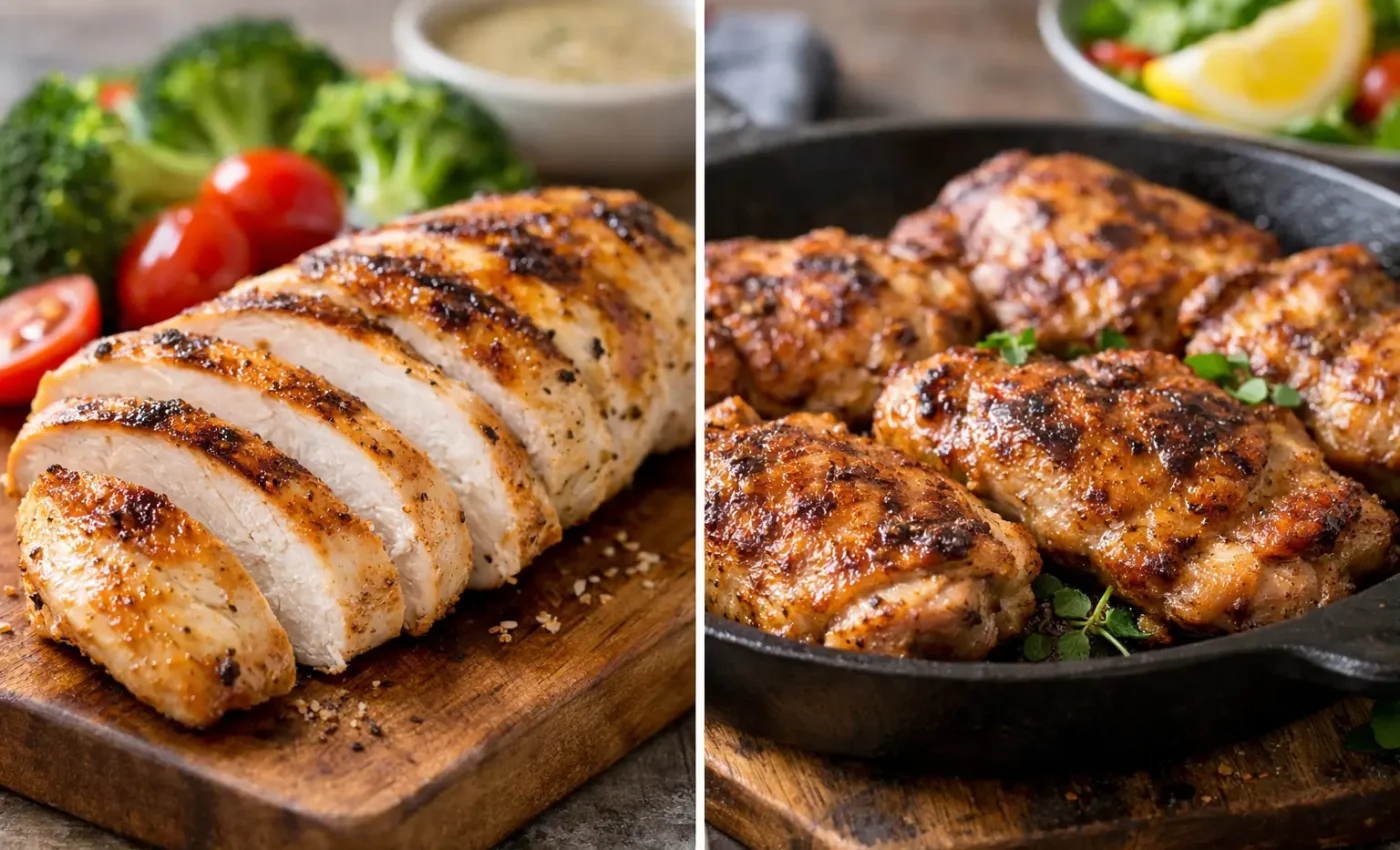
A package of chicken can solve dinner in a hurry, but choosing the right cut makes the difference between juicy tacos and dry ones, or a quick skillet meal and a longer braise. In the chicken breast versus thighs question, there is no single winner. The best choice depends on what you are cooking, how much time you have, and what your family likes to eat.
Chicken breasts are lean, mild, and fast when they are cut thin or diced. Chicken thighs bring deeper flavor, a more forgiving texture, and often a lower price. Knowing where each one shines takes some pressure out of the grocery-store decision.
Chicken Breast Versus Thighs: Key Differences
Chicken breast is a lean cut with very little fat, especially when it is boneless and skinless. That makes it a popular choice for lighter meals, meal prep, salads, wraps, and dishes where you want the sauce, seasoning, or vegetables to lead the flavor. Its mild taste works with almost anything, from lemon and garlic to teriyaki or taco spices.
Chicken thighs have more fat and connective tissue than breasts. That extra richness gives them a fuller chicken flavor and helps them stay tender when cooking runs a few minutes long. Boneless, skinless thighs are especially useful for busy dinners because they are hard to dry out. Bone-in, skin-on thighs take longer, but they turn crisp and deeply flavorful in the oven.
The trade-off is simple: breasts are leaner, while thighs are juicier. Neither is automatically better for every meal. A creamy chicken pasta may benefit from tender breast pieces, while a saucy curry or sheet-pan dinner often feels more satisfying with thighs.
Flavor and texture
If your household prefers a clean, mild bite, chicken breast is usually the safer pick. It has a firmer texture and absorbs marinades well, though it can become chewy when overcooked. Even a few extra minutes can make a thick breast less enjoyable.
Thigh meat is darker, softer, and more savory. It stays moist in soups, casseroles, and slow-simmered sauces. For people who find chicken breast bland or dry, thighs can be the cut that changes their mind about a weeknight chicken dinner.
Nutrition and portions
Chicken breast is generally lower in calories and saturated fat, while providing plenty of protein. It is a practical option when you are building a lighter dinner around vegetables, grains, or a fresh salad.
Chicken thighs also provide protein, along with more fat per serving. That can make a meal feel more filling and flavorful, especially when the rest of the dish is simple. If you want a middle ground, choose boneless, skinless thighs and keep portions reasonable. The preparation matters, too. A breaded, fried breast can be richer than a simply roasted thigh.
Price and value
Prices vary by store and sales, but thighs are often less expensive per pound than breasts. They are a smart choice when feeding a family, stretching leftovers, or cooking a large batch for the week. Bone-in thighs can be an even better value, although you will get less finished meat per pound because of the bones.
Breasts may cost more, but they are convenient. There is little trimming, they slice neatly for sandwiches and bowls, and one large breast can often serve two people when paired with hearty sides.
When Chicken Breast Works Best
Choose chicken breast when dinner needs to be quick, light, or neatly portioned. Thin-cut cutlets can cook in a skillet in just a few minutes. Cubed breast works well in stir-fries, fajitas, chicken fried rice, and creamy pasta dishes because the pieces cook quickly and evenly.
Breast is also a good fit for recipes with a short cooking time. Think grilled chicken salads, baked chicken sandwiches, wraps, and lemon chicken with green beans. For the best texture, use an instant-read thermometer and remove the chicken once the thickest part reaches 165°F. Let it rest for five minutes before slicing so the juices stay in the meat.
Thickness is the biggest challenge with breasts. One end is often much thicker than the other, which means the thin side can overcook before the center is done. Pound the breast to an even thickness, butterfly it, or cut it into even pieces before cooking. This small step makes weeknight results much more reliable.
A marinade can add flavor, but it will not fix overcooking. A quick coating of olive oil, salt, pepper, garlic powder, and paprika is often all a breast needs before it goes into a hot skillet or oven.
When Chicken Thighs Are the Better Choice
Choose thighs when you want deeper flavor, a forgiving cook time, or food that can simmer without constant attention. They are excellent in chicken tacos, rice bowls, curries, braises, casseroles, and one-pan dinners with potatoes or vegetables.
Boneless thighs cook fairly quickly, usually in about 5 to 7 minutes per side in a skillet depending on thickness. Unlike breast meat, thighs often become more tender as they cook beyond the minimum safe temperature. They are safe at 165°F, but many cooks prefer their texture closer to 175°F or higher, when the connective tissue has had more time to soften.
Bone-in, skin-on thighs are ideal for roasting. Start them skin-side up in a hot oven, leaving a little space between pieces so the skin can crisp. They usually need around 35 to 45 minutes at 400°F, depending on size. Pair them with carrots, broccoli, onions, or small potatoes for a complete pan dinner with very little cleanup.
Thighs also handle bold flavors well. Soy sauce, chili paste, barbecue sauce, smoky spices, ginger, and citrus all work beautifully. Their richer taste holds up in a way that keeps the chicken from disappearing into a heavily seasoned dish.
Match the Cut to the Cooking Method
For high-heat, fast cooking, breast needs more attention. Use medium-high heat, avoid crowding the pan, and cook even pieces. A sauce added near the end helps keep it moist, but do not let the chicken boil in liquid for too long.
Thighs are more flexible in a skillet. They brown well, stay tender in sauce, and work nicely when dinner has to wait a few extra minutes for someone to get home. If you are making a slow cooker recipe, thighs are usually the more dependable option. Long cooking can leave breast meat stringy, while thighs remain succulent.
On the grill, both cuts work, but boneless thighs are easier for newer cooks. Their fat helps protect them from drying out, and their smaller size makes them quick to turn and serve. For grilled breasts, flatten them first and keep the heat moderate enough to cook through without scorching the outside.
For baking, either cut can be dependable. Breasts are best when baked at a higher temperature for a shorter time and checked early. Thighs welcome a longer roast, particularly when they are bone-in and skin-on.
Can You Swap Breasts and Thighs in a Recipe?
Usually, yes, but adjust the timing and your expectations. If a recipe calls for diced chicken breast, diced boneless thighs can often go in at the same point. Thighs may need a few more minutes, and the finished dish may have more flavorful juices in the pan.
Swapping breast for thighs in a long-simmering recipe is less predictable. Use breast if you prefer it, but add it later in the cooking process so it does not spend an hour simmering in sauce. Cut it into larger pieces, cook only until done, then return it to the dish just before serving if needed.
For recipes calling for bone-in thighs, breasts are not a direct replacement. The cuts cook differently and bring different amounts of fat and flavor. It is often easier to choose another recipe method than force a swap that changes the result.
Easy Ways to Keep Either Cut Juicy
Start with chicken that is evenly sized, season it well, and give it room in the pan. Crowding causes steaming instead of browning, which can leave the surface pale and the texture less appealing. Cook in batches if needed.
Most importantly, use temperature instead of guesswork. Chicken should reach 165°F at its thickest point. Resting matters, especially for breasts. Tent the cooked chicken loosely and let it sit for a few minutes before cutting.
If you are cooking ahead, store leftovers in shallow containers and refrigerate them promptly. Slice breast only after it cools slightly to help it hold onto moisture. Thighs reheat especially well in a skillet with a small splash of broth or water and a lid.
The easiest dinner choice is often the cut already in your refrigerator. Reach for breast when you want a fast, lean blank canvas. Choose thighs when you want a little more flavor and a wider margin for error. Good food, made practical, starts with using the cut that makes tonight’s meal feel easier.