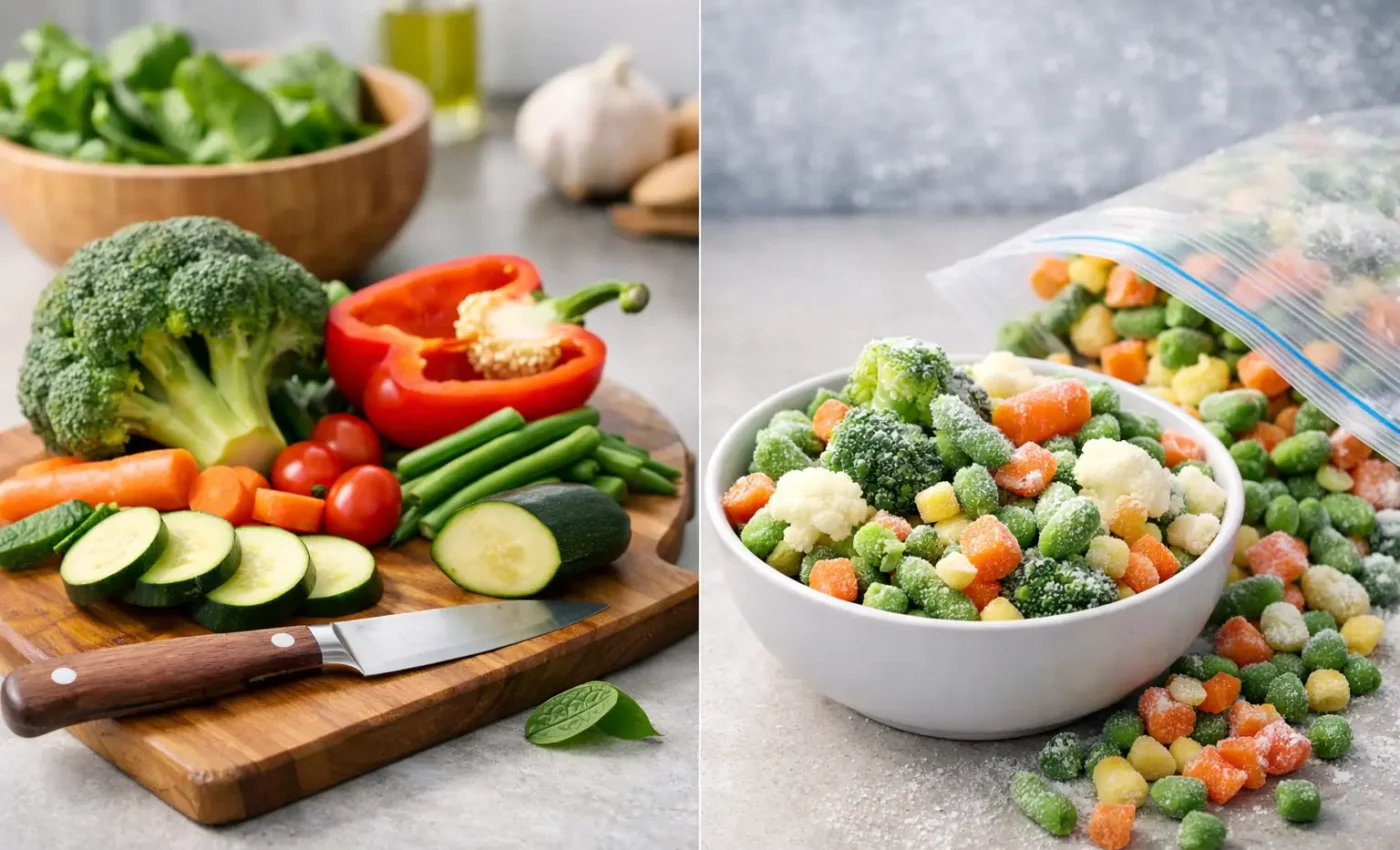
The broccoli is still in the crisper drawer, but dinner needs to be on the table in 25 minutes. That is where the fresh versus frozen vegetables question becomes less about rules and more about what will actually work tonight. Both can help you make a colorful, satisfying meal without turning a busy evening into a grocery-store problem.
Fresh vegetables bring crisp texture and flexibility. Frozen vegetables bring speed, a longer shelf life, and fewer last-minute substitutions. The better choice depends on the dish, how soon you will cook it, and what your household enjoys eating.
Fresh versus frozen vegetables: the practical difference
Fresh produce is usually picked, packed, shipped, stocked, and then stored at home. That can mean great flavor, especially when vegetables are in season and you use them soon after buying them. It can also mean a bag of spinach wilts before you get around to making the pasta you planned.
Frozen vegetables are typically picked at maturity and frozen soon after processing. They are washed and often cut before packaging, so they are ready when you are. Freezing changes their texture, but it also pauses the clock. A bag of peas, corn, or green beans can wait patiently in the freezer until a hectic night calls for it.
For everyday cooking, neither option deserves a permanent spot at the top. A kitchen that uses both is often easier to manage, less wasteful, and more likely to produce a good dinner on a Wednesday.
Nutrition is closer than many people think
Fresh vegetables are nutritious, and frozen vegetables are nutritious too. The idea that frozen automatically means less healthy does not hold up well in a normal home kitchen. Because frozen vegetables are processed close to harvest, they can retain plenty of nutrients.
The bigger nutritional difference often comes from what happens next. Vegetables that sit too long in the refrigerator may lose quality, while a frozen bag remains useful for months. On the other hand, fresh vegetables may encourage you to build a salad, snack plate, or raw side dish that frozen vegetables cannot replace.
Choose plain frozen vegetables when possible. Sauced, seasoned, or buttered packages can be convenient, but they may add more sodium, sugar, or saturated fat than you want. If you use them, treat the seasoning packet as optional and taste before adding extra salt.
When fresh vegetables are worth buying
Fresh is the clear favorite when texture is the main event. Think crunchy salads, crisp slaws, vegetable trays, or roasted vegetables with browned edges. A fresh bell pepper holds its snap in fajitas, and a fresh cucumber makes a cool, quick side for sandwiches or grilled chicken.
Fresh also shines when you want variety. Buying a small amount of several vegetables can make dinner feel more interesting without much extra work. Toss zucchini, red onion, and cherry tomatoes with oil and seasoning for a sheet-pan side, or add shredded carrots and cabbage to tacos.
The key is buying with a real plan. If you purchase asparagus, mushrooms, or leafy greens, aim to use them within a few days. Put the most perishable produce where you can see it, not buried behind leftovers. A simple dinner plan can prevent good intentions from becoming a soggy bag of greens.
Fresh vegetables are also often a good value when they are in season or on sale. Just compare the usable amount, not only the sticker price. A whole head of cauliflower may look inexpensive, but it is only a bargain if your family will eat it before it spoils.
When frozen vegetables make more sense
Frozen vegetables are a weeknight safety net. They are already washed, trimmed, and chopped, which can save 10 minutes of prep and one more cutting board to clean. For soups, pasta, fried rice, casseroles, curries, and skillet meals, they are often the simplest choice.
Peas are especially useful in creamy pasta, chicken pot pie filling, and quick rice dishes. Frozen corn works well in chili, taco bowls, and corn chowder. Green beans, broccoli florets, spinach, and mixed vegetables can turn a pantry-based dinner into a more complete meal without another trip to the store.
They also make portioning easier. Instead of opening a package and feeling committed to every last bit, pour out what you need and return the rest to the freezer. This is helpful for smaller households, picky eaters, and nights when a side dish only needs enough vegetables for two.
Cost is another reason to keep a few favorites on hand. Frozen vegetables are often consistently priced, and their long storage time means less food waste. A sale on fresh produce can still win, but frozen gives you dependable value when seasonal prices rise or schedules get crowded.
The texture issue is real, but manageable
Frozen vegetables contain more moisture after thawing, so they do not stay crisp in the same way fresh vegetables do. That makes them less ideal for a raw salad or a vegetable platter. It does not make them disappointing by default.
For better texture, avoid thawing most frozen vegetables before cooking. Add them straight to a hot skillet, pot, or sheet pan. Give them enough space so steam can escape, and do not crowd the pan. If you are roasting, use high heat and a light coating of oil; a few extra minutes can help moisture cook away.
For frozen spinach, thaw it only when the recipe calls for it, then squeeze out as much liquid as possible. This small step keeps dips, egg dishes, and creamy sauces from becoming watery. Frozen broccoli is often best steamed briefly, then finished in a skillet with garlic, lemon, or a little grated cheese.
Match the vegetable to the meal
The easiest way to choose is to start with how you are cooking. Use fresh vegetables when you need crunch, clean slices, or a roasted finish that feels central to the plate. Use frozen vegetables when they will be stirred into something warm, saucy, or hearty.
A few meals can go either way. Fresh or frozen broccoli works in a chicken and rice skillet. Fresh or frozen spinach can go into a tomato pasta sauce. Fresh or frozen green beans can accompany meatloaf, though fresh beans are better if you want a firmer bite and frozen ones are better when time is tight.
Keep your freezer stocked with the vegetables your family already likes, rather than buying a large bag of something that sounds healthy but rarely gets used. A dependable mix might include peas, corn, broccoli, green beans, and spinach. Then use fresh produce to add seasonal flavor, color, and variety to the meals you make most often.
Simple habits that reduce waste
A little organization makes both choices work harder. Plan fresh vegetables for the first half of the week and frozen vegetables for the later days, when plans are more likely to change. If fresh vegetables are nearing their limit, cook them into soup, a pasta sauce, omelets, or a sheet-pan dinner before they spoil.
Check freezer bags occasionally for ice buildup and use older packages first. Keeping bags flat makes them easier to stack and faster to find. Labeling is helpful if you freeze leftover vegetables yourself, especially corn, peppers, or chopped onions.
You do not need a picture-perfect produce drawer to make meals feel homemade. Keep fresh vegetables for the moments when their texture and flavor matter most, and let frozen vegetables cover the nights when dinner needs to be fast, filling, and dependable. Tonight made easy can be as simple as opening the freezer, heating a skillet, and making good use of what you already have.