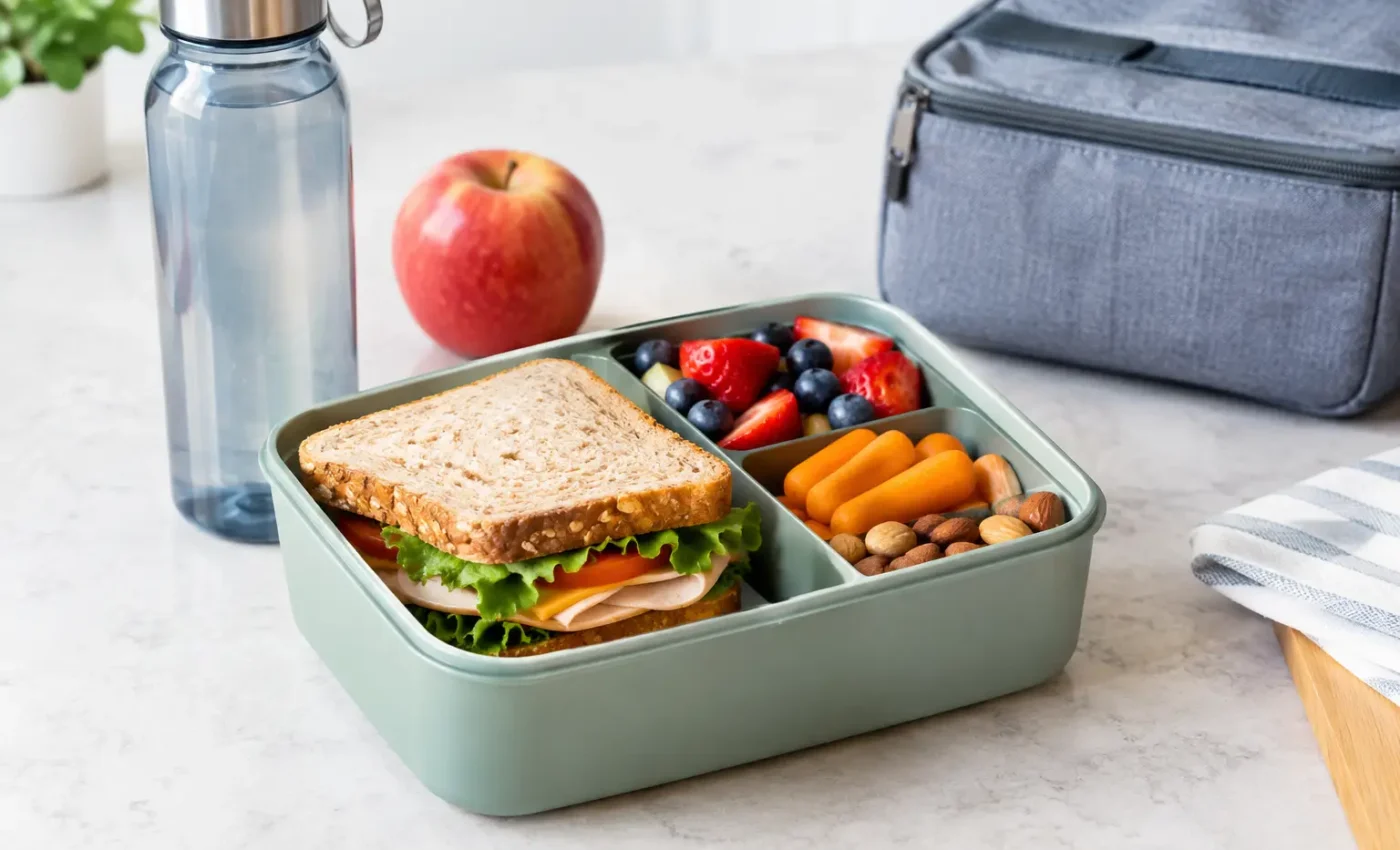
A packed lunch can solve the 12:30 question before the day gets busy. This guide to packed lunches is built for real weekday routines: food that travels well, uses familiar ingredients, and still feels like a proper meal when you sit down to eat it.
The goal is not to prepare five picture-perfect lunch boxes every Sunday. It is to make lunch easier to repeat. A few dependable building blocks, a little smart storage, and a plan for leftovers can turn rushed mornings into a quick grab-and-go routine.
Start with a lunch that will still taste good later
The best packed lunch is not always the meal you most enjoy straight from the pan. It needs to hold up for several hours, fit the way you will eat it, and be satisfying enough to carry you through the afternoon.
Think about temperature first. Grain bowls, pasta salads, hearty salads, sandwiches, wraps, and snack-style lunch boxes are all good cold options. Soup, chili, rice bowls, and leftover pasta can be excellent too, but they work best when there is access to a microwave or a good insulated food jar.
Texture matters just as much. Keep crunchy ingredients separate from anything wet, and pack sauces in a small container. A turkey sandwich with lettuce and tomato may be fine for a short commute, but it can become soggy by lunchtime. Put the tomato on the side, or choose crisp cucumber, shredded carrots, or pickles instead.
A satisfying lunch usually includes four simple parts:
- A filling base, such as bread, rice, pasta, potatoes, tortillas, or grains
- Protein, including chicken, eggs, beans, cheese, tuna, tofu, or leftover meat
- Produce for freshness, color, and fiber
- A flavorful extra, like dressing, hummus, salsa, fruit, nuts, or a small treat
You do not need every item in equal amounts. A hearty bean and cheese quesadilla with salsa and grapes may be plenty. On a more active day, a chicken rice bowl with roasted vegetables and fruit might make more sense. Let appetite, schedule, and what is already in the refrigerator guide the portion.
Make leftovers do a second job
Dinner leftovers are one of the easiest ways to build a packed lunch without adding another cooking project. When making pasta, roasted chicken, meatballs, rice, or roasted vegetables, prepare enough for one or two lunches if your schedule allows.
The key is packing with a different meal in mind, rather than simply putting last night’s dinner into a container. Roasted chicken can become a wrap with greens and ranch dressing, a rice bowl with cucumber and sauce, or a chopped salad with white beans. Taco filling can go into a thermos with rice, or into a tortilla with cheese and corn. A simple tomato pasta can be eaten cold as a pasta salad with mozzarella and spinach, or reheated with a side of fruit.
Not every leftover is a good lunch candidate. Crispy foods tend to lose their appeal in a container, and delicate salads can wilt quickly. If you are packing something that is best hot, use a microwave-safe container and pack any crunchy topping separately.
Cook components, not five separate meals
A little advance prep can help, but it should make the week lighter, not take over your weekend. Instead of assembling every lunch at once, prepare a few flexible ingredients that can be combined in different ways.
Cook a pot of rice or pasta, wash fruit, chop sturdy vegetables, and make one simple protein such as baked chicken, hard-boiled eggs, or seasoned beans. Store each item in its own container. This gives you options without committing Monday through Friday to the same lunch.
For example, those ingredients can become a chicken and rice bowl one day, a pasta salad the next, and a wrap with fruit and crunchy vegetables later in the week. Variety often comes from sauces and seasonings, not from buying a long list of ingredients. Hummus, pesto, salsa, vinaigrette, soy sauce, yogurt dressing, and peanut sauce can make familiar food feel different with very little effort.
Build a small rotation you can rely on
A packed lunch routine works better when you have several proven choices instead of endless ideas. Aim for three or four lunch formats your household genuinely likes. Repeat the formats, then change the fillings with the season, your budget, and what is on hand.
Sandwiches and wraps
Sandwiches are practical because they are quick, portable, and easy to scale for a family. Try turkey and cheese with apple slices, egg salad with crunchy vegetables, or hummus with cucumber and shredded carrots. For wraps, place greens or cheese next to the tortilla to create a barrier before adding moist fillings.
If sandwiches feel repetitive, change the bread before changing everything else. Pita, tortillas, English muffins, bagels, or crackers can bring a fresh feel to the same basic ingredients.
Bowls and hearty salads
Grain bowls are especially useful when there is a microwave nearby. Start with rice, quinoa, couscous, or roasted potatoes, then add protein, vegetables, and a sauce. Keep the sauce separate until lunch so everything stays fresh.
For cold options, choose ingredients with staying power. Chickpeas, white beans, pasta, farro, chopped kale, carrots, bell peppers, broccoli, cheese, and salami hold up better than tender greens. Add avocado only if you can pack it shortly before leaving, since it can brown quickly.
Snack-style lunches
Some days call for a lunch that can be eaten in small bites between meetings, school activities, or errands. A snack-style box can include cheese, crackers, hard-boiled eggs, fruit, vegetables, hummus, and a handful of nuts or pretzels. It is also a good answer for picky eaters who prefer choices rather than one mixed dish.
The trade-off is that these lunches can feel less filling if they are mostly snack foods. Include at least one substantial protein and one carbohydrate, rather than relying only on fruit, crackers, and a small cheese cube.
Pack safely without making it complicated
Cold food should stay cold. Use an insulated lunch bag with an ice pack for lunches containing meat, dairy, eggs, cut produce, or cooked leftovers. If a lunch will sit in a hot car, add a second ice pack or choose a shelf-stable option for that day.
For hot lunches, preheat a food jar by filling it with boiling water for a few minutes, then empty and dry it before adding piping-hot soup, chili, or pasta. This helps the food stay warm longer. A food jar is a great option when a microwave is not available, but it is worth testing at home first to see how it performs by lunchtime.
Keep dressings, dips, and sauces in leakproof containers. A reusable napkin, fork, and small ice pack stored by the door can make packing faster and reduce the morning scramble.
Make mornings easier than takeout
The most useful packed lunch plan is the one you can keep doing when the week gets crowded. Pack as much as possible after dinner, when the kitchen is already in use and leftovers are easy to see. If you prefer morning assembly, place lunch containers and shelf-stable snacks in one spot so you are not searching through cabinets before work or school.
Give yourself permission to keep some lunches very simple. A quesadilla with salsa, fruit, and yogurt is still a homemade lunch. So is a container of leftover soup with bread and an orange. Good food, made practical, is often more valuable than a lunch that takes extra time you do not have.
When a packed lunch feels easy to assemble and good to eat, it becomes one less decision waiting for you in the middle of a busy day.