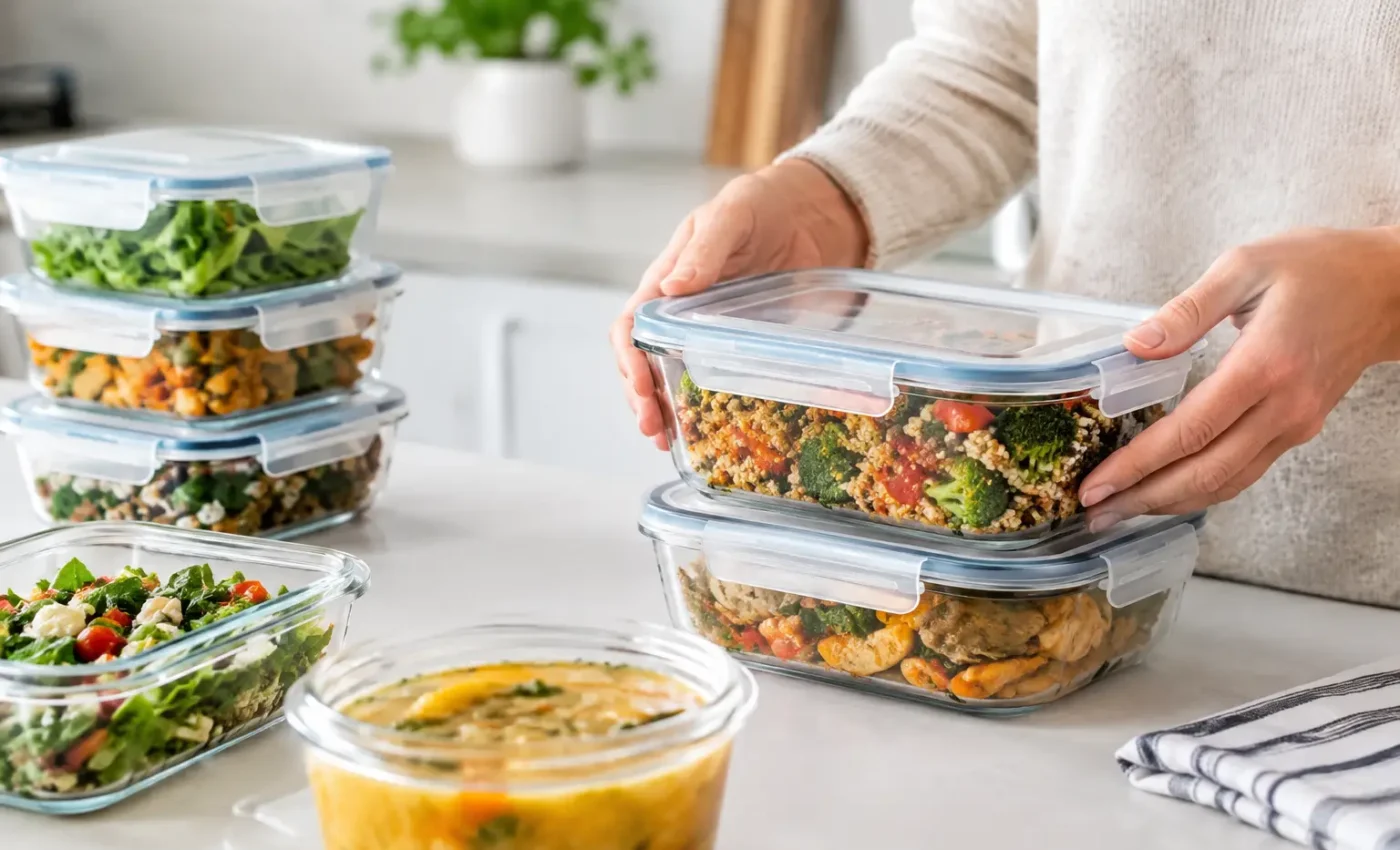
A container of pasta from Tuesday can make Wednesday dinner wonderfully easy – unless nobody can remember when it went into the fridge. Knowing the right leftover food storage time helps you save money, reduce weeknight cooking pressure, and keep meals safe for the people around your table.
For most cooked leftovers, the dependable rule is simple: refrigerate them promptly and plan to eat them within three to four days. That covers many familiar meals, from chicken and rice to chili, roasted vegetables, casseroles, pasta, and soup. A quick label with the date removes the guesswork later.
The everyday leftover food storage time rule
Keep perishable leftovers in a refrigerator at 40°F or below, and use them within three to four days. If you cooked dinner on Sunday evening and cooled it promptly, aim to finish it by Wednesday or Thursday. When you are not sure which day it was made, the safer choice is to toss it.
This timeline applies to food that has been handled and cooled correctly. It is not a promise that every leftover will stay good for four days, especially if it sat out too long, traveled in a warm lunch bag, or was repeatedly warmed and chilled. Storage time and temperature work together.
Foods with a shorter useful life may also lose their best texture before the four-day mark. A crisp salad can become watery, fried food softens, and creamy pasta may thicken in the fridge. Those are quality issues, not always safety issues, but they can help you decide what to serve first.
Cool leftovers quickly, without crowding the fridge
The clock starts after cooking or serving, not when you finally remember the leftovers are on the counter. Perishable food should go into the refrigerator within two hours. If the room, patio, car, or picnic area is hotter than 90°F, that window drops to one hour.
You do not need to wait for a large pot of soup or a tray of baked pasta to become completely cold before refrigerating it. In fact, waiting too long is the bigger concern. Divide hot food into shallow containers so it cools faster, then place the containers in the fridge with a little space around them.
For a big pot of chili, stew, or soup, portioning is far more useful than putting the entire pot in the refrigerator. Smaller amounts cool more evenly and are easier to reheat on a busy night. Shallow containers also make it easier to see what you have before another grocery run.
Keep your refrigerator at 40°F or colder. The built-in dial is not always precise, so a simple refrigerator thermometer can be helpful, especially in a packed family fridge. Avoid storing cooked food in the door, where temperatures change more often each time it opens.
Which leftovers should you eat first?
A practical plan is to eat the foods that are most perishable or most likely to lose quality early. Seafood, cooked chicken, ground meat dishes, egg-based meals, cooked rice, and creamy sauces are good candidates for the first two or three days.
Cooked rice deserves a little extra attention. It is a convenient side dish and a great base for a quick bowl, but it should be cooled and refrigerated promptly after cooking. Do not leave a pot of rice out while everyone finishes dinner and the kitchen gets cleaned later. Portion it, chill it, and reheat only what you plan to eat.
Fresh-cut fruit, green salads, and dishes with delicate toppings are different. They may be safe for a limited time when properly refrigerated, but their texture can fade quickly. Store dressings, crunchy toppings, herbs, and sauces separately when possible. Your leftovers will be more appealing when it is time for lunch.
Takeout follows the same basic rule as homemade food. Put it away promptly, label it, and use it within three to four days. If it arrived warm but sat on the coffee table through a long movie, do not assume refrigeration can fix the problem afterward.
When the freezer is the better plan
If you already know you will not eat leftovers within four days, freeze them sooner rather than later. Freezing on the first or second day usually gives you a better result than freezing food at the edge of its refrigerator life.
At 0°F, frozen leftovers remain safe for a long time, but quality gradually changes. For the best flavor and texture, try to use most cooked leftovers within two to three months. Soups, chili, meatballs, shredded chicken, tomato sauce, and many casseroles freeze particularly well. Creamy sauces, cooked potatoes, and crisp vegetables can separate or turn soft after thawing, so they are less reliable freezer choices.
Use freezer-safe containers or bags, leaving a little room for food to expand. Press excess air from bags, label each package with the name and date, and freeze in meal-size portions. A flat bag of soup or sauce thaws faster than a large frozen block and takes up less space.
Reheat safely without drying out dinner
Reheat leftovers to 165°F, especially dishes containing meat, poultry, eggs, rice, or casseroles. Stir soups, sauces, and microwave meals partway through heating so cold spots do not remain in the center. A food thermometer is the clearest way to check, but steaming-hot food throughout is a useful visual cue when you are serving a quick meal.
Microwaves are convenient, but they heat unevenly. Cover the dish loosely, stir or rotate it when possible, and let it stand for a minute after heating. That short rest lets the heat finish spreading through the food.
Reheat only the portion you expect to eat. Repeatedly heating a full container, serving from it, and returning it to the fridge adds extra temperature changes and makes the timeline harder to track. If your family wants different amounts, portion the food before reheating.
Thaw frozen leftovers in the refrigerator when you have time. For a faster option, use the microwave or cold water, then cook or reheat the food right away. Avoid thawing cooked meals on the counter, where the outside can warm too much while the middle is still frozen.
Can you trust the smell test?
No. A sour smell, mold, slimy texture, or unusual color is a clear reason to discard food, but leftovers can carry harmful bacteria without looking or smelling obviously bad. The smell test can catch some problems. It cannot confirm that food is safe.
When in doubt, think back to the timeline and temperature rather than trying one small bite. If leftovers sat out too long, if your refrigerator lost power for an extended period, or if you cannot remember when the container was made, throwing it away is the safer call. One container of forgotten pasta is not worth a sick day.
Make leftovers easy to use
The best storage system is the one your household will actually follow. Keep a roll of masking tape and a marker near the refrigerator, then label containers with both the food and the date. Put the oldest leftovers at the front of a shelf where they are easy to spot.
A quick look in the fridge before planning dinner can turn yesterday’s roasted vegetables into a grain bowl, leftover chicken into tacos, or extra tomato sauce into a fast pasta night. Good food, made practical, often starts with using what is already cooked.
Treat leftovers as a planned part of the week, not a mystery pushed to the back of the refrigerator. Cool them promptly, date them clearly, and enjoy them while they are still at their best.