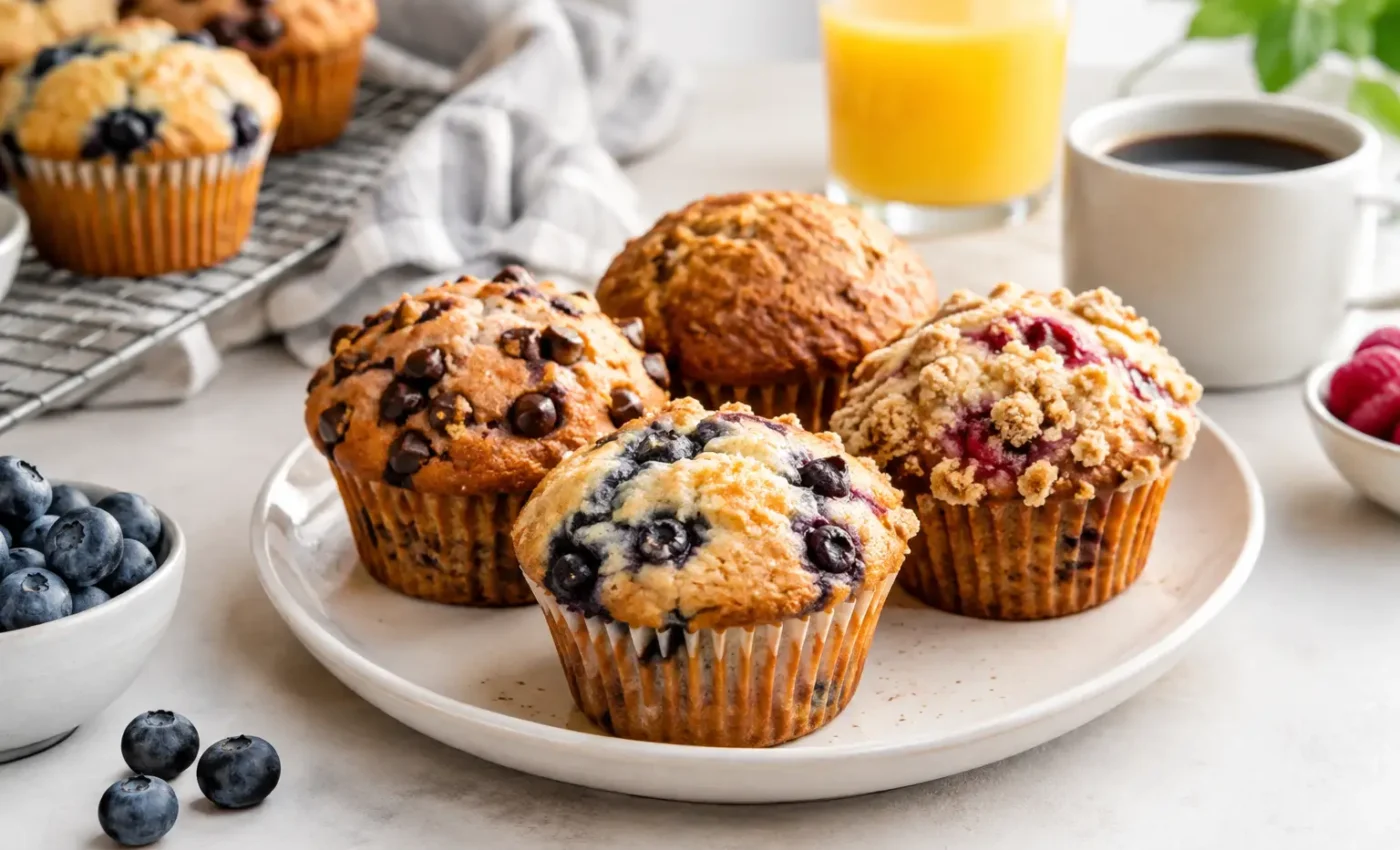
A warm muffin can make a rushed morning feel a little more put together. These easy muffin recipes start with one flexible, everyday batter, so you can bake a batch with what is already in your kitchen instead of making a special grocery trip. Mix it before the coffee finishes brewing, bake while everyone gets ready, and you have a homemade breakfast or lunchbox snack for days.
The dependable muffin method
A good muffin should be tender in the middle, lightly golden on top, and simple enough to make without pulling out a mixer. The key is using basic pantry ingredients in the right order and resisting the urge to overmix. Muffin batter is supposed to look a little lumpy. Once the flour goes in, stirring too much develops gluten and can leave you with muffins that are tough rather than soft.
For a standard 12-cup muffin pan, gather 2 cups all-purpose flour, 3/4 cup granulated sugar, 2 teaspoons baking powder, 1/2 teaspoon salt, 1 cup milk, 1/2 cup melted butter or neutral oil, 2 large eggs, and 1 teaspoon vanilla extract. Melted butter gives a richer flavor, while oil keeps muffins especially moist for an extra day or two. Either choice works well.
Heat the oven to 400°F and line or grease the muffin pan. In one bowl, whisk together the flour, sugar, baking powder, and salt. In another, whisk the milk, butter or oil, eggs, and vanilla until smooth. Pour the wet ingredients into the dry ingredients and fold just until no dry streaks remain. A few small lumps are exactly what you want.
Divide the batter among the 12 cups, filling each about three-quarters full. Bake for 16 to 20 minutes, until the tops spring back lightly and a toothpick inserted in the center comes out clean or with a few moist crumbs. Let the muffins rest in the pan for 5 minutes, then move them to a rack. That short cooling time helps them set without becoming soggy on the bottom.
Easy muffin recipes from one base batter
The base batter is dependable on its own, but mix-ins turn it into the kind of muffin your household will actually look forward to eating. Add the flavor ingredients after the wet and dry mixtures have been combined, folding only until they are evenly distributed.
Blueberry lemon muffins
Fold in 1 cup fresh or frozen blueberries and 1 tablespoon finely grated lemon zest. Frozen berries can go in straight from the freezer, which helps prevent them from bleeding too much color into the batter. Tossing the berries with 1 teaspoon of flour can also help keep them from settling at the bottom.
For a brighter finish, sprinkle the tops with a little coarse sugar before baking. These are especially good for weekend breakfasts, but they freeze well enough to make Monday morning easier too.
Cinnamon streusel muffins
For a cozy bakery-style option, stir 1 teaspoon ground cinnamon into the dry ingredients. Before baking, top each muffin with a quick streusel made from 1/3 cup brown sugar, 1/4 cup flour, 1/2 teaspoon cinnamon, and 2 tablespoons softened butter pinched together with a fork.
The topping adds sweetness and crunch, so this version is best when you want a treat-like muffin. If you are packing them for school or work, let the streusel cool fully first so it stays crisp instead of softening in a container.
Banana walnut muffins
Replace 1/2 cup of the milk with 1/2 cup mashed very ripe banana, then fold in 1/2 cup chopped walnuts. Use bananas with plenty of brown spots for the fullest flavor. Because banana adds moisture, check the muffins near the longer end of the baking time.
If nuts are not a fit for your family, leave them out or swap in 1/2 cup mini chocolate chips. The banana keeps these muffins naturally soft, making them a practical use for fruit that is past its prime for the fruit bowl.
Apple cinnamon muffins
Fold in 1 cup peeled, finely chopped apple and 1 teaspoon cinnamon. Firmer apples hold their shape best, while softer apples melt more into the batter. Both are good, but the texture will be different.
A small dice matters here. Large apple chunks can make the muffins harder to portion and may leave wet pockets around the fruit. A pinch of nutmeg adds warmth if you have it, but cinnamon alone gives you the familiar flavor most people expect.
Chocolate chip muffins
Fold in 3/4 cup semi-sweet chocolate chips. For a slightly less sweet batch, use 1/2 cup chips and add 2 tablespoons unsweetened cocoa powder to the dry ingredients. If you add cocoa, stir in 1 extra tablespoon of milk to keep the batter from becoming too thick.
These are a reliable answer for snack time, especially when plain muffins might get ignored. A few chips pressed onto the top of each portion before baking make them look inviting without changing the recipe.
Savory cheddar herb muffins
Not every muffin needs to be sweet. Reduce the sugar in the base batter to 2 tablespoons, skip the vanilla, and fold in 1 cup shredded cheddar, 2 tablespoons chopped chives or green onion, and a pinch of black pepper. These are good alongside soup, eggs, or a simple dinner salad.
Use a cheese you would enjoy eating on its own, since it is the main flavor. Pre-shredded cheese is convenient, though freshly shredded cheddar melts a little more smoothly. This version is best served warm, but a quick reheat brings back its soft texture.
Small choices that make muffins better
Muffin recipes are forgiving, but a few details make the difference between a decent batch and one you want to bake again. Start with baking powder that is fresh. If it has been open in the pantry for a long time, it may not provide enough lift. Flat muffins are often an ingredient issue, not a mixing issue.
Measure flour by spooning it into the measuring cup and leveling it off, rather than scooping directly from the bag. Scooping packs in extra flour and creates a dry, heavy batter. If the batter seems unusually stiff after combining, add milk 1 tablespoon at a time. It should be thick but easy to scoop.
Keep mix-ins in proportion. About 3/4 to 1 cup total fruit, nuts, chocolate, or cheese is plenty for this batter. More can sound appealing, but an overloaded muffin may spread, sink in the middle, or break apart when you peel off the liner.
For taller tops, begin baking at 400°F as directed. The initial higher heat helps the batter rise quickly. Do not open the oven door during the first 12 minutes, since a sudden drop in heat can affect the rise.
Make-ahead storage for real life
Once completely cool, store muffins in an airtight container at room temperature for up to three days. Place a paper towel in the bottom of the container and another on top of the muffins to absorb excess moisture. This is particularly helpful for blueberry, banana, and apple muffins.
For longer storage, freeze the cooled muffins in a freezer-safe container or bag for up to two months. Wrap individual muffins if you want easy grab-and-go breakfasts. Thaw one overnight on the counter, or warm it in the microwave for about 20 to 30 seconds.
A batch of muffins does not need to solve every breakfast for the week. It just needs to give you one less decision on a busy day. Keep the base ingredients on hand, choose the mix-in that sounds good, and let a warm homemade muffin do the rest.