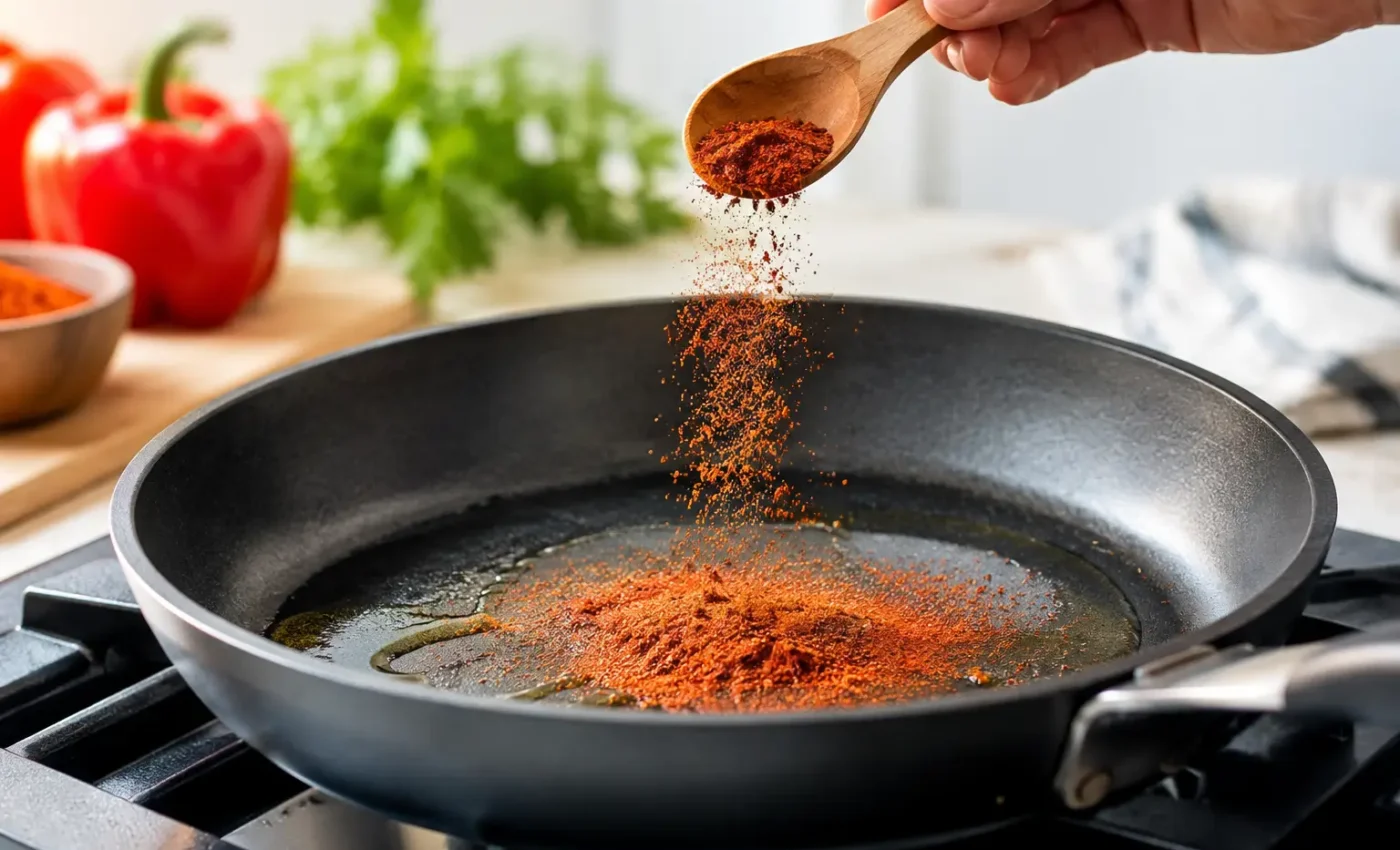
Paprika can turn an ordinary skillet dinner into something warmer, richer, and more colorful in less than a minute. Learning how to bloom paprika is a small cooking move with a big payoff, especially for soups, chicken dishes, rice, beans, and creamy sauces. The key is simple: warm the spice gently in fat so its flavor wakes up, then move quickly before it burns.
For busy home cooks, this is not about fussy technique. It is about getting fuller flavor from a familiar jar of spice you already have in the cabinet.
What does it mean to bloom paprika?
Blooming is the process of briefly heating dried spices in oil, butter, or another cooking fat. Paprika contains flavor compounds that become more noticeable when they meet gentle heat and fat. Instead of tasting dusty or flat, it becomes fragrant, mildly sweet, earthy, and deeply savory.
You may also hear this called tempering spices. Whatever the name, the goal is the same: give the paprika a quick moment in warm fat before adding liquid ingredients.
Paprika needs a lighter touch than many other spices. Ground cumin, coriander, or chili powder can often handle a little more time in the pan. Paprika, particularly sweet Hungarian or smoked paprika, can go from fragrant to bitter very fast. Usually, 10 to 30 seconds is enough.
How to bloom paprika in a pan
Start with a skillet, saucepan, or Dutch oven over low to medium-low heat. Add the oil, butter, or cooking fat called for in your recipe. Once the fat is warm and looks loose or shimmery, add the paprika.
Stir constantly with a wooden spoon or spatula. You should smell a warm, toasty aroma almost right away. Then add the next ingredient that cools the pan, such as onions, garlic, tomato paste, broth, crushed tomatoes, or cooked beans.
That is the whole method. The important part is having that next ingredient ready before the paprika goes in. A measured splash of broth or a bowl of chopped onions can save you from standing over a pan wondering what comes next.
A simple timing guide
If the pan is over medium-low heat, bloom paprika for about 15 seconds. If you are using butter, keep the heat lower because butter can brown quickly. If the recipe begins with onions, it is often easiest to cook the onions first, then stir in the paprika once they have softened.
When garlic is involved, timing depends on the dish. Garlic burns easily too, so add it first for only 15 to 30 seconds, then add paprika and immediately follow with liquid or another moist ingredient. For a quick tomato sauce, you can stir the paprika into the oil with garlic, then add tomatoes right away.
The best fat for blooming paprika
Neutral oils, olive oil, butter, bacon drippings, and chicken fat all work well. Choose a fat that suits the meal rather than worrying about a perfect choice.
Olive oil is a dependable option for tomato sauces, roasted vegetables, and bean dishes. Butter gives paprika a cozy, rounded flavor that works beautifully in creamy chicken, noodles, or mashed potatoes. Bacon drippings bring smoky depth to beans, cabbage, or breakfast potatoes. A neutral oil is useful when you want the paprika itself to stand out without competing flavors.
You do not need much fat. For most everyday recipes, one to two tablespoons is plenty. If there is too little fat, the paprika may stick directly to the hot pan and scorch. If your recipe is nearly fat-free, bloom the paprika in a small amount of oil first, then continue with the rest of the ingredients.
Which paprika should you use?
The label matters because not all paprika tastes the same. Sweet paprika is mild, warm, and slightly fruity. It is the most common choice for family-friendly dishes, including chicken, potatoes, soups, and simple skillet meals.
Smoked paprika adds a woodsy, campfire-like flavor. A little goes a long way, and it is especially good in chili, roasted vegetables, taco-seasoned fillings, and sheet-pan chicken. Hot paprika brings heat along with its pepper flavor, so start modestly if you are cooking for a mixed crowd.
Hungarian paprika is often sold in sweet and hot versions and is a great choice when paprika is a major flavor in the dish. Spanish paprika can be sweet, bittersweet, or hot, and smoked versions are common. Use what you have, but taste the finished dish before adding extra salt or more spice. A fresh, flavorful paprika may need less help than an older jar.
When to add paprika for the best flavor
Paprika can be added at different points in a recipe, but blooming works best when it is part of the early cooking stage. Think of it as a bridge between sautéed aromatics and the sauce, broth, or other main ingredients.
For soups and stews, soften the onion first, stir in paprika, then add broth or tomatoes. For a quick chicken skillet, brown the chicken and remove it if needed, sauté the onion, bloom the paprika in the remaining fat, and build the sauce. For rice or grains, bloom the paprika with onions before adding the dry rice and liquid.
There is one exception: paprika also works as a finishing touch. A pinch of sweet or smoked paprika sprinkled over deviled eggs, hummus, creamy dips, or roasted potatoes adds color and a gentle pop of flavor. That final sprinkle is not blooming, but it can complement the paprika used earlier in the recipe.
Common mistakes and easy fixes
The biggest mistake is using heat that is too high. If the paprika darkens immediately, smells sharp, or leaves black flecks in the pan, it has likely burned. Unfortunately, burned paprika tends to make the entire dish bitter. It is usually better to wipe out the pan and start that step again than to try to cover the flavor later.
Another common issue is adding paprika to a dry pan. Without fat, it can toast unevenly and stick. Give it a thin layer of oil or butter, and keep it moving.
Old paprika can also make blooming feel underwhelming. It may still color food, but its aroma and flavor fade over time. If your paprika has been open for years and barely smells like anything, replacing it can make a noticeable difference. Store the new jar in a cool, dark cabinet, away from the stove if possible.
Finally, do not confuse more paprika with better flavor. Adding several tablespoons can make a dish chalky or slightly bitter unless the recipe is designed around it. Begin with the amount called for, taste after the sauce or broth has simmered, and add a little more only if the dish needs it.
Easy ways to use bloomed paprika tonight
Once you know the method, it fits naturally into meals you already make. Stir paprika into the butter after sautéing onions for a quick creamy pasta sauce. Add it to olive oil before crushed tomatoes for a richer weeknight tomato sauce. Bloom it with onions before adding black beans, broth, and corn for an easy soup.
It also makes simple ingredients feel more complete. Potatoes become more savory, canned chickpeas take on deeper flavor, and leftover chicken gets a fast second life in a skillet with onions, paprika, broth, and a spoonful of sour cream or plain Greek yogurt.
The best part is that blooming paprika takes less time than setting the table. Keep the heat gentle, have your next ingredient ready, and let that brief burst of warmth do the work. Your everyday meals will taste like you gave them more attention, even when dinner needs to happen fast.